
 Anna Louise
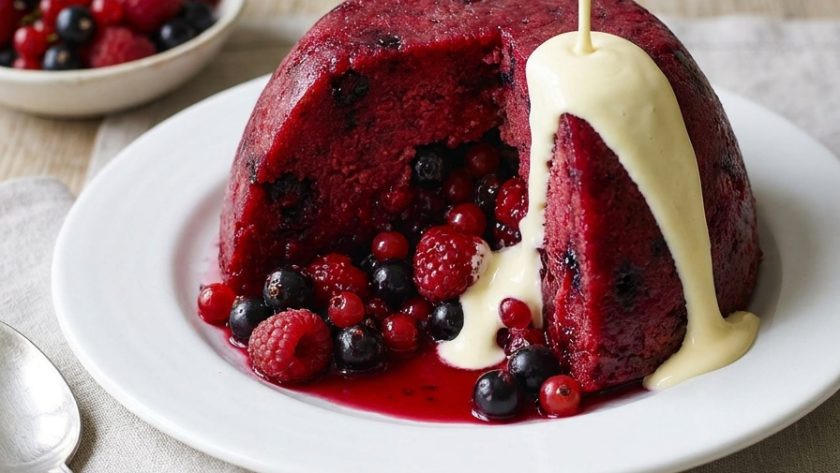
Summer pudding is one of my favourite British desserts because it is one of those rare recipes where the simplicity of the method gives something that looks genuinely spectacular.
There is no cooking of the pudding itself — just bread soaked in the deep, jewel-coloured juice of mixed summer berries, refrigerated overnight until the bread has absorbed the juice completely and turned a vivid, dark berry red throughout.
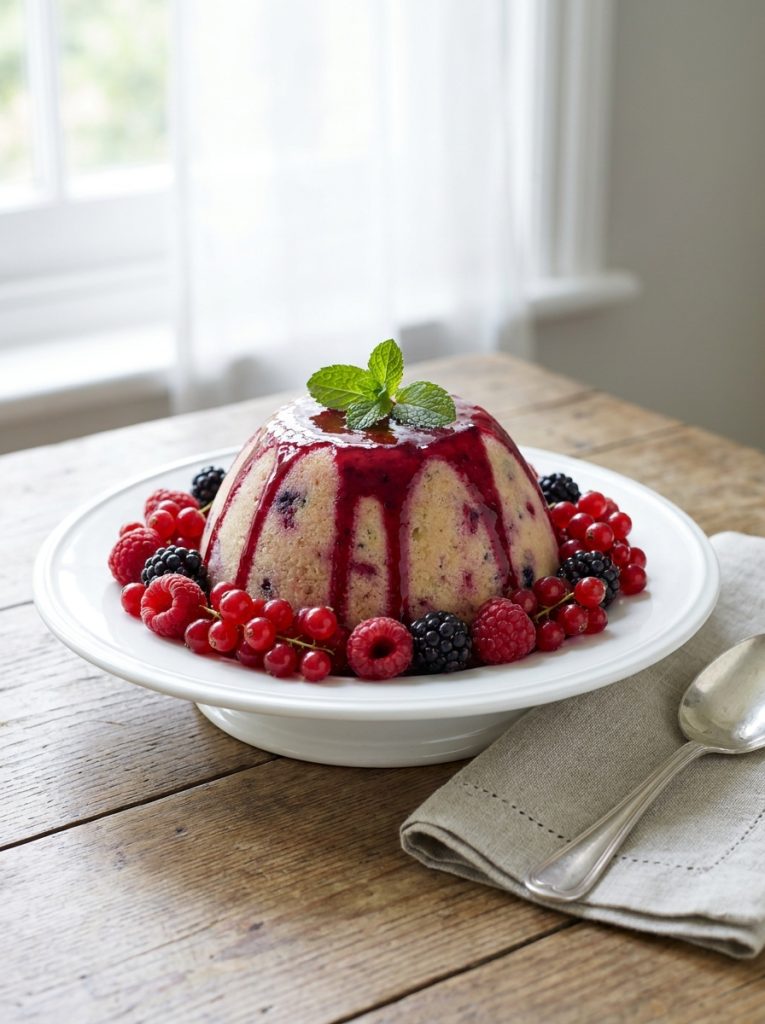
When you turn it out onto a plate and it holds its domed shape — deep red and glistening — it genuinely looks like something from a professional kitchen.
The key is using a mixture of berries that give plenty of juice. I use raspberries, redcurrants, blackcurrants, strawberries, and blackberries — the combination gives a deep, complex, slightly sharp berry flavour and a juice that is vivid enough to colour the bread completely.
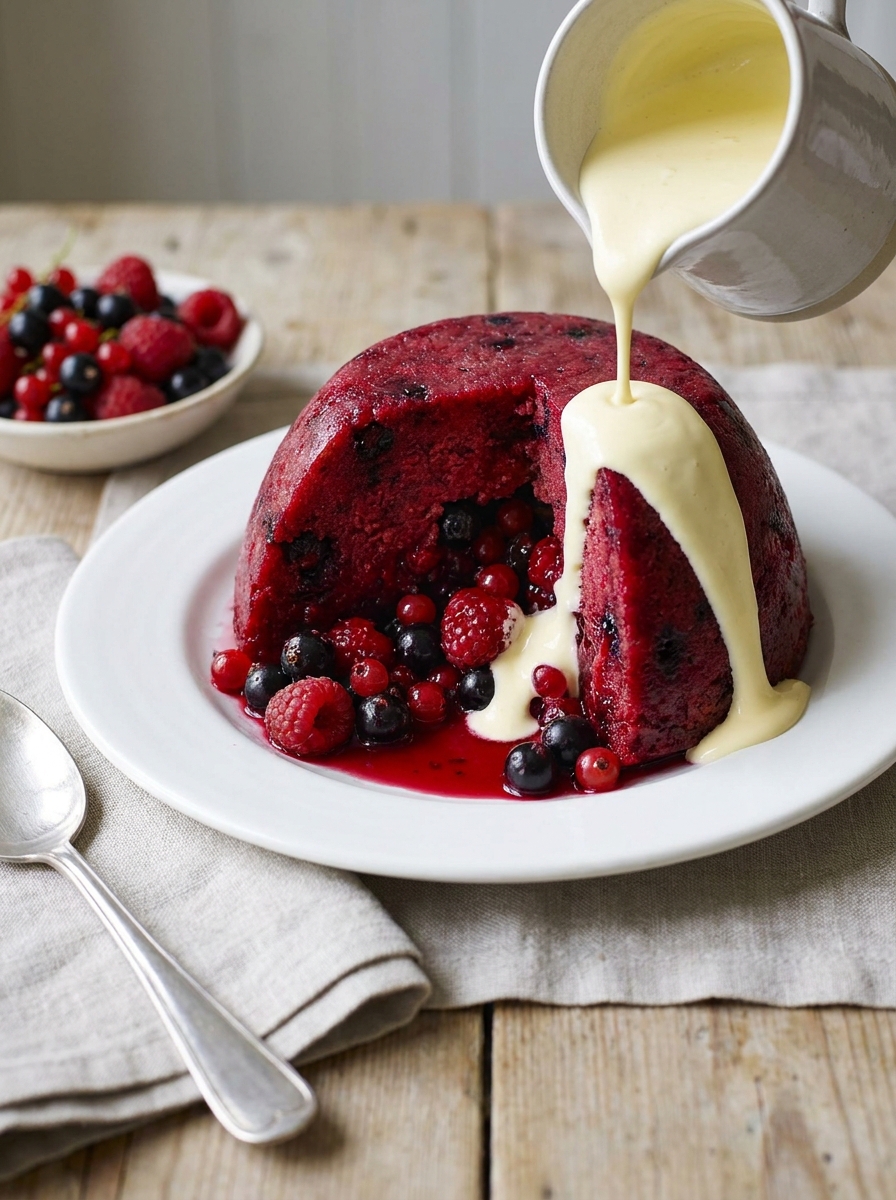
Every slice reveals a cross-section of that deep berry red all the way through, with a scattering of different berries visible. It is one of the most beautiful things I put on a summer table.
Ingredients for Mary Berry Summer Pudding (Serves 8)
For the Summer Pudding
- 900g mixed summer berries — a combination of raspberries, redcurrants, blackcurrants, strawberries, and blackberries
- 150g golden caster sugar
- 3 tbsp water
- 8–10 slices good quality white bread, medium-sliced — crusts removed
To Serve
- 300ml double cream, whipped to soft peaks — alongside
- Extra fresh berries for decoration
- A light dusting of icing sugar
How to Make Mary Berry Summer Pudding
Step 1 — Cook the Berries
Put the mixed berries, golden caster sugar, and water into a large saucepan. Heat gently over a medium-low heat for three to four minutes — just long enough for the sugar to dissolve and the berries to start releasing their juice. Stir very gently — you want most of the berries to remain whole.
The mixture should be very juicy, deeply coloured, and the berries should be barely cooked — still largely holding their shape. Taste and add a little more sugar if the fruit seems very sharp. Remove from the heat.
Step 2 — Line the Basin
Lightly press a circle of cling film into a 1.2 litre pudding basin — this makes turning out considerably easier.
Cut one circle of bread to fit the base of the basin exactly. Cut the remaining slices into fingers approximately 4cm wide. Dip the bread circle briefly into the berry juice — both sides — and press into the base of the basin. Dip each bread finger briefly into the juice and arrange around the sides of the basin — overlapping slightly and making sure there are no gaps. Reserve enough bread to cover the top.
Step 3 — Fill and Cover
Spoon the berry mixture into the lined basin — including all the juice. Reserve two to three tablespoons of juice in a small bowl for touching up any pale patches later.
Dip the remaining bread in juice and lay over the top of the berries — covering completely. Press down gently.
Cover with cling film. Place a small plate or saucer on top that fits just inside the rim of the basin. Put a tin of tomatoes or similar weight on top of the plate as a weight. Refrigerate overnight — or for at least eight hours.
Step 4 — Turn Out and Serve
Remove the weight, plate, and cling film from the top. Place a serving plate on top of the basin. Invert confidently in one movement. Lift the basin away. Peel off the cling film.
Check for any pale patches on the outside of the pudding — dab with the reserved berry juice using a pastry brush or a teaspoon until the surface is evenly and deeply coloured all over.
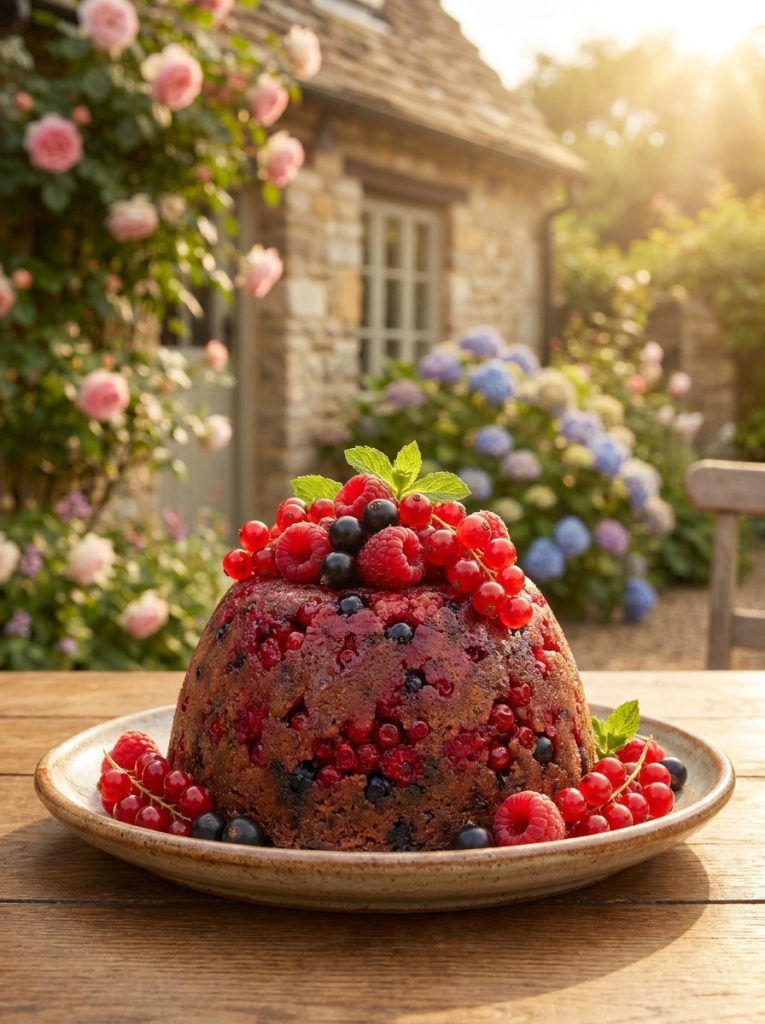
Decorate with fresh berries and a light dusting of icing sugar. Serve immediately with softly whipped cream alongside.
My Top Tips For Perfect Mary Berry Summer Pudding
Use a generous mixture of berries — redcurrants and blackcurrants are essential. Redcurrants and blackcurrants give the most vivid, most deeply coloured juice and the most intensely fruity flavour. A summer pudding made only with raspberries and strawberries is paler and less complex. The currants are what give the pudding its specific, deeply British character.
Just barely cook the berries — three to four minutes only. The berries should be warm enough to release their juice and allow the sugar to dissolve, but still largely whole and holding their shape. Over-cooked berries give a mushy filling and lose the beautiful contrast of whole berry pieces visible in each slice.
Overlap the bread pieces and leave no gaps. Any gap in the bread lining gives a hole through which the juice can leak when the pudding is turned out, leaving a messy surface rather than the clean, deeply coloured dome. Overlap generously and press firmly to seal.
The weight is not optional. The weight on top overnight presses the bread into contact with the berry juice, ensuring even absorption and a pudding that holds its domed shape perfectly when turned out. Without the weight, the bread can be loose and the pudding can collapse.
Reserve juice for touching up. Even with perfect lining, a patch or two of paler bread can appear on the outside of the pudding after turning out. Two tablespoons of reserved berry juice and a light touch with a pastry brush fixes this completely in thirty seconds.
Serving Suggestions
At the centre of the table at a summer lunch — it looks spectacular and always causes a moment of silence before everyone asks for a slice. With softly whipped cream or crème fraîche alongside. With extra fresh berries scattered around the base of the pudding on the serving plate.
How to Store Mary Berry Summer Pudding
In the fridge: Keep the pudding in the basin, weighted, for up to 2 days before turning out. Once turned out, serve within a few hours. Freezing is not recommended — the bread becomes soggy and the berries lose their texture.
Mary Berry Summer Pudding Recipe
Ingredients
Method
- Heat berries, sugar, and water gently 3–4 minutes until sugar dissolves and berries release juice — barely cooked, mostly whole. Reserve 2–3 tbsp juice separately.
- Line a 1.2 litre basin with cling film. Cut bread circle for base — dip in juice, press into base. Dip bread fingers in juice — arrange around sides overlapping with no gaps.
- Spoon berry mixture and all juice into lined basin. Dip remaining bread in juice — lay over top to cover completely. Press gently. Cover with cling film. Place small plate on top — add weight. Refrigerate overnight minimum.
- Remove weight, plate, and top cling film. Invert onto serving plate — lift basin — peel cling film. Touch up any pale patches with reserved juice. Decorate with fresh berries and icing sugar. Serve with softly whipped cream.
Notes
Frequently Asked Questions
Can I use frozen berries?
Yes — frozen berries work well. Increase the cooking time to five to six minutes to account for the extra liquid they release. The juice is equally vivid and the flavour is very good.
Can I use brioche instead of white bread?
Yes — brioche gives a slightly richer, slightly more indulgent pudding. It absorbs the juice more readily and gives a slightly softer finished pudding. Very good as an alternative.
My pudding collapsed when I turned it out — what happened?
Either the weight was not heavy enough, the bread had gaps, or the pudding was not refrigerated for long enough. Make it the day before, use a proper weight, and ensure the bread lining has no gaps.
Can I make individual summer puddings?
Yes — line six individual dariole moulds with bread as directed. Fill with fruit and juice. Weight overnight using individual saucers with weights on top.















Leave a Reply