
 Anna Louise
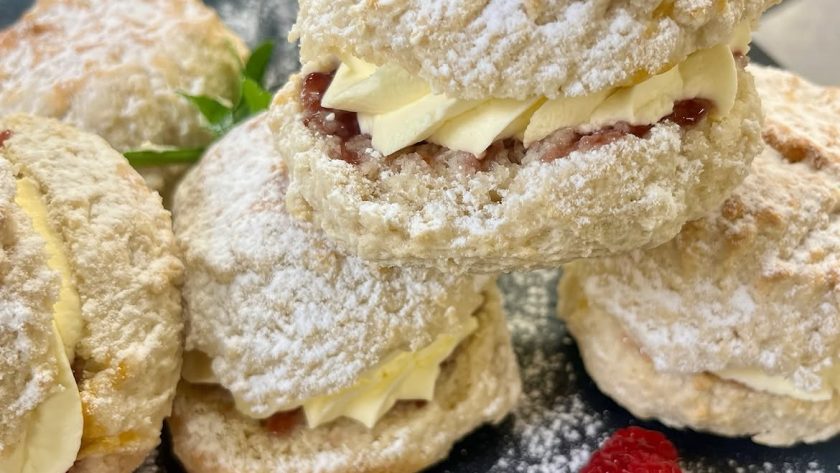
 Devonshire scones are a specific thing — not just any scone, but the scone made specifically to be eaten with clotted cream and strawberry jam in the Devonshire tradition.
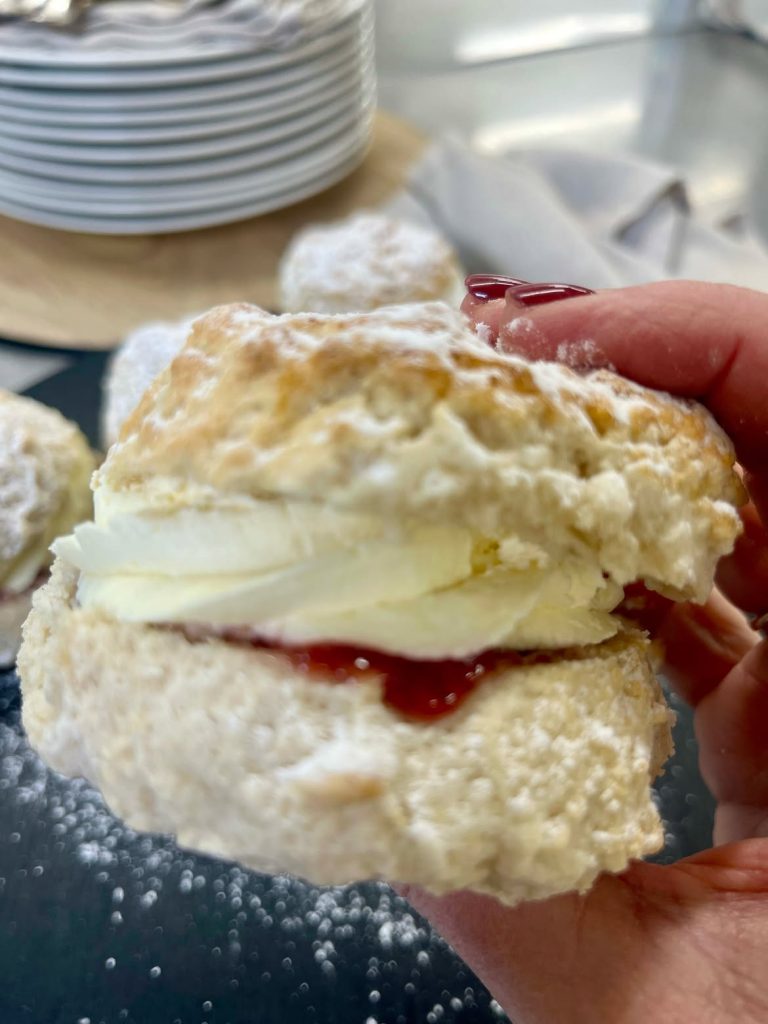
Slightly sweeter than a plain scone, slightly richer from an egg in the batter, with a beautiful golden top and a clean split around the middle where they have risen dramatically in a hot oven.
Mary Berry’s Devonshire scones recipe is the version that earns the name. These are not the thick, doughy, slightly dense scones that disappoint at tourist cafes.
They are properly light, properly tall, and properly tender — the kind that make people go quiet for a moment when they take the first bite.
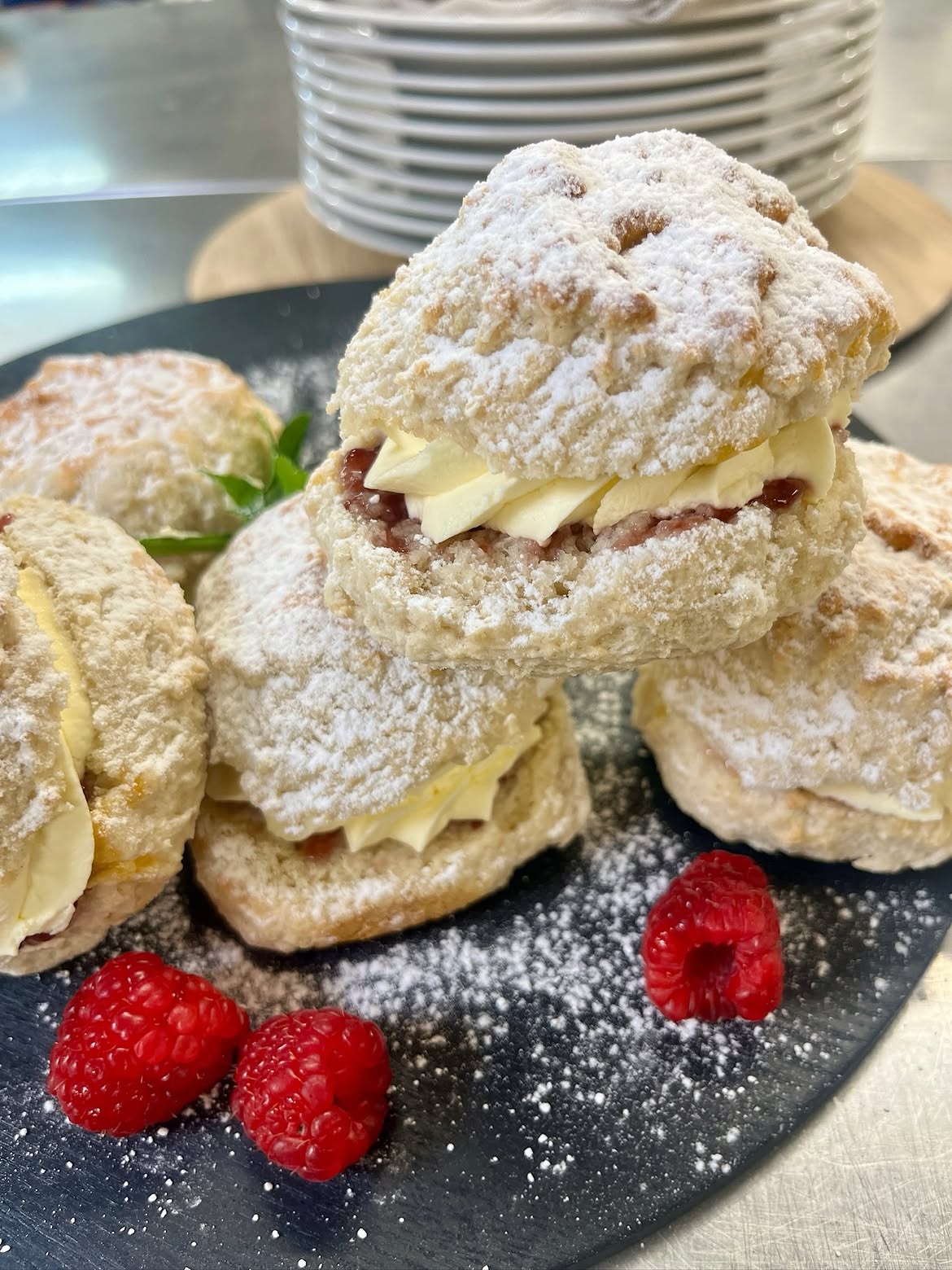
The Devonshire cream tea tradition puts clotted cream first, then jam on top. This recipe respects that tradition and produces a scone worthy of the cream that will go on it.
What Makes a Devonshire Scone Different
An egg in the batter. Most plain scone recipes use only milk as the liquid. Devonshire scones typically include a beaten egg, which adds richness, a slightly more golden colour to both the interior and the exterior, and a more tender crumb.
Slightly more sugar. Devonshire scones are marginally sweeter than a standard plain scone — not noticeably sweet on their own, but sweet enough to balance perfectly with the clotted cream and jam.
Eaten with clotted cream. This is the defining characteristic. Clotted cream goes on first — generously, as a base. The jam goes on top of the cream. This is the Devonshire way and it is the correct way.
Ingredients for Mary Berry Devonshire Scones
- 450g self-raising flour, sifted, plus extra for dusting
- 2 tsp baking powder
- ½ tsp fine salt
- 3 tbsp caster sugar
- 100g unsalted butter, cold and cubed
- 1 large egg, beaten
- 200ml whole milk, cold, plus extra for brushing
- 1 tsp vanilla extract
To Serve
- Clotted cream — as generous as you can manage
- Good quality strawberry jam
How to Make Mary Berry Devonshire Scones — Step by Step
Step 1 — Preheat and Prepare
Preheat your oven to 220°C / 200°C fan / Gas 7. Line a large baking tray with baking parchment.
Step 2 — Rub in the Butter
Sift the flour, baking powder, and salt into a large bowl. Add the caster sugar and stir briefly. Add the cold cubed butter and rub in quickly with your fingertips — lifting the mixture and letting it fall to keep everything cool. Work until the mixture resembles fine breadcrumbs with a few slightly larger pieces of butter still visible.
If your hands feel warm, refrigerate the bowl for five minutes before continuing.
Step 3 — Add the Liquid
Beat the egg with the cold milk and vanilla extract in a small jug. Make a well in the centre of the flour mixture. Pour in almost all the liquid and mix quickly with a round-bladed knife until a soft, slightly sticky dough just comes together. Add the remaining liquid only if the dough seems dry.
Stop the moment the dough coheres. Overworking gives tough scones.
Step 4 — Shape and Cut
Turn the dough out onto a lightly floured surface. Gently pat — do not roll — to a thickness of 3cm. This is non-negotiable for a properly tall Devonshire scone. Anything less gives flat scones.
Use a 6cm round straight-sided cutter. Press straight down and lift straight up — never twist. Twisting seals the cut edges and prevents even rising. Cut as many rounds as possible from the first pat-out. Gather the trimmings gently, pat once more, cut again. Re-gather no more than once.
Step 5 — Glaze and Bake
Place on the prepared tray. Brush the tops only with a little extra milk — do not let it run down the sides. The egg in the batter already gives a golden colour so the glaze needs to be very light.
Bake for 12 to 15 minutes until well risen, golden brown, and firm to a gentle touch. The scones should have risen dramatically and have a clean split around the middle.
Step 6 — Cool and Serve
Transfer to a wire rack. Serve warm — ideally within 20 to 30 minutes of baking. Split with fingers or a knife. Clotted cream first, generously. Jam on top.
My Top Tips For Mary Berry Devonshire Scones
Three centimetres is the minimum thickness. This is the rule for any tall scone and it is especially important for a Devonshire scone where height is part of the character. Measure if you are not sure — the thickness before baking directly determines the rise.
Never twist the cutter. Press straight down, lift straight up. A twisted cutter seals the cut edge and produces a scone that rises unevenly or not at all on one side.
Keep everything cold. Cold butter, cold milk and egg mixture, cool hands. The colder everything is when it goes in the oven, the more dramatically the butter creates steam and the higher the scones rise.
The egg in the batter changes things. The addition of a beaten egg makes this dough slightly richer and slightly stickier than a plain milk scone. Do not be alarmed by the stickiness — use a light dusting of flour on the surface and handle gently. The richness from the egg is worth it.
Clotted cream first. This is the Devonshire tradition — cream first as a base, jam on top. The cream acts as a foundation that prevents the jam from soaking into the scone. It is also the most practical and most generous way of applying both. Cornwall puts jam first; Devon puts cream first. If you are eating a Devonshire scone, put the cream on first.
Serving Suggestions
With clotted cream and strawberry jam as part of a cream tea — this is the only correct way. With butter and good quality marmalade for breakfast. As part of an afternoon tea spread. As a special treat for someone who deserves a proper cream tea.
How to Store Mary Berry Devonshire Scones
At room temperature: Best eaten within two hours of baking. Store in an airtight container for up to two days — refresh in a 170°C oven for five minutes before serving.
In the freezer: Freeze in an airtight container for up to three months. Warm from frozen in a 180°C oven for 12 to 15 minutes. Or freeze the raw cut scones and bake fresh from frozen — the best approach for genuinely fresh scones at any time.
Try These Recipes
- Mary Berry Chocolate Cupcakes
- Mary Berry All In One Chocolate Cake
- Mary Berry Chocolate Sponge Cake
- Mary Berry Chocolate Birthday Cake
Mary Berry Devonshire Scones Recipe
Ingredients
Method
- Preheat oven to 220°C / 200°C fan / Gas 7. Line a large tray with parchment.
- Sift flour, baking powder, and salt into a bowl. Add sugar. Rub in cold butter until fine breadcrumbs with a few larger pieces.
- Beat egg with milk and vanilla. Make a well. Pour in almost all the liquid. Mix quickly with a round-bladed knife until a soft, slightly sticky dough just comes together.
- Pat gently on a floured surface to 3cm thickness — never thinner. Cut straight down with a 6cm cutter — never twist. Gather once and cut again.
- Place on tray. Brush tops only with a little milk.
- Bake 12–15 minutes until risen, golden, and firm. Transfer to wire rack. Serve warm with clotted cream first, then jam.
Notes
Frequently Asked Questions
What is the difference between a Devonshire scone and a plain scone?
A Devonshire scone contains a beaten egg in addition to milk — this gives a slightly richer, more golden, more tender result. It is slightly sweeter and marginally more substantial than a plain scone. Both are wonderful but the Devonshire version is specifically designed for the cream tea experience.
Can I make these without the egg?
Yes — replace the egg with an extra 30ml of milk. The scones will be slightly less rich and slightly less golden but still very good. They become a very close version of the plain scones recipe elsewhere on this site.
Cream or jam first?
Cream first, then jam — this is the Devonshire tradition. The Cornish tradition is jam first then cream. Both are valid in their own tradition. For a Devonshire scone specifically, cream goes on first.
Why are my scones not splitting around the middle?
The dough was either too thin, the oven was not hot enough, or the cutter was twisted. Pat to 3cm, preheat the oven fully to 220°C, and press the cutter straight down without twisting.
Can I add fruit to Devonshire scones?
Yes — 75g of sultanas or dried cranberries make wonderful fruit Devonshire scones. Add them to the flour mixture before the liquid goes in.
How do I get the most even rise?
Make sure the dough is an even thickness throughout — 3cm across the entire pat-out. Uneven dough gives uneven scones. A light, even pat with both hands gives the best result.













Leave a Reply