
 Anna Louise
 Blackcurrant jam is the one I recommend to people who have never made jam before. Not because it is the easiest in terms of technique — it is — but because of what happens when you taste it.
Homemade blackcurrant jam is so far removed from the commercial version that the comparison is almost unfair. Deep, sharp, intensely fruity, with a flavour that tastes genuinely of real blackcurrants rather than something that once stood near one.
Blackcurrants are also the most forgiving jam fruit there is. They have an exceptionally high pectin content — higher than almost any other common fruit — which means they set quickly, reliably, and without the anxiety that comes with low-pectin fruits. If you do the wrinkle test and it wrinkles, you are done. It always wrinkles.
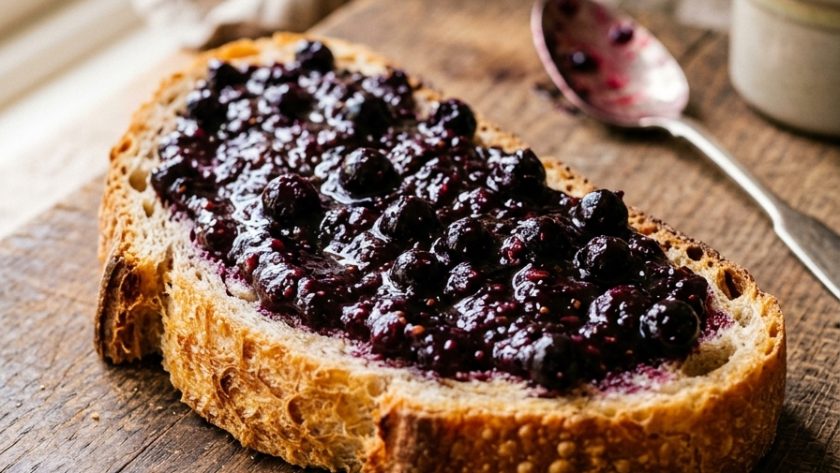
This recipe gives you a jam that is dark, glossy, and deeply flavoured. It sets firmly, slices cleanly, and keeps for a year unopened. Make it in July when blackcurrants are at their cheapest and best, and you will be eating something genuinely wonderful on your toast in January.
Why Blackcurrant Jam Sets So Easily
Blackcurrants have one of the highest natural pectin contents of any fruit used for jam making. Pectin — the naturally occurring substance that causes jam to gel — is present in huge quantities in blackcurrant skins and fruit. This means:
The jam reaches setting point quickly — sometimes in as little as 8 minutes of rolling boil. Test early and test often. Do not walk away from the pan.
You do not need added pectin or jam sugar. Standard granulated sugar is all you need. The fruit provides everything else.
The jam sets firmly — firmer than strawberry or raspberry jam — which makes it particularly good for spreading on scones, filling cakes, and serving alongside cheese.
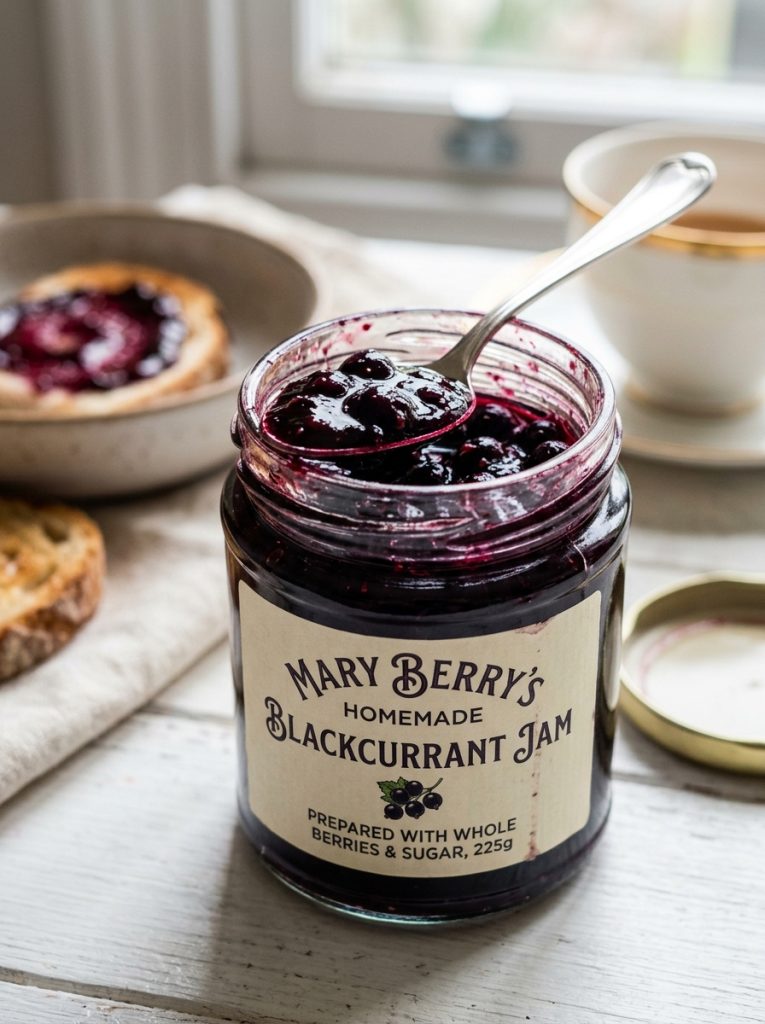
Ingredients for Mary Berry Blackcurrant Jam
- 1kg fresh or frozen blackcurrants, stalks removed
- 300ml water
- 1.3kg granulated sugar
Equipment
- Large preserving pan (6 litre capacity minimum)
- Several small saucers in the freezer
- 3 to 4 sterilised glass jars with lids
- Jam funnel
How to Make Mary Berry Blackcurrant Jam — Step by Step
Step 1 — Sterilise the Jars
Wash jars in hot soapy water, rinse, and place upside down in a 140°C oven for 15 minutes. Leave in the oven until needed.
Step 2 — Soften the Blackcurrants
Place the blackcurrants and water in the preserving pan over a medium heat. Bring to a gentle simmer and cook for 15 to 20 minutes until the blackcurrants are completely soft and have burst — the skins should be tender with no resistance when pressed.
This step is critical. Blackcurrant skins are tough, and if they are not completely softened before the sugar goes in, they will remain tough and chewy in the finished jam.
Do not rush this stage. Under-softened blackcurrants produce a jam with tough, unpleasant pieces of skin throughout.
Step 3 — Add the Sugar
Add the granulated sugar to the softened blackcurrants and stir over a low heat until every grain has completely dissolved — about 5 to 8 minutes. The liquid should look clear, not grainy, when you lift the spoon. Do not let the jam boil before the sugar is fully dissolved.
Step 4 — Bring to a Rolling Boil
Increase the heat to high and bring the jam to a rapid, rolling boil — one that cannot be stirred down. From this point, stir occasionally to prevent the base catching. Because of the high pectin content of blackcurrants, test for set after just 8 minutes of boiling.
Step 5 — Test for Set
Remove the pan from the heat. Drop a small teaspoon of jam onto a cold saucer from the freezer. Leave for one minute. Push gently with your fingertip — if the surface wrinkles, setting point is reached.
Blackcurrant jam sets very quickly. If it is not ready at 8 minutes, return to the boil for two minutes more and test again. Do not over-boil — an over-boiled blackcurrant jam becomes very firm, almost sticky, and loses some of its flavour. Test early.
Step 6 — Skim and Pot
Remove the pan from the heat. Skim any foam from the surface — a knob of butter stirred through disperses it instantly. Leave to stand for five minutes.
Ladle into the hot sterilised jars using a jam funnel. Fill to within 5mm of the top. Seal immediately. Label with the date.
My Top Tips
Soften the skins completely before adding sugar. This is the most important step in blackcurrant jam. The skins are tough and once sugar is added they will not soften further — they will stay exactly as they are when the sugar goes in. Fifteen to twenty minutes of gentle simmering is the minimum. Press one against the side of the pan with your spoon — it should offer no resistance at all.
Test for set early. Blackcurrants have very high pectin and can set much faster than you expect. Start testing at 8 minutes of rolling boil. Over-boiled blackcurrant jam sets too firmly and loses the brightness of its flavour.
Use slightly less sugar than you might expect. The ratio here is slightly lower than a standard 1:1 fruit to sugar ratio — 1kg fruit to 1.3kg sugar rather than 1.5kg. Blackcurrants are very tart and the lower sugar level preserves their sharpness, which is part of what makes this jam so good. A sweeter jam would be less interesting.
Frozen blackcurrants work perfectly. If you cannot get fresh blackcurrants — they are only available for a few weeks in July — frozen blackcurrants are an excellent alternative. Defrost completely and use in exactly the same quantities. The pectin content and flavour are well preserved by freezing.
Leave the jam to stand five minutes before potting. This allows it to thicken slightly. Potted immediately it can be slightly more liquid than when it has had a brief rest. Five minutes makes a difference.
Serving Suggestions
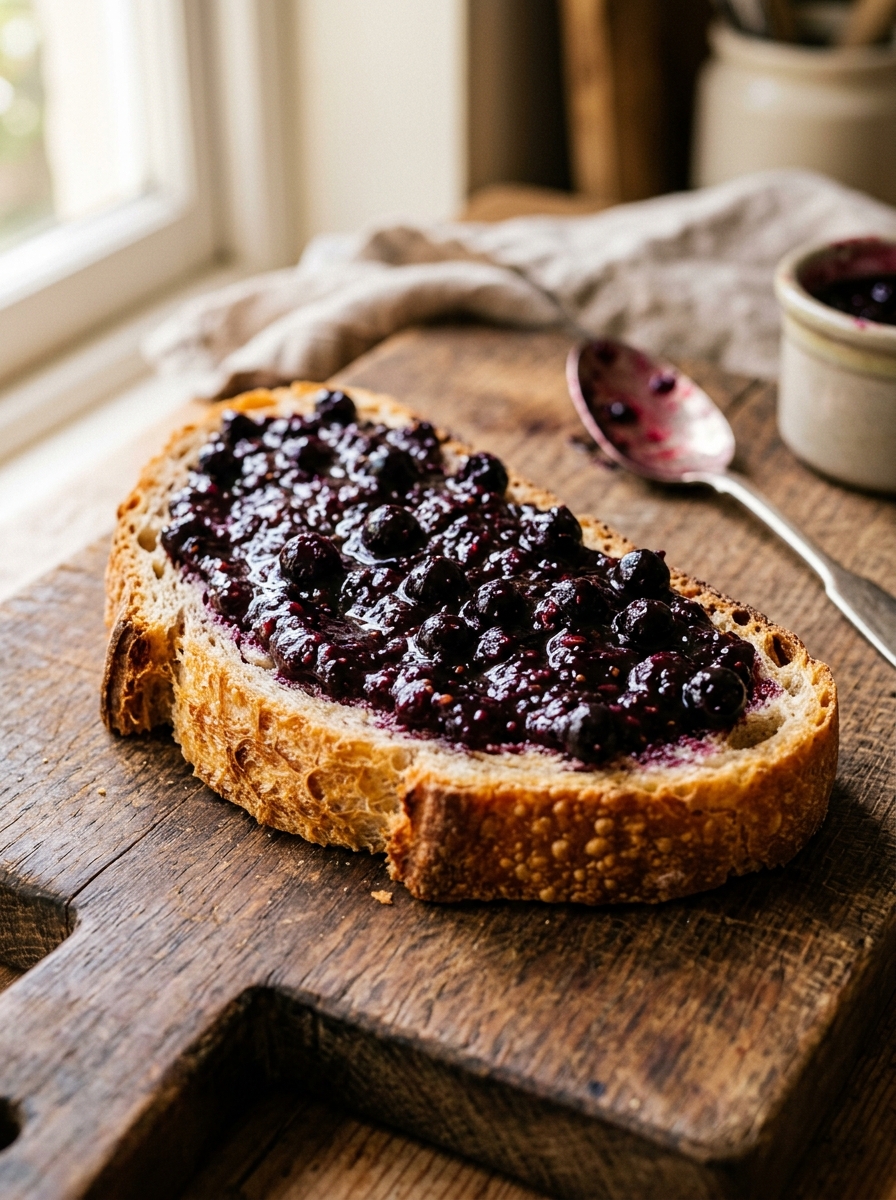
On toast with good butter — the sharpness of blackcurrant jam against properly salted butter is one of the great British breakfast pleasures.
As a filling for a Victoria sponge — particularly wonderful because the sharpness of the jam balances the sweetness of the cake. On scones with clotted cream. Stirred into Greek yoghurt. As a sauce for ice cream, warmed briefly with a splash of water.
How to Store
Unopened: Cool, dark place for up to 1 year.
Once opened: Refrigerate and use within 6 to 8 weeks.
Mary Berry Blackcurrant Jam Recipe
Ingredients
Method
- Sterilise jars in a 140°C oven for 15 minutes.
- Place blackcurrants and water in a large preserving pan. Simmer over medium heat for 15–20 minutes until skins are completely soft with no resistance.
- Add sugar. Stir over low heat for 5–8 minutes until every grain is dissolved. Do not boil before sugar is dissolved.
- Increase heat to high. Bring to a rapid rolling boil. Boil hard for 8 minutes then test — drop a teaspoon on a cold saucer, leave 1 minute, push with fingertip. If it wrinkles, setting point is reached. If not, boil 2 more minutes and test again.
- Remove from heat. Skim foam — a knob of butter disperses it. Stand 5 minutes.
- Ladle into hot sterilised jars. Fill to within 5mm of top. Seal immediately. Label with date.
Notes
Frequently Asked Questions
Can I use redcurrants or mixed currants?
Yes — a mixture of blackcurrants and redcurrants is traditional in some British jam recipes. Redcurrants have similarly high pectin but a slightly more delicate, less intensely flavoured result. A 50/50 mix gives a beautiful pink-red jam that is slightly less sharp than pure blackcurrant.
Why is my jam very firm — almost like a jelly?
It was boiled for too long past setting point. Blackcurrant jam sets quickly and over-boiling concentrates the pectin further, producing a very firm set. Next time test earlier. The jam is still perfectly usable — just slightly firmer than ideal.
Do I need to remove every single stalk?
Yes — stalks left in the jam are unpleasant to eat and will show up as dark fibrous pieces in the finished jar. Take the time to top and tail each currant. It is repetitive but quick once you get into a rhythm.
Can I make a smaller batch?
Yes — halve all quantities. The cooking time for softening the fruit remains the same, but the rolling boil stage may be slightly shorter. Test from 6 minutes with a smaller batch.
Why did my jam crystallise in the jar?
Sugar crystallisation in jam is almost always caused by undissolved sugar granules in the mixture before boiling, or by the jam being disturbed while cooling. Always stir patiently until every grain is dissolved before bringing to the boil, and leave the jars undisturbed as they cool.
Can I use jam sugar instead of granulated?
You can, but it is unnecessary with blackcurrants — they have more than enough natural pectin. Jam sugar contains added pectin which would make the jam very firm. Granulated sugar is all you need.

Leave a Reply