
 Anna Louise
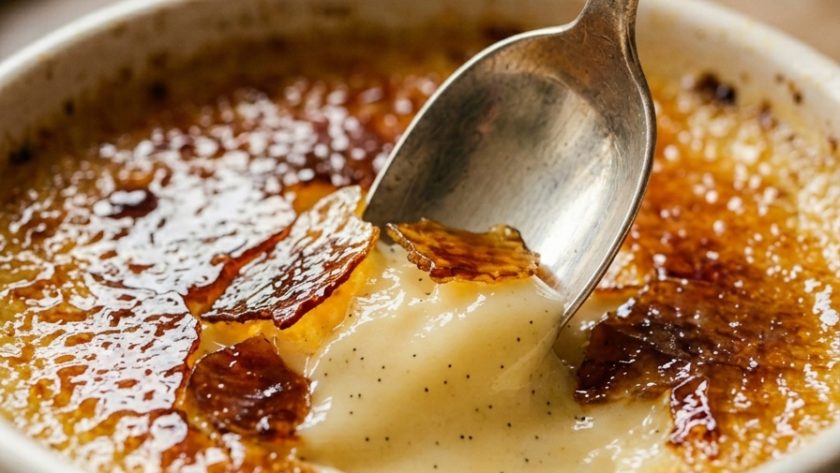
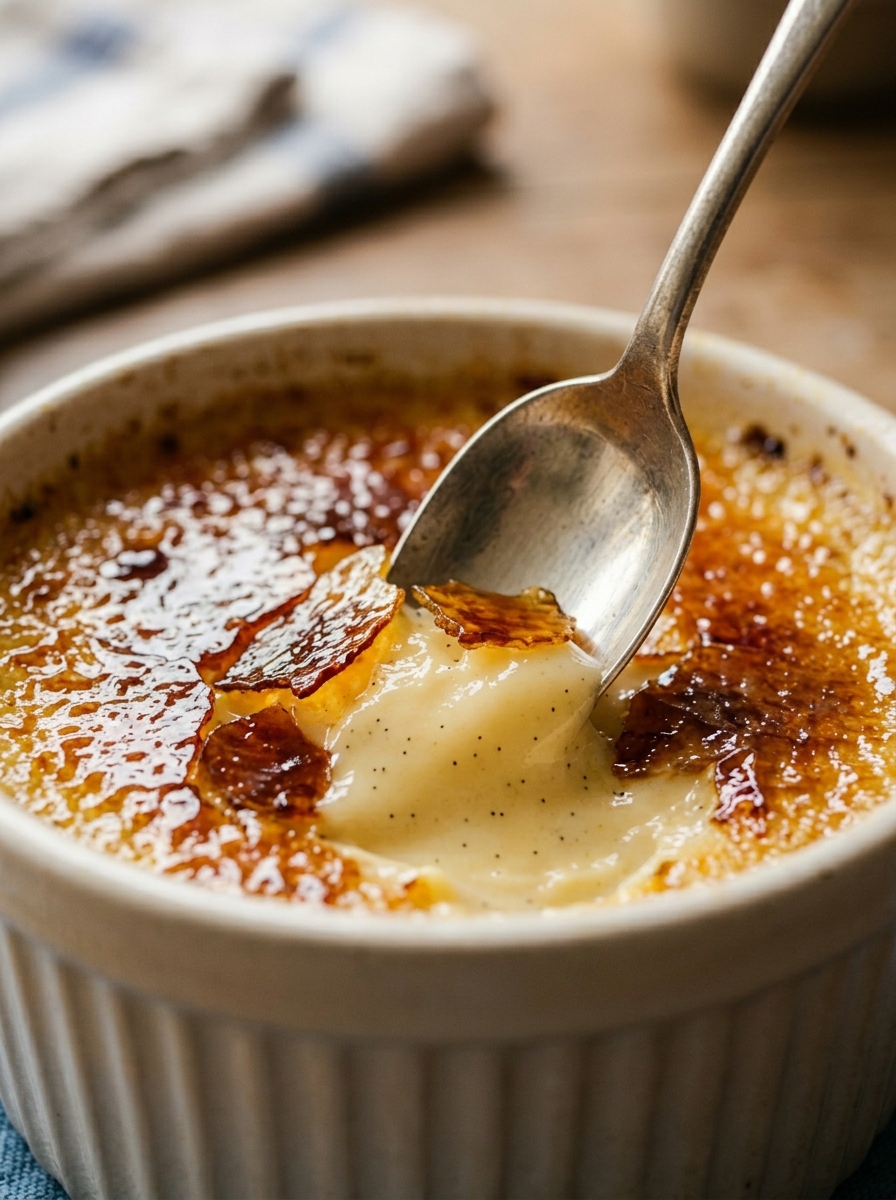
 There is a moment with crème brûlée that never stops being satisfying — the tap of a spoon against that glassy caramel shell, the crack as it gives way, and the silky, cold custard underneath. It is one of the great textural contrasts in all of dessert cookery, and it is far more achievable at home than most people assume.
Mary Berry’s crème brûlée is a properly rich, silky custard — made with double cream and egg yolks, gently flavoured with vanilla, and baked low and slow in a water bath until just set. The classic caramelised sugar topping is added just before serving, giving you that essential crisp shell over the cold, trembling custard beneath.
This is the dessert I make when I want something that feels genuinely special but is, in reality, almost entirely hands-off. Most of the work is waiting.
What Makes a Perfect Crème Brûlée?
Yolks only — no whole eggs. Egg yolks alone give crème brûlée its characteristic richness and silky texture without the slightly rubbery quality that whole eggs can introduce. This is a custard built for richness, not structure.
A low oven temperature and a water bath. Crème brûlée is baked at a low temperature in a water bath, which protects the delicate custard from direct heat and ensures a smooth, silky set rather than a curdled or grainy one.
The custard must wobble. Like the bread and butter pudding, the custard should still wobble gently in the centre when you take it out of the oven. It firms up further as it chills. Overbaked crème brûlée is firm and slightly rubbery rather than silky.
The caramel top must be done at the last minute. Sugar caramelised too far in advance will absorb moisture from the custard below and lose its crispness. The caramel top is the very last thing you do, ideally within an hour of serving.
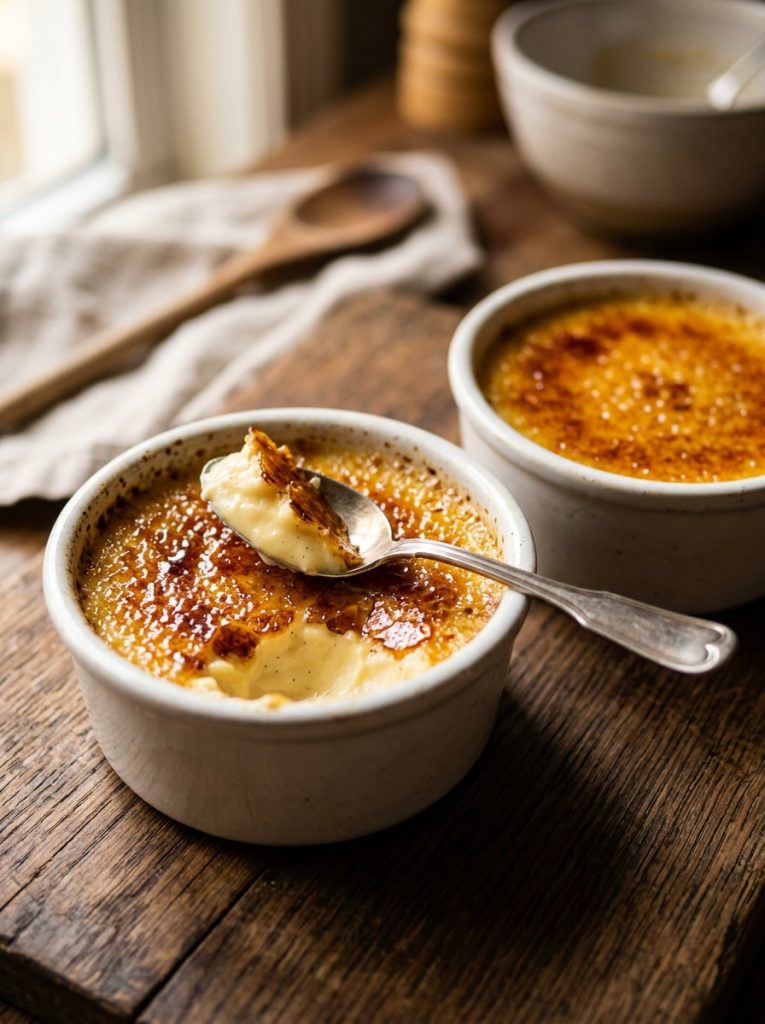
Ingredients for Mary Berry Crème Brûlée
For the Custard
- 600ml double cream
- 1 vanilla pod, split lengthways (or 2 tsp vanilla extract)
- 6 large egg yolks
- 75g caster sugar
- Pinch of salt
For the Caramel Topping
- 6–8 tbsp demerara sugar or caster sugar (about 1 tbsp per ramekin)
How to Make Mary Berry Crème Brûlée — Step by Step
Step 1 — Infuse the Cream
Pour the double cream into a saucepan. If using a vanilla pod, split it lengthways and scrape the seeds into the cream, then add the pod itself as well. Heat gently over a medium-low heat until the cream is hot but not boiling — small bubbles around the edges. Remove from the heat and leave to infuse for 15 to 20 minutes. If using vanilla extract instead, simply heat the cream and add the extract afterwards — no infusing needed.
Step 2 — Preheat and Prepare
Preheat your oven to 150°C / 130°C fan / Gas 2. Arrange 6 to 8 ramekins (approximately 150ml capacity) in a large roasting tin.
Step 3 — Make the Custard Base
Whisk the egg yolks, caster sugar, and salt together in a large bowl until pale and slightly thickened — about a minute.
Remove the vanilla pod from the infused cream if used. Reheat the cream gently until hot again, then pour it slowly over the egg yolk mixture, whisking constantly. Pour gradually — adding hot liquid too quickly can cook the eggs and give you a lumpy custard.
Pour the custard through a fine sieve into a jug — this removes any small lumps of cooked egg and gives you a perfectly smooth result.
Step 4 — Fill the Ramekins and Add the Water Bath
Divide the custard evenly between the ramekins, filling each to about 1cm from the top. Carefully pour just-boiled water into the roasting tin around the ramekins, until it comes about halfway up their sides. Be careful not to splash any water into the custard itself.
Step 5 — Bake
Bake for 30 to 40 minutes. The custards are ready when the edges are set but the centre still wobbles gently when you nudge the ramekin — like a very soft jelly. They will continue to firm up as they cool. Every oven is slightly different, so start checking at 30 minutes.
Step 6 — Cool and Chill
Carefully remove the ramekins from the water bath and leave to cool to room temperature on a wire rack. Once cooled, cover each ramekin with cling film and refrigerate for at least 4 hours, or overnight. The custard needs this time to become properly cold and fully set — a cold custard is essential for the contrast with the warm caramel top.
Step 7 — Caramelise the Tops
Just before serving — within an hour ideally — remove the ramekins from the fridge. Pat the surface of each custard dry with a piece of kitchen paper if any condensation has formed.
Sprinkle an even, thin layer of demerara or caster sugar over the surface of each custard — about 1 tablespoon per ramekin, tilting and tapping to distribute it evenly right to the edges.
Using a kitchen blowtorch, caramelise the sugar by moving the flame continuously in small circles a few centimetres above the surface, until the sugar melts and turns a deep amber colour and forms a glassy shell. If you do not have a blowtorch, place the ramekins under a very hot grill for 2 to 3 minutes, watching constantly — grilling gives a slightly less even result but works well.
Step 8 — Serve Immediately
Leave the caramel to harden for one to two minutes — it sets very quickly — then serve immediately. The contrast between the crisp, warm caramel and the cold, silky custard beneath is the entire point of this dessert and it does not last long once made.
My Top Tips for Perfect Crème Brûlée
Use a vanilla pod if you can. The flecks of vanilla seed throughout the custard look beautiful and the flavour is noticeably more fragrant and complex than extract alone. If using extract, use a good quality one and add a little extra — 2 teaspoons rather than 1.
Pour the hot cream slowly. Whisking constantly while pouring is essential — this is what is called tempering, and it gradually raises the temperature of the egg yolks without cooking them too quickly. Rushing this step is the most common cause of a grainy custard.
Always sieve the custard. Even with careful tempering, a few strands of cooked egg can form. Sieving takes thirty seconds and guarantees a perfectly smooth, silky result every time.
Trust the wobble. The custard should still move gently in the centre when you take it out of the oven. It firms up considerably as it chills — what looks slightly underdone in the oven is exactly right once cold.
Caramelise at the last minute. This is non-negotiable for the textural contrast that makes crème brûlée special. Sugar caramelised more than an hour before serving begins to absorb moisture from the custard and softens. Do it as close to serving as possible.
Use a blowtorch if you can. A kitchen blowtorch gives you complete control and an even, glassy caramel shell. They are inexpensive and, once you have one, genuinely useful for many other things too — toasting meringue, finishing roasted vegetables, browning the top of a gratin.
Serving Suggestions
On its own, immediately after caramelising — crème brûlée needs absolutely nothing else. A few fresh raspberries on the side add a lovely sharp contrast if you want a little extra. Always served cold with a warm, crisp top — that is the entire experience.
How to Store Mary Berry Crème Brûlée
Custards without caramel: Cover and store in the fridge for up to 3 days. Caramelise just before serving.
Caramelised tops do not store well — the sugar absorbs moisture from the custard and softens within a few hours. Always caramelise just before serving, even if the custards themselves were made days in advance.
Mary Berry Crème Brûlée
Ingredients
Method
- Heat double cream with vanilla pod seeds and pod (or vanilla extract) until hot but not boiling. Leave to infuse for 15–20 minutes if using a pod.
- Preheat oven to 150°C / 130°C fan / Gas 2. Arrange ramekins in a large roasting tin.
- Whisk egg yolks, caster sugar, and salt until pale. Remove vanilla pod, reheat cream until hot, and pour slowly over yolks, whisking constantly. Sieve into a jug.
- Divide custard between ramekins, filling to 1cm from the top. Pour just-boiled water into the roasting tin to halfway up the ramekins.
- Bake for 30–40 minutes until edges are set and centre wobbles gently. Cool to room temperature, then cover and refrigerate at least 4 hours or overnight.
- Just before serving, pat surface dry. Sprinkle 1 tbsp sugar evenly over each custard. Caramelise with a blowtorch in small circles until deep amber and glassy, or under a very hot grill for 2–3 minutes. Leave to harden 1–2 minutes. Serve immediately.
Notes
Frequently Asked Questions About Mary Berry Crème Brûlée
Why is my custard grainy or curdled?
The hot cream was added too quickly to the egg yolks, or the custard was baked at too high a temperature or for too long. Pour the cream very slowly while whisking constantly, use a low oven temperature, and always use a water bath.
Can I make crème brûlée without a blowtorch?
Yes — place the sugar-topped ramekins under a very hot grill for 2 to 3 minutes, watching constantly. The grill method works but can give a less even caramelisation than a blowtorch, and there is a higher risk of the custard underneath warming up too much.
Why did my caramel top go soft?
It was caramelised too far in advance. Sugar absorbs moisture from the air and from the custard below within an hour or two of caramelising. Always caramelise as close to serving as possible.
Can I flavour crème brûlée differently?
Yes — infuse the cream with other flavours instead of or alongside vanilla. A cinnamon stick, the zest of an orange, a few crushed cardamom pods, or a tablespoon of espresso all work beautifully. Strain out any solid flavourings before adding the cream to the egg yolks.
How do I know when the custard is properly set?
The edges should look set and the centre should wobble gently — like a soft jelly — when you nudge the ramekin. If the whole thing wobbles like liquid, it needs more time. If nothing wobbles at all, it is overbaked.
Can I make crème brûlée in a large dish instead of individual ramekins?
Yes — use a shallow ovenproof dish and increase the baking time to 45 to 55 minutes, checking regularly. Caramelising a large surface is more difficult to do evenly, so individual ramekins are generally recommended for the best result.



Leave a Reply