
 Anna Louise
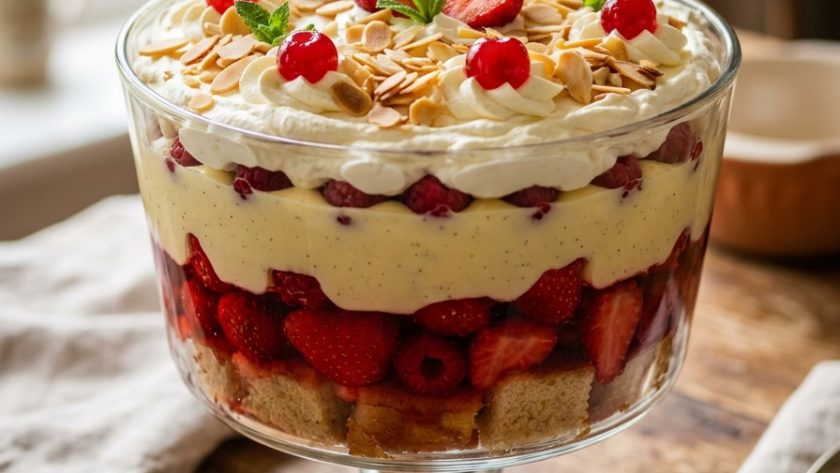
 There is no dessert more quintessentially British than a trifle. It is the dish that appears at Christmas, at Easter, at summer garden parties, at birthday celebrations — at any occasion, in fact, where you want to bring something that looks genuinely spectacular and tastes even better.
Mary Berry’s trifle is the definitive version. Every layer is exactly right. The sponge is soaked generously with sherry — or elderflower cordial if you prefer it alcohol-free — so it is moist and fragrant all the way through. The fruit layer is vivid and fresh.
The jelly sets softly around the sponge and fruit, binding everything together. The custard is homemade — thick, creamy, and deeply vanilla-flavoured — poured over while still warm so it sets to a beautiful, trembling consistency. And the cream on top is billowy and softly whipped, finished with whatever decoration makes your heart sing.
This is a dessert that rewards patience. Each layer needs time to set before the next goes on. But the process is simple and the result — when you carry that trifle bowl to the table and see everyone’s faces — is completely worth every moment.
Why Every Layer Matters
The sponge layer. The sponge is the foundation of the trifle. It absorbs the sherry or cordial and the jelly as they set, becoming soft, moist, and deeply flavoured. Use a good quality trifle sponge, Swiss roll, or homemade sponge cake — the better the sponge, the better the trifle.
The jelly layer. The jelly sets around the sponge and fruit, adding a gentle wobble and a bright fruit flavour. Make it with real fruit juice rather than a packet jelly for a significantly more sophisticated result — though a good quality packet jelly works perfectly well and is what most people use.
The custard layer. Homemade custard is the heart of a great trifle. It is richer, more deeply vanilla-flavoured, and has a silky quality that shop-bought custard cannot match. It takes 15 minutes and the difference is immediately and completely noticeable.
The cream layer. Softly whipped — not stiff. The cream should be billowy and generous, sitting on top of the custard like a cloud. Stiff cream looks less elegant and feels heavier on the palate.
Ingredients for Mary Berry Trifle
For the Sponge Layer
- 200g trifle sponges, Swiss roll slices, or homemade plain sponge cake, cut into pieces
- 4 tbsp dry sherry or elderflower cordial
- 4 tbsp good quality raspberry or strawberry jam
For the Fruit Layer
- 400g fresh strawberries, hulled and halved
- 200g fresh raspberries
- 150g fresh blueberries or blackberries
For the Jelly Layer
- 135g packet raspberry jelly (or make your own with 300ml raspberry juice, 3 gelatine leaves, and 2 tbsp caster sugar)
- 300ml boiling water
- 150ml cold water
For the Homemade Custard
- 6 large egg yolks
- 75g caster sugar
- 2 tbsp cornflour
- 600ml whole milk
- 200ml double cream
- 2 tsp vanilla extract or 1 vanilla pod, seeds scraped
For the Cream Topping
- 500ml double cream
- 2 tbsp icing sugar, sifted
- 1 tsp vanilla extract
To Decorate
- Fresh strawberries and raspberries
- Toasted flaked almonds
- Chocolate curls or sprinkles
- Edible flowers (optional)
- A dusting of icing sugar
How to Make Mary Berry Trifle — Step by Step
Step 1 — Prepare the Sponge Layer
Spread the trifle sponges or cake pieces with the jam. Arrange them jam-side up in a single layer across the base of a large trifle bowl — approximately 3 litre capacity. Press them down gently so they cover the base evenly.
Drizzle the sherry or elderflower cordial evenly over the sponge pieces. Leave for five minutes to soak in. The sponge should be moist and fragrant but not swimming in liquid.
Step 2 — Add the Fresh Fruit
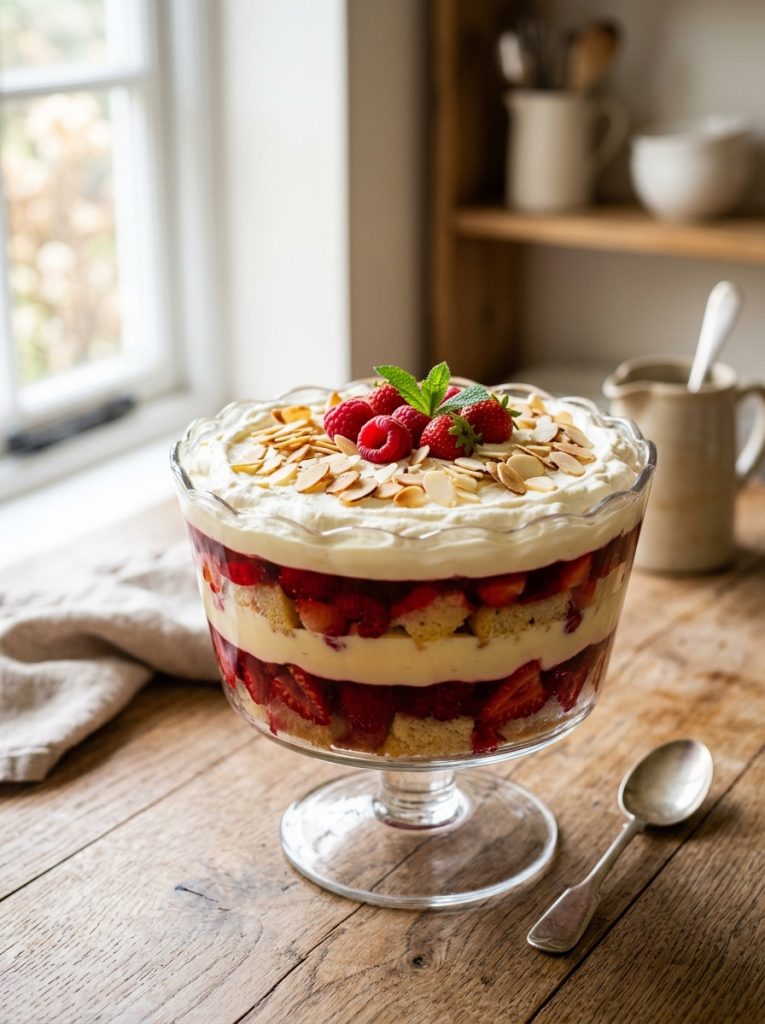
Scatter the fresh strawberries, raspberries, and blueberries evenly over the soaked sponge layer. Press some of the fruit gently against the side of the bowl — when viewed from the outside, this creates a beautiful layered effect that shows through the glass.
Step 3 — Make and Add the Jelly
Dissolve the jelly cube in 300ml of boiling water, stirring until completely dissolved. Add 150ml of cold water to cool it slightly.
Pour the jelly gently over the fruit and sponge layer. Do not pour too forcefully — you want the jelly to find its way around the fruit rather than displacing everything.
Refrigerate for at least 2 hours until the jelly is completely set before adding the custard. Do not rush this stage — liquid jelly will mix with the custard and you will lose the distinct layers.
Step 4 — Make the Homemade Custard
Whisk the egg yolks, caster sugar, and cornflour together in a large bowl until smooth and pale.
Heat the whole milk and double cream together in a saucepan over a medium heat until just below simmering — small bubbles will appear at the edges. Add the vanilla.
Pour the hot milk mixture slowly over the egg yolk mixture, whisking constantly as you pour. Once combined, pour everything back into the saucepan.
Cook over a medium-low heat, stirring constantly with a wooden spoon or silicone spatula, until the custard thickens enough to coat the back of a spoon — about 8 to 10 minutes. Draw your finger across the back of the spoon — the line should hold cleanly. Remove from the heat immediately.
Pour the warm custard through a fine sieve directly over the set jelly layer. The sieve catches any lumps or cooked egg strands, giving you a perfectly smooth custard. Leave to cool to room temperature, then refrigerate for at least 2 hours until completely set and cold.
Step 5 — Add the Cream Topping
Whip the double cream, icing sugar, and vanilla extract together until the cream holds soft, billowy peaks. Do not overwhip — stop while it still looks generous and cloud-like.
Spoon the whipped cream generously over the cold, set custard. Use the back of a spoon to create gentle swirls and peaks across the surface.
Step 6 — Decorate and Serve
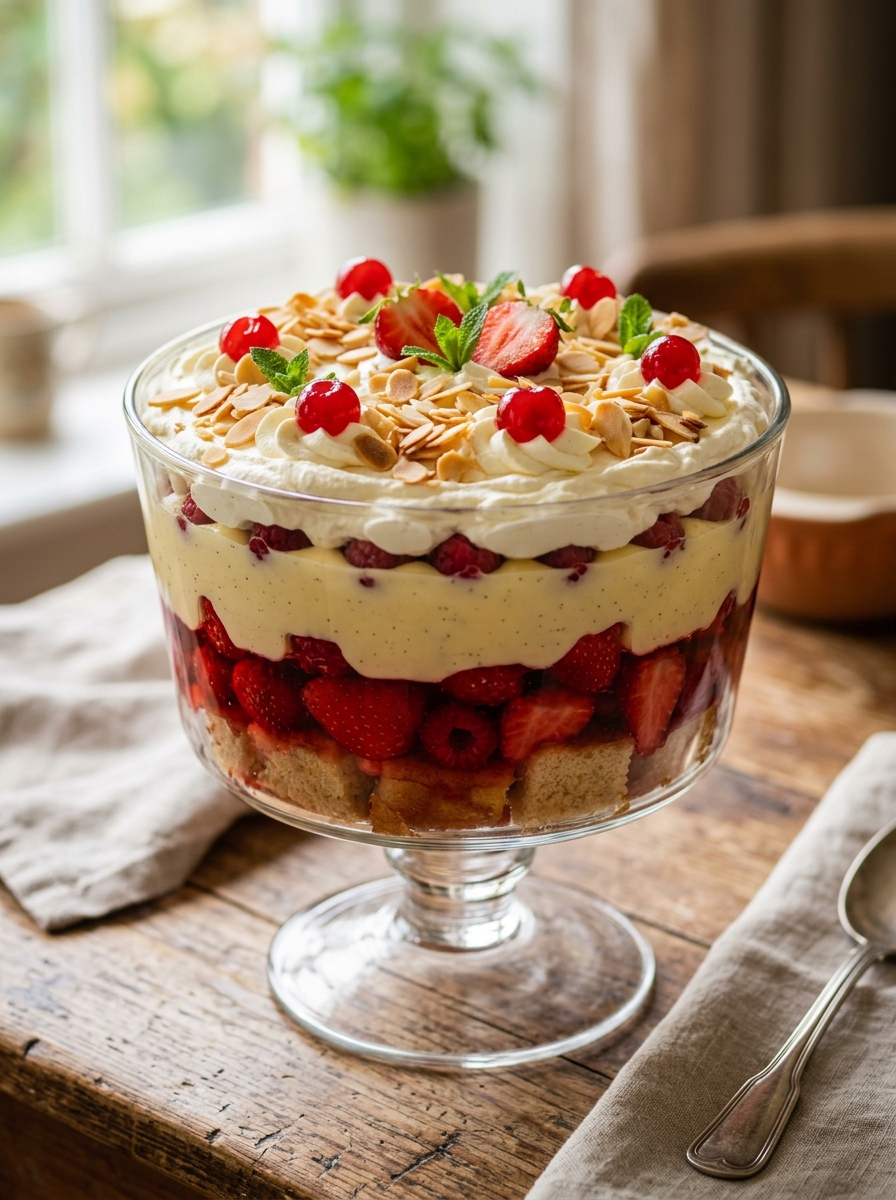
Decorate the cream layer with fresh strawberries and raspberries, toasted flaked almonds, chocolate curls, and edible flowers if using. A light dusting of icing sugar over the top adds a beautiful finishing touch.
Refrigerate until ready to serve. The trifle can be assembled up to this point and kept in the fridge for up to 4 hours before serving.
My Top Tips for the Perfect Mary Berry Trifle
Make the custard from scratch. I know shop-bought custard is convenient and produces an acceptable trifle. But homemade custard — thick, silky, deeply vanilla-flavoured — elevates a trifle from something people enjoy to something people remember. It takes 15 minutes and the difference is completely worth it.
Allow every layer to set before adding the next. This is the rule that separates a trifle with beautiful, distinct layers from a muddy, mixed-up bowl. The jelly must be completely set before the custard goes on. The custard must be cold and set before the cream goes on. Patience here produces a trifle that looks as spectacular as it tastes.
Use a glass bowl. The layers are the point of a trifle — the whole beauty of it is visible from the outside. A glass trifle bowl shows every layer clearly and makes the whole thing look genuinely magnificent. An opaque bowl hides all the work you have put in.
Be generous with the sherry. Four tablespoons sounds like a lot but once it soaks into the sponge it becomes a background fragrance and flavour rather than an overpowering hit. The sherry-soaked sponge is one of the things that distinguishes a proper grown-up trifle from a children’s version. Use a good dry or medium dry sherry.
Press fruit against the sides of the bowl. When you arrange the fruit layer, gently press some of the most beautiful pieces against the glass. The colourful layers of fruit visible through the glass are one of the most appealing aspects of a trifle and take about 30 extra seconds to achieve.
Decorate at the last possible moment. The cream can be added a few hours ahead, but the decorations — particularly fresh fruit — look most beautiful when added just before serving. Fresh strawberries placed on cream several hours in advance weep and discolour slightly.
Serving Suggestions
Carried to the table whole and served at the table for maximum impact — spooned into bowls or glasses. Always cold — a warm trifle is not a trifle. For individual servings at a dinner party, layer everything into individual glasses — the effect is beautiful and very elegant.
How to Store Mary Berry Trifle
In the fridge: Cover loosely with cling film and store for up to 2 days. The layers remain distinct and the flavours actually improve slightly overnight as everything melds together.
The assembled trifle cannot be frozen — the jelly, custard, and cream do not freeze well together. Make it fresh within 2 days of serving.
Mary Berry Trifle Recipe
Ingredients
Method
- Spread trifle sponges with jam. Arrange jam-side up in base of trifle bowl. Drizzle sherry or cordial over. Leave 5 minutes to soak.
- Scatter fresh fruit over sponge. Press some pieces against the glass sides.
- Dissolve jelly in 300ml boiling water. Add 150ml cold water. Pour gently over fruit and sponge. Refrigerate at least 2 hours until completely set.
- Whisk egg yolks, sugar, and cornflour until pale. Heat milk, cream, and vanilla to just below simmering. Pour slowly over egg mixture, whisking constantly. Return to pan and cook over medium-low heat, stirring constantly, until thick enough to coat a spoon. Pour through a fine sieve over set jelly. Cool to room temperature then refrigerate at least 2 hours until cold and set.
- Whip double cream, icing sugar, and vanilla to soft billowy peaks. Spoon over cold custard. Swirl gently.
- Decorate with fresh fruit, flaked almonds, chocolate curls, and edible flowers. Dust with icing sugar. Refrigerate until serving.
Notes
Frequently Asked Questions About Mary Berry Trifle
Can I make trifle the day before?
Yes — and it is often better made the day before. The sponge soaks up more flavour overnight, the layers set more firmly, and the whole thing becomes more cohesive. Add the cream topping and final decorations on the day of serving for the best appearance.
Can I make trifle without alcohol?
Absolutely — replace the sherry with elderflower cordial, orange juice, or a good quality fruit juice. The trifle will be slightly lighter in flavour but completely delicious and suitable for children and non-drinkers.
Can I use shop-bought custard?
Yes — a good quality fresh shop-bought custard works well. Use a thick, fresh custard from the chilled aisle rather than a tinned or carton version for the best result. But if you have never made your own, do try it once — the difference is remarkable.
Why is my jelly layer mixing with my custard?
The jelly was not completely set when the custard was added. The jelly needs at least 2 hours in the fridge — preferably more — to set firmly enough to support the warm custard without mixing. Always check that the jelly is fully set by pressing it gently — it should feel firm and not move.
Can I make individual trifles?
Yes — layer everything into individual glasses or glass bowls. They look beautiful and make serving at a dinner party very elegant. Use approximately one-eighth of each quantity per individual serving.
What sponge works best for trifle?
Shop-bought trifle sponges are the traditional choice and work very well. Swiss roll sliced into rounds gives you a beautiful jam swirl visible through the glass. Homemade Victoria sponge or Madeira cake cut into pieces is wonderful if you have some to use up. Avoid very dense or dry sponge as it does not absorb the sherry and jelly well.




Leave a Reply