
 Anna Louise
 There are certain recipes that feel less like cooking and more like an act of care. Bread and butter pudding is one of them. It is the dessert you make when you want to look after someone — when the weather is miserable, when the week has been hard, when comfort is the only thing on the menu.
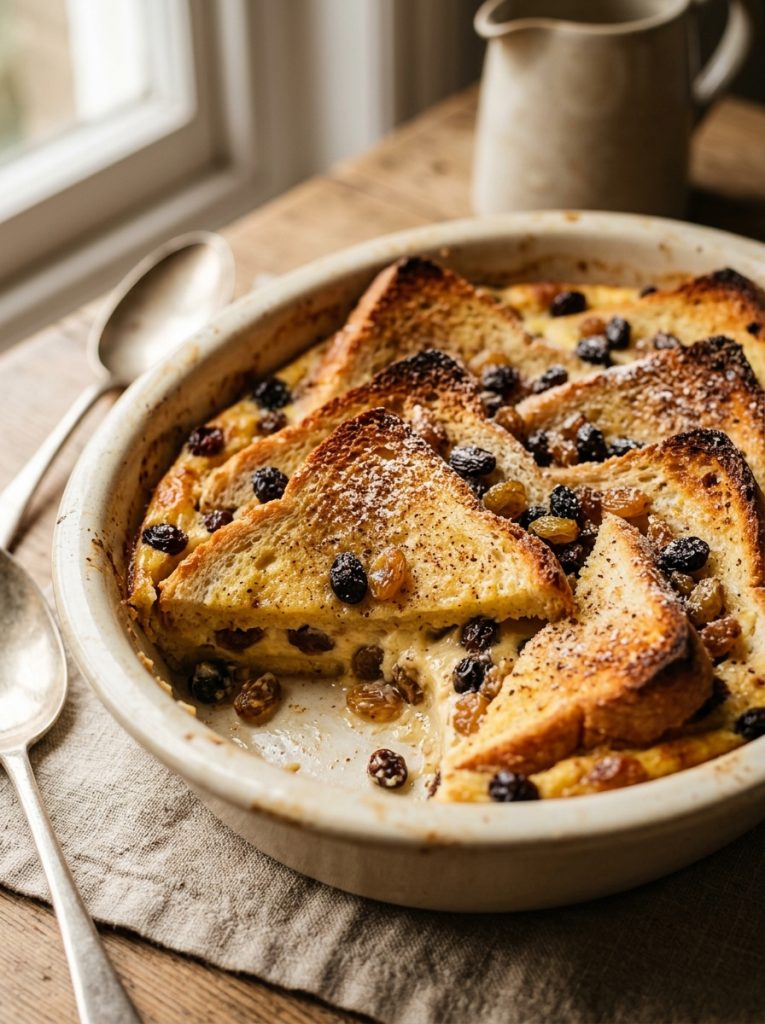
Mary Berry’s bread and butter pudding is the finest version of this classic I have ever made. The bread is buttered generously — not sparingly — and layered with plump, soaked sultanas and a whisper of cinnamon.
The custard that is poured over it is rich and creamy, made with double cream and whole milk and plenty of eggs, so it sets to a trembling, silky consistency that is completely wonderful.
The top layer of bread pokes up through the custard and bakes to a deep, golden, slightly crisp finish that provides a beautiful contrast to the soft, yielding layers beneath.
It is a dessert that asks very little of you and gives a great deal back. No special equipment, no unusual ingredients, nothing that is not already in most kitchens. Just good bread, good butter, good eggs, and a warm oven.
If you have been searching for the perfect Mary Berry bread and butter pudding recipe, this is exactly what you need.
What Makes This Bread and Butter Pudding So Good?
Generous butter. This is not the place for restraint. Each slice of bread should be buttered properly — right to the edges, with a thickness that you would be happy eating on its own. The butter melts into the custard during baking and enriches it enormously.
Double cream in the custard. A custard made with whole milk alone is pleasant. A custard made with half double cream and half whole milk is extraordinary — rich, silky, and deeply flavoured. The difference is immediately noticeable and completely worth the extra indulgence.
Soaking time. The assembled pudding should be left to soak for at least 30 minutes before baking — ideally an hour. This gives the bread time to absorb the custard fully, so every layer is saturated rather than having dry pockets of bread surrounded by wet custard.
A hot water bath. Baking the pudding in a roasting tin filled with hot water protects the custard from the direct heat of the oven, producing a set that is silky and trembling rather than scrambled and grainy. It takes two minutes to set up and makes a significant difference.
Ingredients for Mary Berry Bread and Butter Pudding
For the Pudding
- 8 thick slices of white bread, slightly stale (about 400g — a day-old loaf is ideal)
- 75g unsalted butter, softened, plus extra for greasing
- 75g sultanas
- 2 tbsp brandy or orange juice (for soaking the sultanas — optional but lovely)
- 1 tsp ground cinnamon
- ½ tsp freshly grated nutmeg
- 3 tbsp caster sugar
- Zest of 1 unwaxed lemon
For the Custard
- 4 large eggs
- 2 large egg yolks
- 75g caster sugar
- 300ml double cream
- 300ml whole milk
- 1 tsp vanilla extract
To Finish
- 2 tbsp demerara sugar, for sprinkling over the top
- A light dusting of freshly grated nutmeg
How to Make Mary Berry Bread and Butter Pudding — Step by Step
Step 1 — Soak the Sultanas
If using brandy or orange juice, place the sultanas in a small bowl and pour over the liquid. Leave to soak for at least 20 minutes — the sultanas will plump up beautifully and absorb the flavour. This is optional but it adds a wonderful depth to the finished pudding.
Step 2 — Prepare the Bread
Butter each slice of bread generously on one side — right to the edges, with a proper thickness of butter. Cut each slice diagonally into two triangles.
Step 3 — Layer the Pudding
Grease a deep ovenproof dish — approximately 28x20cm — generously with butter. Arrange half the bread triangles, buttered side up, in a single overlapping layer across the base of the dish. Scatter the soaked sultanas, cinnamon, half the caster sugar, and the lemon zest evenly over this layer.
Arrange the remaining bread triangles on top, buttered side up, in another overlapping layer. The points of the triangles should poke up above the custard line — these will catch in the oven and turn golden and slightly crisp, which is the most wonderful part of the whole pudding.
Sprinkle the remaining caster sugar over the top layer.
Step 4 — Make the Custard
Whisk the eggs, egg yolks, and caster sugar together in a large jug until combined. Add the double cream, whole milk, and vanilla extract. Whisk until smooth and well combined. Do not over-whisk — you do not want a frothy custard.
Step 5 — Pour and Soak
Pour the custard slowly and evenly over the layered bread, making sure every piece of bread is wetted. Use the back of a spoon to gently press the top layer of bread down into the custard — this helps the bread absorb it more thoroughly.
Leave to soak for at least 30 minutes at room temperature — or up to an hour. The longer the soak, the more evenly saturated the pudding will be. Do not skip this step.
Step 6 — Preheat and Prepare the Water Bath
Preheat your oven to 180°C / 160°C fan / Gas 4. Place the pudding dish inside a large roasting tin. Sprinkle the demerara sugar and a little freshly grated nutmeg over the top of the pudding.
Carefully pour enough just-boiled water into the roasting tin to come halfway up the sides of the pudding dish. This water bath protects the custard during baking and gives you a silky, trembling set rather than a grainy one.
Step 7 — Bake
Carefully transfer the roasting tin and pudding dish to the oven — do this slowly and steadily to avoid sloshing the hot water. Bake for 35 to 40 minutes until the custard is just set — it should wobble very slightly in the centre when you give the dish a gentle shake, and the bread on top should be deep golden brown and crisp at the tips.
Do not overbake — a bread and butter pudding that is baked too long loses the silky, trembling quality of the custard and becomes grainy and dry.
Step 8 — Rest and Serve
Remove the pudding dish from the water bath carefully. Leave to rest for five to ten minutes before serving — this allows the custard to settle and firm up very slightly, making it easier to portion cleanly.
Serve warm, spooned generously into bowls, with cold pouring cream, warm custard, or a scoop of vanilla ice cream alongside.
My Top Tips for the Best Bread and Butter Pudding
Use slightly stale bread. Fresh bread is too soft and absorbs the custard too quickly, becoming mushy before it has time to set properly. Day-old bread — left out uncovered overnight — has a firmer structure that holds up to the custard during the soaking time and baking. Slightly stale bread is not a compromise here — it is genuinely the right ingredient.
Butter the bread generously. I said this in the intro and I am saying it again. Bread and butter pudding is not a diet dessert. The butter is half the point. Butter right to the edges of every slice with a proper thickness — if it looks like too much, it is probably about right.
Do not skip the soaking time. Thirty minutes minimum. An hour is better. The soaking is what transforms a layered bread-and-custard assembly into a unified, silky pudding. Without it, you get patches of soggy bread and patches of dry bread rather than an evenly saturated, beautifully set pudding.
Use the water bath. I know it feels like an extra step. It takes two minutes to set up and it is genuinely the difference between a custard that sets to a silky, trembling consistency and one that scrambles and becomes grainy. It is worth it every time.
Watch the wobble. The custard should still wobble very slightly in the centre when you take the pudding out. That wobble is the silky, just-set custard that is the hallmark of a great bread and butter pudding. No wobble means overcooked. Trust the wobble.
Rest before serving. Five to ten minutes out of the oven lets the custard settle and makes portioning much cleaner. Serving immediately means the custard is at its most liquid and the portions can be ragged and messy.
Serving Suggestions
Warm from the oven, spooned into deep bowls with cold pouring cream — the contrast of warm pudding and cold cream is one of the great dessert combinations. With warm vanilla custard poured over for the ultimate comfort version.
With a scoop of vanilla ice cream for something more celebratory. A light dusting of icing sugar just before serving makes it look very beautiful indeed.
How to Store Mary Berry Bread and Butter Pudding
In the fridge: Cover with cling film and store for up to 3 days. Reheat individual portions in the microwave for 2 to 3 minutes, or reheat the whole pudding covered with foil in a 160°C oven for 20 minutes.
In the freezer: Bread and butter pudding freezes reasonably well — freeze in individual portions, wrapped tightly, for up to 2 months. The custard may separate slightly on defrosting but comes back together when reheated gently. Defrost overnight in the fridge before reheating.
Mary Berry Bread and Butter Pudding
Ingredients
Method
- Soak sultanas in brandy or orange juice for 20 minutes if using. Set aside.
- Butter each slice of bread generously on one side. Cut into triangles.
- Grease a deep 28x20cm ovenproof dish. Layer half the bread triangles buttered side up. Scatter over sultanas, cinnamon, half the caster sugar, and lemon zest. Add remaining bread triangles buttered side up. Sprinkle with remaining sugar.
- Whisk eggs, yolks, and caster sugar together. Add double cream, milk, and vanilla. Whisk until smooth.
- Pour custard slowly over the bread. Press bread down gently. Leave to soak for 30–60 minutes.
- Preheat oven to 180°C / 160°C fan / Gas 4. Place pudding dish in a large roasting tin. Sprinkle demerara sugar and nutmeg over the top. Pour enough just-boiled water into the roasting tin to come halfway up the sides of the dish.
- Bake for 35–40 minutes until custard is just set with a slight wobble in the centre and the bread tips are deep golden.
- Remove from water bath. Rest 5–10 minutes. Serve warm with pouring cream, custard, or ice cream.
Notes
Frequently Asked Questions About Mary Berry Bread and Butter Pudding
What is the best bread for bread and butter pudding?
A good quality white loaf — slightly stale — is the classic choice and gives the best result. Brioche makes an extraordinarily indulgent version with a richer, more tender crumb. Croissants, cut in half and buttered, make a wonderful French-inspired version. Avoid very crusty bread as the crust can become unpleasantly tough in the custard.
Can I make bread and butter pudding ahead of time?
Yes — assemble the pudding, pour over the custard, and refrigerate overnight. The bread will absorb the custard thoroughly overnight, which actually gives a better result than a 30-minute soak. Take it out of the fridge 30 minutes before baking to come to room temperature, then bake as directed.
Why is my bread and butter pudding watery?
Either the custard was not made with enough eggs, the pudding was not soaked for long enough before baking, or it was underbaked. Make sure you use the full quantity of eggs and yolks, allow a full soaking time, and bake until the custard is just set with a very slight wobble in the centre.
Can I add marmalade to bread and butter pudding?
Yes — spreading each slice of bread with a thin layer of good quality marmalade before buttering gives a wonderful bitter-sweet citrus note that works beautifully with the rich custard. Particularly lovely if you are using brioche as the bread.
Can I make this without a water bath?
You can — place the dish directly on the oven shelf. The custard will still set but may have a slightly less silky, more firmly set texture. If skipping the water bath, reduce the oven temperature by 10°C and check the pudding a few minutes earlier.
Can I use semi-skimmed milk instead of whole milk?
You can, but the custard will be noticeably less rich and creamy. The combination of double cream and whole milk is what gives this pudding its extraordinary silky quality. If you want to reduce the richness slightly, use 200ml double cream and 400ml whole milk — but I would not go lower than that.


Leave a Reply