
 Anna Louise
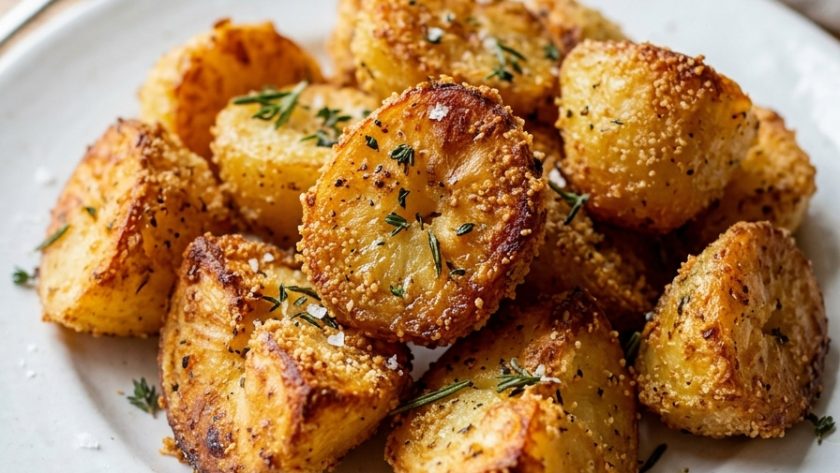
 The semolina roast potato is Mary Berry’s secret weapon — and once you know it, you will never make roast potatoes any other way.
A light coating of fine semolina over the par-boiled, roughed-up potato gives the outside surface a texture that holds fat and crisps to a shattering, golden crust that no plain roast potato can match.
The semolina does not add flavour — it adds texture. The tiny grains of semolina stick to the roughened surface of the par-boiled potato and create hundreds of tiny points of contact between the fat and the potato as it roasts.
Each one crisps individually, giving a surface of extraordinary, irregular crunchiness that is completely different from — and completely superior to — a plain roast potato.
This is the recipe that makes people stop talking at the Sunday lunch table and go quiet for a moment when they take the first bite.
Why Semolina Works
The science is straightforward. Par-boiled potatoes have a roughened, slightly grainy outer surface from the fluffing process. Plain roasted, these surface irregularities crisp to a reasonably good crust.
Semolina coated over this surface adds an additional layer of starch — fine, granular, absorbent. The hot fat in the roasting tin soaks into this semolina layer immediately when the potato goes in.
As the potato roasts, the semolina and fat together form a crust that is significantly thicker, more irregular, and more dramatically crispy than the potato surface alone could produce.
The result is the finest roast potato you can make in a domestic oven.
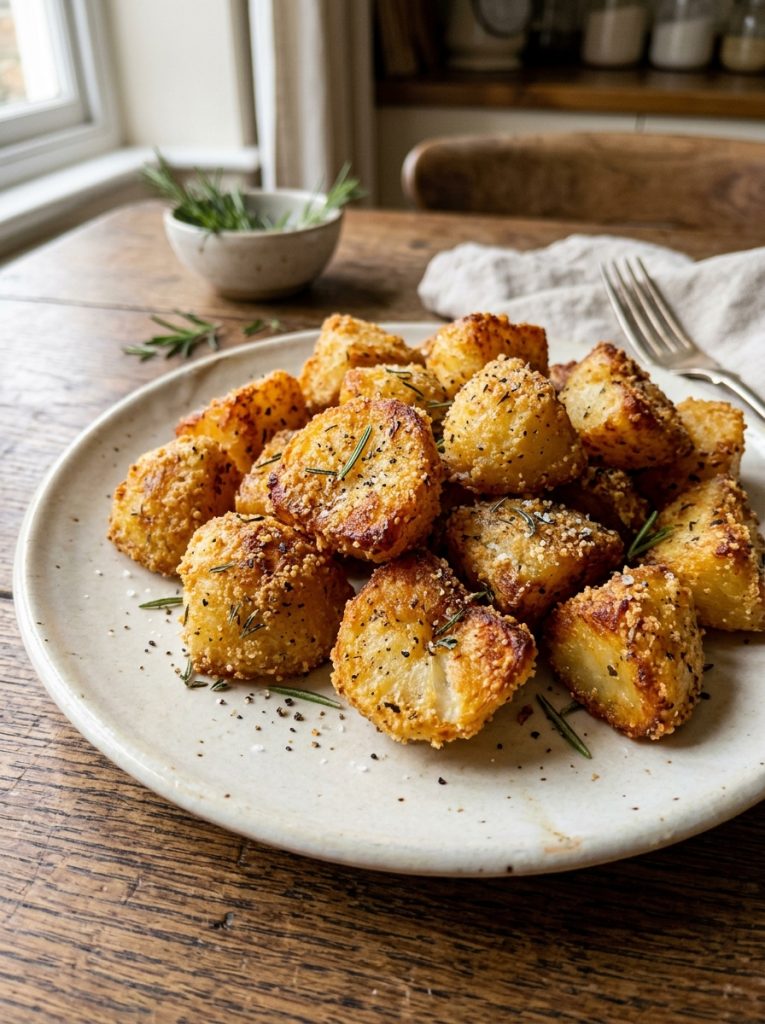
Ingredients for Mary Berry Roast Potatoes with Semolina
- 1.5kg floury potatoes (Maris Piper or King Edward — always)
- 4 tbsp fine semolina
- 4 tbsp sunflower oil or goose fat (goose fat gives the finest result)
- 1 tsp fine salt
- Freshly ground black pepper
- 4 garlic cloves, unpeeled (optional — add to the tin for fragrance)
- 4 sprigs fresh rosemary (optional — adds aroma)
How to Make Mary Berry Roast Potatoes with Semolina — Step by Step
Step 1 — Peel and Par-Boil
Peel the potatoes and cut into even-sized chunks — roughly golf-ball sized or slightly larger. Uniform sizing means they cook evenly.
Place in a large saucepan of well-salted cold water. Bring to the boil. Cook for eight to ten minutes from the boil — until the outside of each potato is starting to soften and the tip of a knife enters easily but the potato still has a firm centre. They must be par-boiled, not fully cooked. Over-par-boiled potatoes disintegrate when shaken and do not hold together in the oven.
Step 2 — Preheat the Fat
While the potatoes par-boil, place the sunflower oil or goose fat in a large roasting tin. Put the tin in the oven and preheat to 220°C / 200°C fan / Gas 7. The fat must be shimmering and smoking hot before the potatoes go in.
Step 3 — Drain and Rough Up
Drain the par-boiled potatoes thoroughly. Return to the empty saucepan over a low heat for one minute, shaking the pan, to drive off all excess moisture — wet potatoes steam rather than roast.
Shake the saucepan firmly with the lid on — or toss with a spoon — until the outside of each potato chunk is visibly roughened, fluffy, and slightly broken down at the edges. The rougher the surface, the crispier the final potato. Do not be timid — shake vigorously.
Step 4 — Coat with Semolina
Scatter the fine semolina over the roughened potatoes. Season with salt and pepper. Toss to coat every surface evenly — the semolina should adhere to the rough surface of each potato.
Step 5 — Roast
Working very quickly — the fat must be smoking hot when the potatoes go in — remove the roasting tin from the oven and carefully add the semolina-coated potatoes in a single layer. They should sizzle immediately and dramatically when they hit the hot fat.
Add the unpeeled garlic cloves and rosemary sprigs around the potatoes if using.
Return immediately to the oven. Roast for 45 to 55 minutes, turning once or twice during cooking, until the potatoes are deeply golden all over and the semolina crust is shatteringly crispy.
Do not turn them too early — the crust needs time to set before it will release cleanly from the tin.
Step 6 — Drain and Serve
Transfer the finished potatoes to a warm serving dish using a slotted spoon — leave the excess fat in the tin. Serve immediately.
My Top Tips For Mary Berry Roast Potatoes with Semolina
Maris Piper or King Edward only. Waxy potatoes have too low a starch content to produce a fluffy interior and a crispy exterior. Floury potatoes — Maris Piper or King Edward — have the high starch content that makes the inside fluffy and the outside crispy. Never use anything else for roast potatoes.
The fat must be smoking. The same principle as Yorkshire pudding — smoking fat creates an immediate, dramatic reaction when the potato hits the tin, sealing the outside and beginning the crisping process from the first second. Fat that is merely warm gives pale, soft, slightly greasy potatoes.
Drive off all moisture before adding semolina. One minute over low heat in the empty saucepan removes the last traces of surface moisture from the par-boiled potatoes. Wet potatoes steam rather than roast and will not develop a crispy crust regardless of how hot the fat is.
Shake vigorously to roughen the surface. The rougher the surface before the semolina is added, the more the semolina can adhere and the crispier the finished potato. Shake or toss the potatoes more firmly than feels comfortable. The slightly broken-down edges are where the crispiest bits form.
Turn only once during roasting. Turn the potatoes once — about halfway through — to ensure even browning. Turning too frequently disturbs the forming crust and prevents it from developing properly.
Do not crowd the tin. Potatoes need space for the heat to circulate. A crowded tin produces steamed potatoes with a soft exterior. Use two tins if needed.
Serving Suggestions
With a traditional British roast — beef, chicken, lamb, or pork. With Yorkshire pudding and all the trimmings on a Sunday. Alongside any main course that benefits from the finest possible roast potato.
How to Store Mary Berry Roast Potatoes with Semolina
At room temperature: Best eaten immediately. Store in an airtight container for up to 2 days — reheat in a 220°C oven for ten to twelve minutes to restore the crunch.
In the freezer: Freeze par-boiled, semolina-coated potatoes (before roasting) on a tray until solid, then store in a freezer bag for up to 3 months. Roast from frozen at 220°C for 55 to 60 minutes.
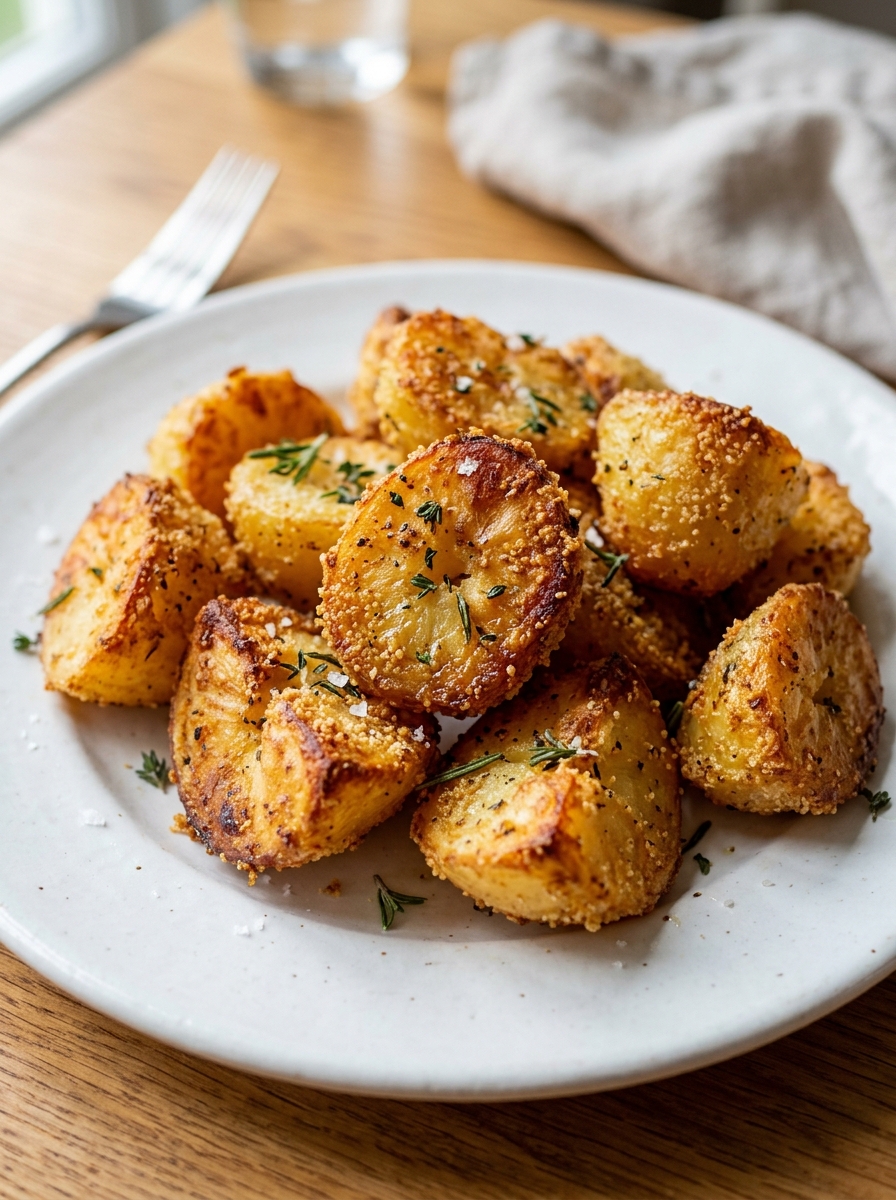
Mary Berry Roast Potatoes with Semolina Recipe
Ingredients
Method
- Preheat oven to 220°C / 200°C fan / Gas 7. Place oil or goose fat in a large roasting tin — heat in oven until smoking.
- Par-boil potatoes in well-salted water from cold 8–10 minutes from the boil until just yielding at the edges. Drain thoroughly. Return to empty pan over low heat 1 minute — shake to dry.
- Shake potatoes firmly with lid on until visibly roughened and fluffy at the edges.
- Scatter semolina, salt, and pepper over potatoes. Toss to coat every surface.
- Working quickly, add potatoes to the smoking fat — they should sizzle immediately. Add garlic and rosemary if using. Return to oven immediately.
- Roast 45–55 minutes, turning once halfway, until deeply golden and shatteringly crispy all over. Drain on a slotted spoon. Serve immediately.
Notes
Frequently Asked Questions
Can I use fine polenta instead of semolina?
Yes — fine polenta gives a similar result to semolina and is a good substitute. The crust is slightly different in character but equally crispy.
Can I use plain flour instead of semolina?
You can — plain flour gives a reasonably good result. Semolina gives a better, more distinctive crust. The coarser texture of semolina creates more irregular crisping points than flour.
Can I use butter instead of oil?
Butter burns at the temperatures needed for great roast potatoes. Use sunflower oil, vegetable oil, or goose fat. Goose fat gives the finest flavour and arguably the finest crust.
Why are my roast potatoes not crispy?
The most common causes are: the fat was not hot enough, the potatoes were not dried properly, the tin was overcrowded, or the potatoes were not roughened enough before the semolina was added. Address each one.
Can I prepare these ahead?
Yes — par-boil, rough up, and coat with semolina up to several hours ahead. Keep in the fridge uncovered so the surface dries further. Roast as directed when needed. The pre-drying in the fridge can actually improve the crust.



Leave a Reply