
 Anna Louise
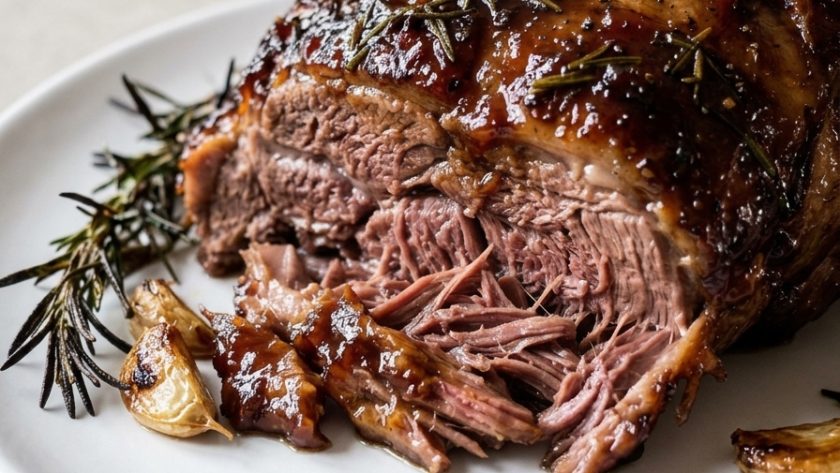
 Slow roasted lamb is one of the most rewarding Sunday lunch recipes in British cooking — the kind of thing that transforms a standard weekend into something that feels properly celebratory.
It requires almost no active effort, produces meat so tender it pulls apart at the touch of a fork, and fills the house with a smell that makes everyone count down the hours until lunch.
This recipe covers slow roasted lamb in its broader sense — applicable to both shoulder and leg, depending on what you have and how you want to serve it — and it complements the slow roast lamb shoulder recipe elsewhere on this site, which covers that specific cut in detail.
Here the focus is on the technique of slow roasting lamb generally, the flavouring options, and the principles that apply regardless of which cut you are using.
Shoulder Versus Leg for Slow Roasting
Both shoulder and leg can be slow roasted, but they produce different results and suit different cooking times.
Shoulder has more fat and connective tissue and is the superior cut for long, slow roasting. Cooked low and slow for four to five hours, the fat renders completely and the collagen converts to gelatin, producing meat of extraordinary richness, tenderness, and depth. It pulls apart rather than carving — which is part of its considerable charm.
Leg has less fat and is leaner. It can be slow roasted but requires a shorter time — two to two and a half hours at 160°C — or it becomes too dry. The result is tender and flavourful but more suited to carving than pulling.
For the most dramatic, most forgiving, and most impressive result, shoulder is always the recommendation.
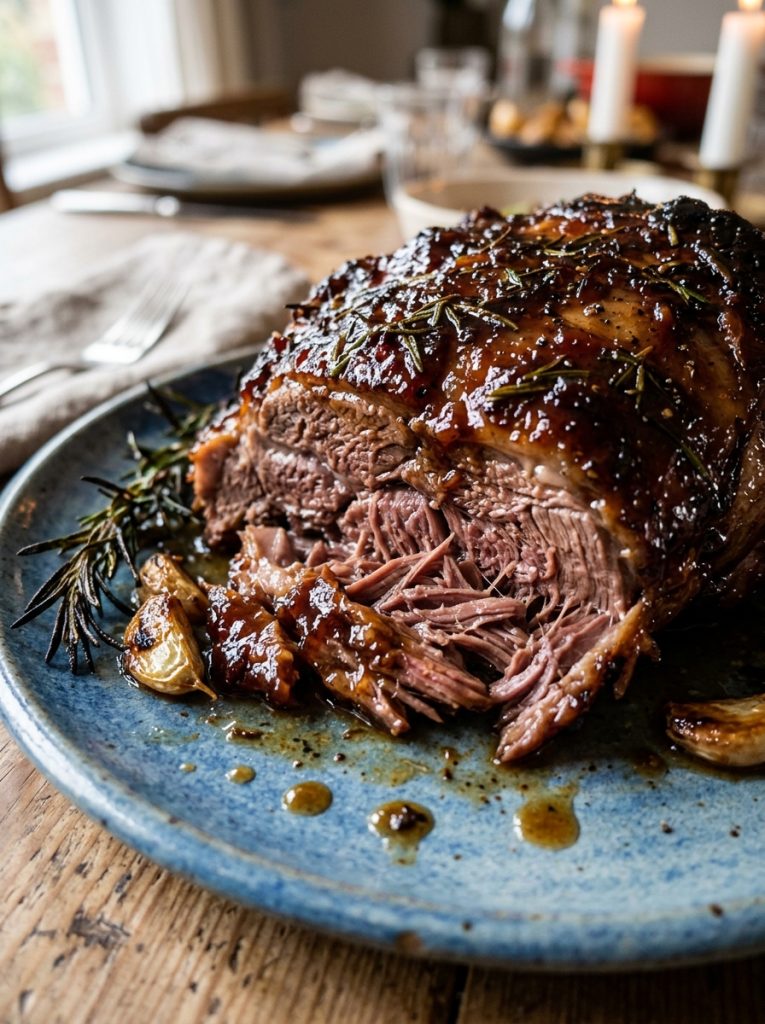
Ingredients for Mary Berry Slow Roasted Lamb
- 2 to 2.5kg bone-in lamb shoulder or leg
- 6 garlic cloves — 3 halved for studding, 3 crushed for the paste
- 6 sprigs fresh rosemary — 3 broken into small sprigs for studding, 1 tbsp leaves from the rest
- 1 tbsp fresh thyme leaves
- Zest of 1 unwaxed lemon
- 2 tbsp olive oil
- 1 tsp fine salt
- 1 tsp ground cumin (optional — adds a warm depth)
- Freshly ground black pepper
- 200ml red wine or lamb stock
- 200ml water
- 2 onions, quartered (placed under the lamb in the tin)
How to Make Mary Berry Slow Roasted Lamb — Step by Step
Step 1 — Prepare the Herb Paste and Stud the Lamb
Remove the lamb from the fridge one hour before cooking. Using a sharp knife, make 12 deep cuts all over the lamb. Push a piece of garlic and a small rosemary sprig into each cut.
Make the herb paste by combining the crushed garlic, rosemary leaves, thyme leaves, lemon zest, olive oil, cumin if using, salt, and pepper. Mix to a rough paste. Rub this all over the lamb, getting into every cut and crevice.
Step 2 — Marinate
For the best flavour, leave the herb-rubbed lamb at room temperature for 30 minutes before roasting. For an exceptional result, cover and refrigerate overnight after rubbing, then bring to room temperature for one hour before roasting.
Step 3 — Prepare the Roasting Tin
Preheat your oven to 220°C / 200°C fan / Gas 7. Place the quartered onions in the base of a large roasting tin. Rest the lamb on top of the onions — they support it, add flavour to the pan juices, and prevent the base of the lamb from sitting directly in fat.
Pour the wine and water around the lamb.
Step 4 — Initial Blast and Slow Roast
Roast uncovered at 220°C for 20 minutes to develop colour and begin rendering the fat.
Reduce the oven to 160°C / 140°C fan / Gas 3. Cover the tin very tightly with two layers of foil — crimp firmly all around the edges. Return to the oven.
For shoulder: roast for a further 4 to 4.5 hours until completely falling from the bone.
For leg: roast for a further 1.5 to 2 hours until tender but still carveable.
Check every hour and add a splash of water if the liquid has completely evaporated.
Step 5 — Uncover and Finish
Remove the foil for the final 30 minutes of cooking. This allows the outside to crisp and colour further.
Step 6 — Rest and Serve
Remove from the oven. Cover loosely with foil. Rest for 20 to 30 minutes minimum. During resting, strain the pan juices into a small saucepan, skim the fat, and reduce briefly for a concentrated, deeply flavoured gravy.
Pull the shoulder apart with two forks or carve the leg. Serve with the gravy.
My Top Tips For Mary Berry Slow Roasted Lamb Leg
Overnight marinating makes a significant difference. The herbs and garlic penetrate more deeply into the meat and the flavour of the finished lamb is noticeably more complex and aromatic. If you can plan ahead, marinate overnight.
The onion base is important. Quartered onions under the lamb do three things — they prevent the base of the lamb from sitting in rendered fat, they add sweetness and flavour to the pan juices, and they give the lamb a slight elevation so the heat circulates more evenly around it.
The foil seal must be tight for a long braise. Any gaps mean steam escapes, the liquid evaporates faster, and the lamb can become dry. Crimp the foil firmly all around.
Always rest for at least 20 minutes. The resting period is not optional — it allows the juices to redistribute through the meat. Pulled or carved without resting, the juices run out and the meat is noticeably less juicy.
The pan juices make exceptional gravy. After the slow roast, the pan juices are deeply flavoured — a mixture of rendered lamb fat, wine, onion, and herb infusion. Strained and reduced, they make the finest lamb gravy you will ever taste.
Serving Suggestions
With roast potatoes and minty peas — the classic Sunday lunch. With dauphinoise potatoes for something more indulgent. With flatbreads, yoghurt, and a herb salad for a more casual sharing approach. With roasted vegetables alongside for a complete one-tin dinner.
How to Store Mary Berry Slow Roasted Lamb Leg
In the fridge: Store pulled or carved lamb in its juices for up to 3 days. Reheat gently with a splash of stock.
In the freezer: Freeze pulled lamb with its juices for up to 3 months. Defrost overnight in the fridge and reheat gently.
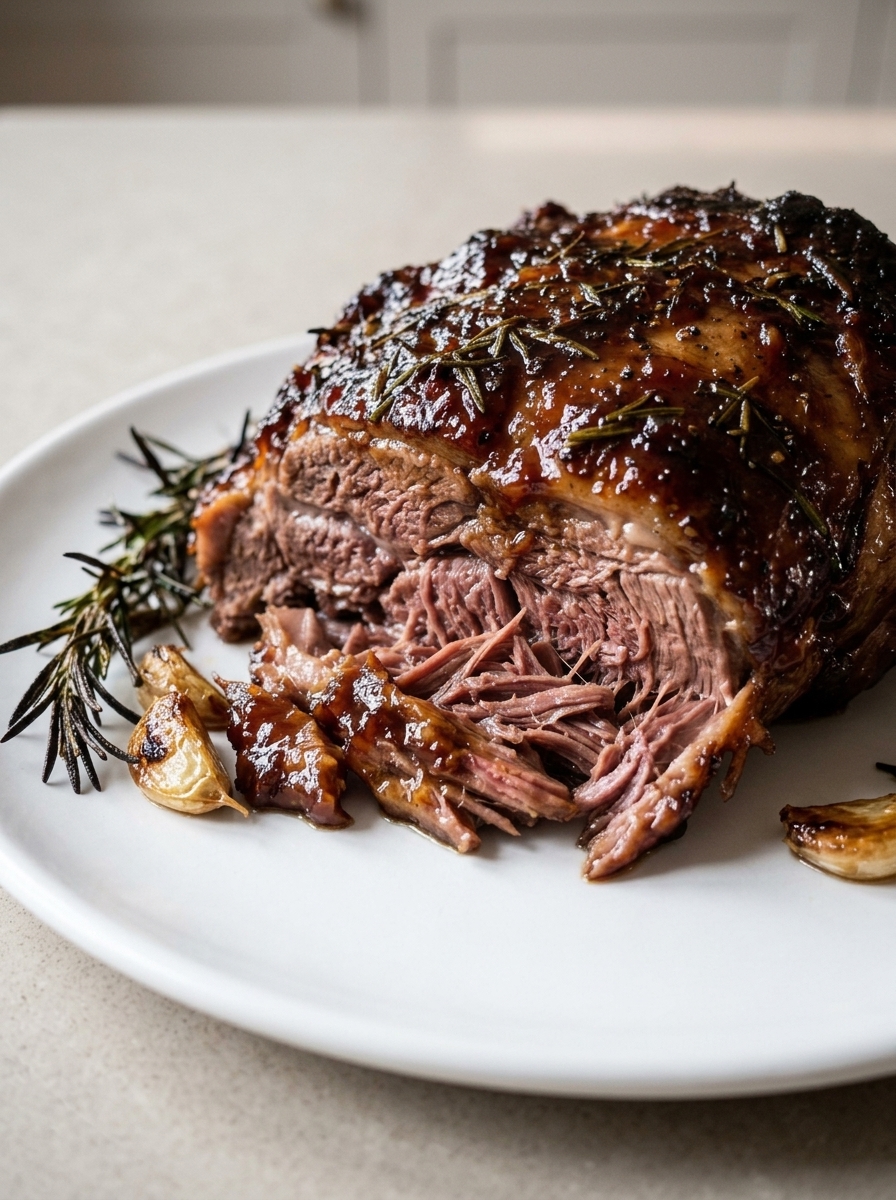
Mary Berry Slow Roasted Lamb Leg Recipe
Ingredients
Method
- Remove lamb from fridge 1 hour before cooking. Make 12 deep cuts. Push garlic and rosemary into each cut.
- Mix crushed garlic, rosemary leaves, thyme, lemon zest, oil, cumin, salt, and pepper to a paste. Rub all over the lamb. Leave 30 minutes minimum — overnight in fridge for best flavour.
- Preheat oven to 220°C / 200°C fan / Gas 7. Place onions in roasting tin. Rest lamb on top. Pour wine and water around.
- Roast uncovered 20 minutes. Reduce to 160°C / 140°C fan / Gas 3. Cover tightly with double foil — crimp firmly. Roast: shoulder 4–4.5 hours, leg 1.5–2 hours. Check hourly and add water if needed.
- Remove foil for final 30 minutes.
- Rest 20–30 minutes covered loosely with foil. Strain and reduce pan juices for gravy. Pull or carve. Serve with gravy.
Notes
Frequently Asked Questions
What is the difference between this and the slow roast lamb shoulder recipe on this site?
The slow roast lamb shoulder recipe covers that specific cut in detail with precise timings and method. This recipe covers slow roasted lamb more broadly — applicable to both shoulder and leg — and focuses on the general technique, flavouring, and principles. Both use the same low-and-slow approach.
Can I add vegetables to the roasting tin?
Yes — root vegetables added around the lamb in the final two hours of cooking absorb the pan juices and become wonderfully flavoured. Potatoes, carrots, and parsnips all work beautifully.
Can I cook this in a slow cooker?
Yes — brown the lamb first in a very hot pan to develop colour, then transfer to the slow cooker with the wine and aromatics. Cook on LOW for 8 to 10 hours. The result is excellent though the lamb will not have the same golden exterior as oven-roasted.
Why is my lamb dry?
Either it was a leg rather than shoulder and cooked too long, the foil seal had gaps and the liquid evaporated, or it was not rested properly. Shoulder is the most forgiving cut for slow roasting.



Leave a Reply