
 Anna Louise
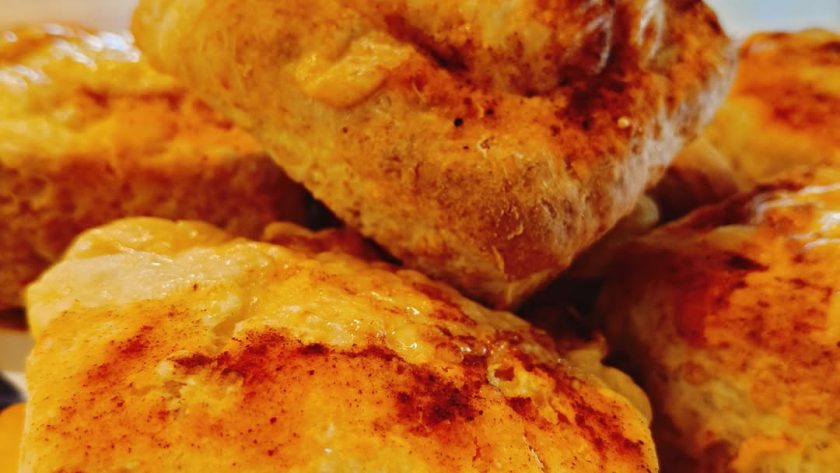
 A great cheese scone is one of the most satisfying things to come out of a domestic oven. Crisp and golden on the outside, soft and tender inside, packed with the sharp, savoury flavour of good mature cheese — and ready, from mixing bowl to cooling rack, in under 30 minutes.
Mary Berry’s cheese scone recipe is the one I have made more times than I can count, and it has never once let me down.
The technique is the same rubbing-in method as a plain scone, but the addition of mature Cheddar — stirred through the dough and scattered on top — gives these scones a depth of savoury flavour and a beautifully golden, slightly cheesy crust that plain scones simply cannot match.
These are the scones I make for weekend breakfasts, for packed lunches, for afternoon tea when I want something savoury alongside the sweet options. They are wonderful warm from the oven with cold butter.
They are equally good split and filled with mature Cheddar and a little chutney. And they are, without question, one of the most popular things I bake for other people.
What Makes a Perfect Cheese Scone?
Cold butter, rubbed in quickly. The butter must be cold — straight from the fridge — and rubbed in fast enough that it does not warm up in your hands. Small pieces of cold butter, incompletely rubbed in, create the steam pockets during baking that give scones their characteristic light, layered rise.
Good quality mature Cheddar. The cheese is the dominant flavour in this recipe. A sharp, properly aged mature Cheddar — with a pronounced, slightly tangy flavour — gives you a scone that tastes genuinely of cheese. A mild or medium Cheddar gives a blander result. Use the most mature Cheddar you can find.
Minimal handling once the liquid goes in. Scone dough that is overworked becomes tough and does not rise well. The moment the dough comes together, stop. Rough and slightly sticky is correct.
Ingredients for Mary Berry Cheese Scones
For the Cheese Scones
- 225g self-raising flour, sifted
- 1 tsp baking powder
- ½ tsp fine salt
- ½ tsp mustard powder (optional but lovely — it amplifies the cheese flavour)
- ¼ tsp cayenne pepper (optional — adds a subtle warmth)
- 50g unsalted butter, cold and cubed
- 125g mature Cheddar, coarsely grated (plus an extra 25g for the tops)
- 1 large egg, beaten
- 4–5 tbsp whole milk, plus extra for brushing
How to Make Mary Berry Cheese Scones — Step by Step
Step 1 — Preheat and Prepare
Preheat your oven to 220°C / 200°C fan / Gas 7. Line a large baking tray with baking parchment or lightly grease it.
A hot oven is essential for scones — the blast of high heat causes the butter pockets in the dough to release steam quickly, creating lift. A cool oven produces flat, dense scones.
Step 2 — Rub in the Butter
Sift the self-raising flour, baking powder, salt, mustard powder, and cayenne (if using) into a large bowl. Add the cold cubed butter. Using your fingertips, rub the butter into the flour with quick, light movements, lifting the mixture and letting it fall back into the bowl to keep it cool and airy.
Work until the mixture resembles fine breadcrumbs with a few slightly larger pea-sized pieces of butter still visible — these larger pieces are what give the scones their characteristic lightness.
If your hands feel warm, pop the bowl in the fridge for five minutes to chill everything down before continuing.
Step 3 — Add the Cheese
Stir the 125g of grated Cheddar through the flour mixture, tossing it to distribute evenly.
Step 4 — Add the Liquid
Make a well in the centre. Pour in the beaten egg and four tablespoons of the milk. Mix quickly and lightly with a round-bladed knife — cutting through the mixture in short strokes rather than stirring — until a soft, slightly sticky dough just comes together. Add the remaining tablespoon of milk only if the dough seems dry.
The dough should be soft enough to pat out but not wet or sloppy. Stop mixing the moment it coheres.
Step 5 — Shape and Cut
Turn the dough out onto a lightly floured surface. Pat it out gently — do not roll — to a thickness of about 2.5cm. This thickness is important — too thin and the scones will be flat and dense; thick enough and the rise will be impressive.
Using a 5cm round cutter, cut out rounds with a sharp, straight downward press — do not twist the cutter. Twisting seals the cut edges and prevents the scones from rising evenly. Re-gather the trimmings once, pat out again, and cut more rounds. You should get approximately 8 to 10 scones.
Step 6 — Top and Bake
Place the scones on the prepared tray, spaced slightly apart. Brush the tops lightly with a little milk. Scatter the reserved 25g of grated Cheddar over the top of each scone.
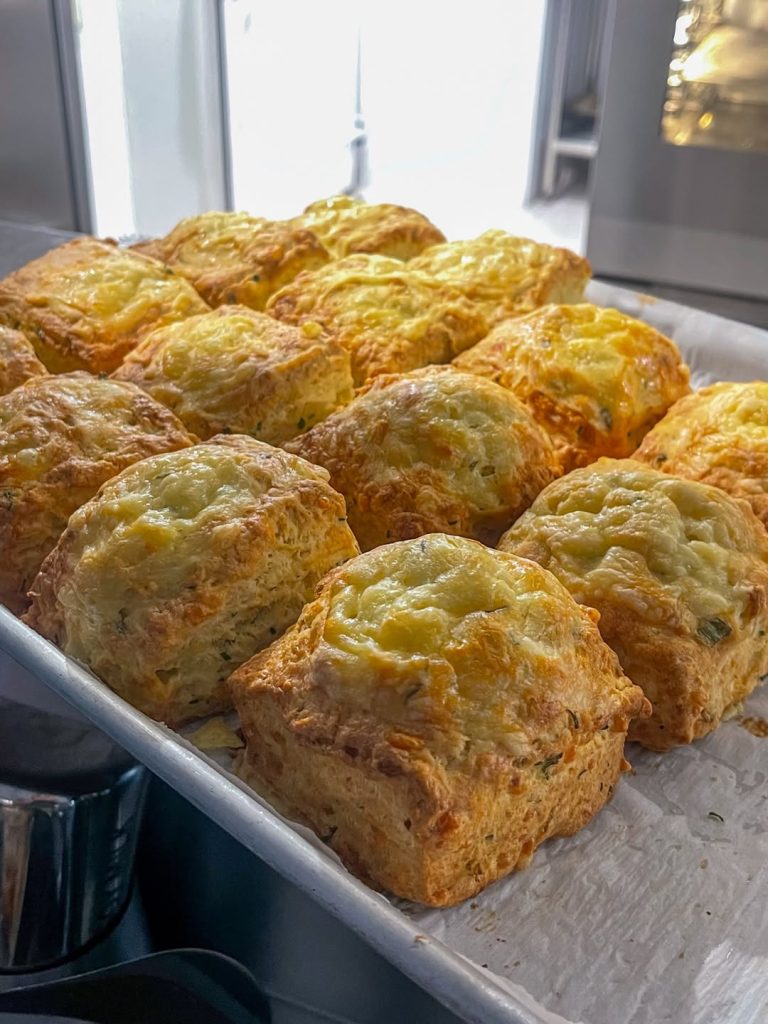
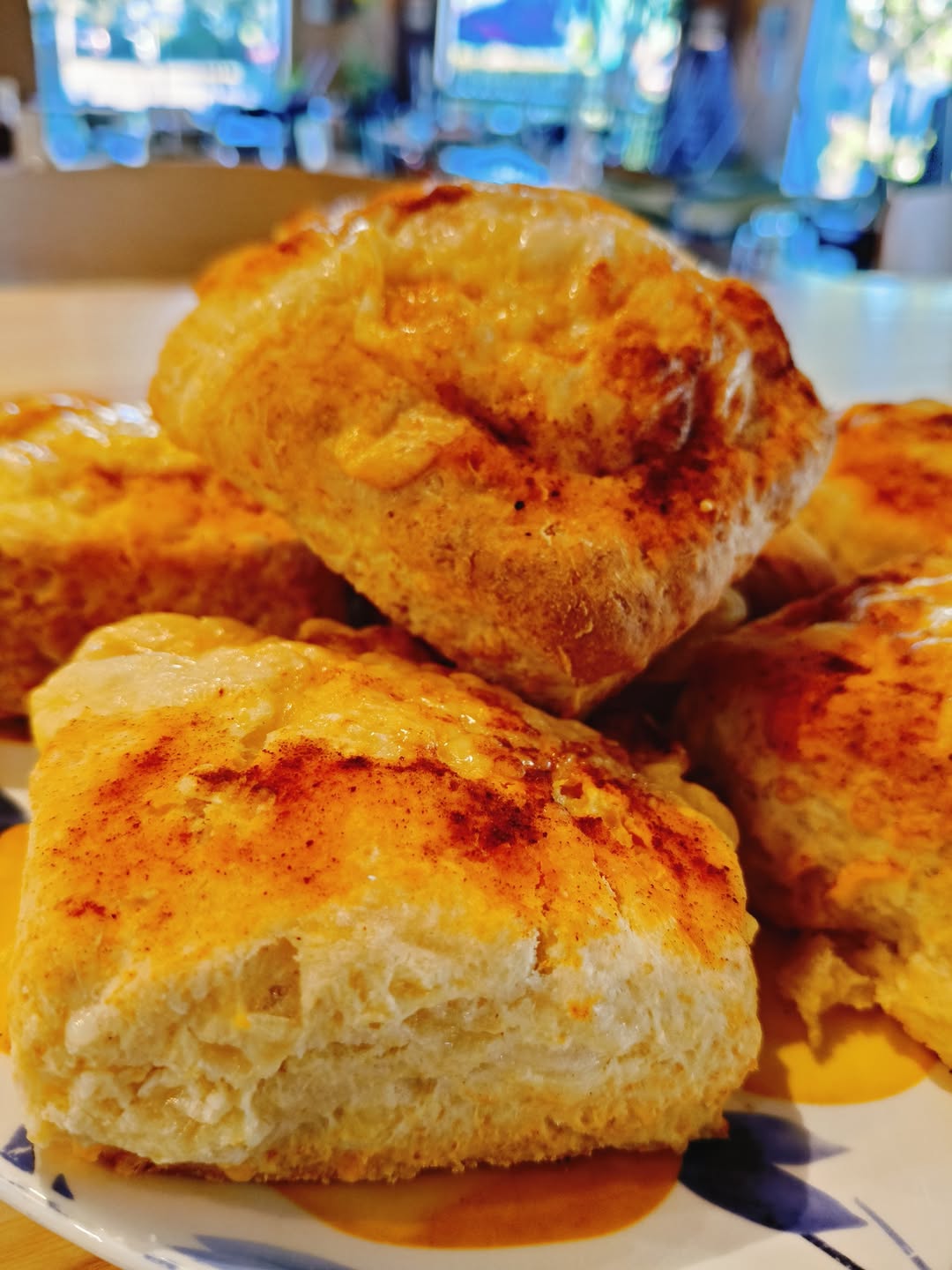
Bake for 12 to 15 minutes until risen, deeply golden, and the cheese on top is bubbling and golden brown. They will look and smell extraordinary.
Step 7 — Cool and Serve
Transfer to a wire rack. These are best eaten while still warm — the cheese inside is melting and the crust is at its most crisp. Within 20 minutes of coming out of the oven is the ideal window.
My Top Tips for Perfect Cheese Scones
Keep everything cold. Cold butter, cold milk, even cold hands if possible. Warmth at any stage melts the butter before it reaches the oven, eliminating the steam pockets that create the light, layered rise. If the kitchen is warm, chill the flour mixture in the fridge for 10 minutes after rubbing in the butter before adding the liquid.
Do not twist the cutter. This is the single most important tip for well-risen scones. Press straight down and lift straight up. Twisting seals the sides of the cut and prevents the characteristic even rise — you end up with scones that are lopsided or that rise only in the centre.
Pat the dough, do not roll it. A rolling pin compresses the dough and reduces the rise. Pat it out to 2.5cm with your hands — gently, quickly, and only as much as needed.
Use mustard powder. Dry mustard powder is a classic addition to cheese scones that amplifies the flavour of the Cheddar without adding any detectable mustard flavour. It is one of those additions you would never guess was there but would notice in its absence.
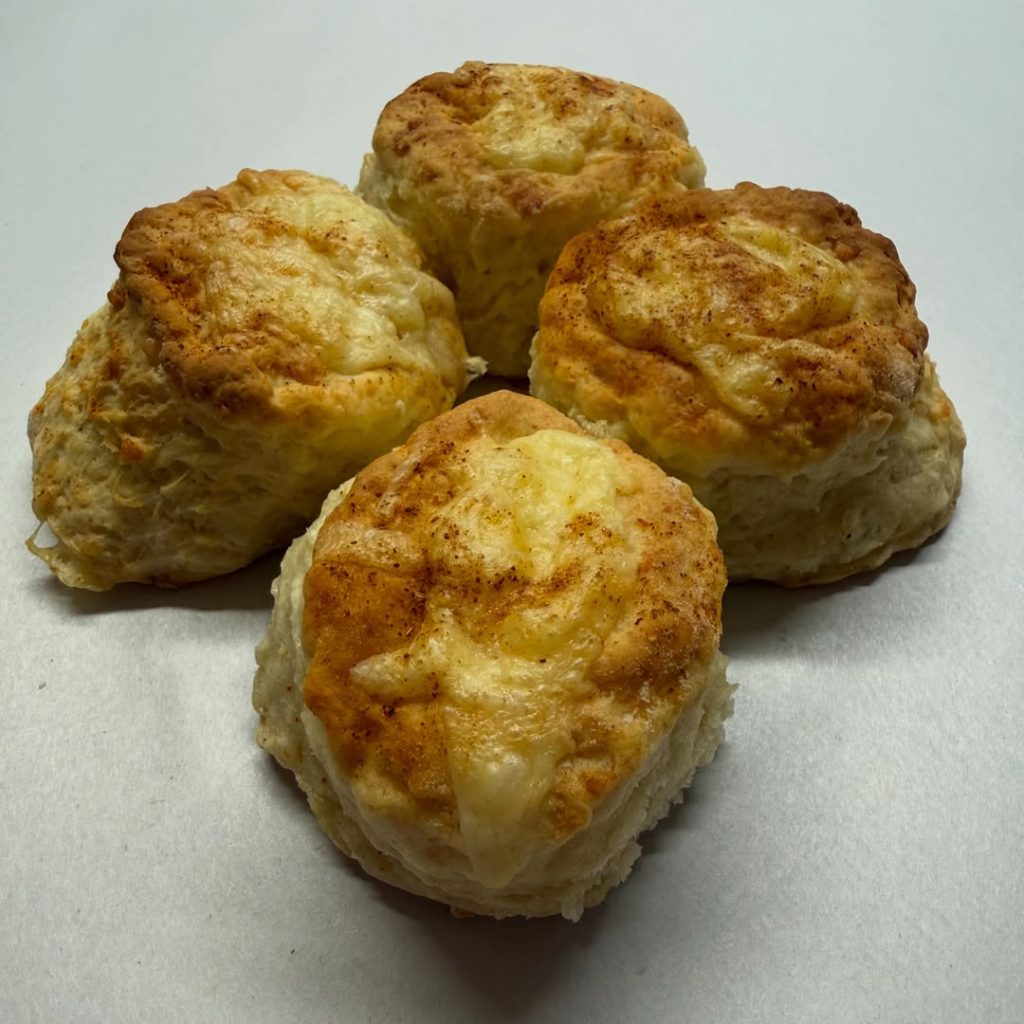
Scatter cheese generously on top. The cheese on the top of each scone melts and bubbles during baking, creating a savoury, slightly crispy crust that is one of the best things about a cheese scone. Do not be stingy — use the full 25g spread across all the scones.
Eat them warm. Cheese scones are wonderful when cool but genuinely exceptional when warm — the cheese inside is still slightly melting and the crust is at its crispest. If they have cooled, warm them in a 170°C oven for 5 minutes before serving.
Serving Suggestions
Warm from the oven with cold butter and a little extra mature Cheddar on the side — absolutely the best way. Split and filled with sliced Cheddar and a teaspoon of good chutney for lunch.
As part of an afternoon tea spread alongside sweet scones, sandwiches, and cake. Alongside a bowl of soup — the leek and potato or tomato soup elsewhere on this site are particularly good companions.
How to Store Mary Berry Cheese Scones
At room temperature: Store in an airtight container for up to 2 days. Warm in a 170°C oven for 5 minutes before serving to refresh.
In the freezer: Freeze in an airtight container for up to 3 months. Warm from frozen in a 180°C oven for 12 to 15 minutes until heated through and the crust is crisp again.
Mary Berry Cheese Scones
Ingredients
Method
- Preheat oven to 220°C / 200°C fan / Gas 7. Line a baking tray with parchment.
- Sift flour, baking powder, salt, mustard powder, and cayenne into a large bowl. Add cold cubed butter. Rub in quickly with fingertips until fine breadcrumbs with a few pea-sized pieces remaining.
- Stir in 125g grated Cheddar.
- Make a well in the centre. Add beaten egg and 4 tbsp milk. Mix quickly with a round-bladed knife until a soft, slightly sticky dough just comes together. Add remaining milk only if needed.
- Turn onto a lightly floured surface. Pat gently to 2.5cm thickness — do not roll. Cut straight down with a 5cm cutter — do not twist. Re-gather trimmings once and cut again.
- Place on the tray. Brush tops with milk. Scatter remaining 25g Cheddar over each scone.
- Bake 12–15 minutes until risen, golden, and the cheese topping is bubbling. Cool briefly on a wire rack. Serve warm.
Notes
Frequently Asked Questions About Mary Berry Cheese Scones
Why did my cheese scones not rise?
Most likely causes: the baking powder or self-raising flour was old and had lost its effectiveness; the oven was not hot enough; the cutter was twisted rather than pressed straight down; or the dough was overworked. Check the freshness of your raising agents, preheat the oven properly, press the cutter straight, and handle the dough minimally.
Can I use a different cheese?
Yes — Red Leicester gives a beautiful orange colour and a mild flavour. Gruyère gives a more sophisticated, slightly nutty flavour. A mix of Cheddar and Parmesan is excellent. Whatever cheese you use, make sure it is full-flavoured — mild cheeses disappear into the dough without contributing much.
Can I add other ingredients to cheese scones?
Yes — finely chopped fresh chives stirred into the dough with the cheese are wonderful. A pinch of smoked paprika in place of the cayenne gives a lovely smokiness. Sun-dried tomatoes, very finely chopped and patted dry, are a good addition for a more Mediterranean flavour.
Can I make the dough ahead of time?
The dough does not benefit from being made ahead — the raising agents begin working the moment they come into contact with the liquid and refrigerating the dough significantly reduces the rise. Make the dough immediately before baking for the best result.
Why are my scones heavy and dense?
Either the butter was not rubbed in finely enough, leaving large lumps of fat that created a greasy rather than light texture, or the dough was overworked. Work the butter to fine breadcrumbs with a few slightly larger pieces, add the liquid, mix minimally, and bake immediately.
Can I make mini cheese scones for canapés?
Yes — use a 3cm cutter and reduce the baking time to 8 to 10 minutes. Mini cheese scones are wonderful as canapés or party food, particularly topped with a tiny amount of chutney and a small slice of mature Cheddar.


Leave a Reply