
 Anna Louise
 Soda bread occupies a unique and wonderful position in British and Irish baking. No yeast. No kneading. No proving time. No special equipment. You mix the dough, shape it, cut a cross in the top, and put it in the oven.
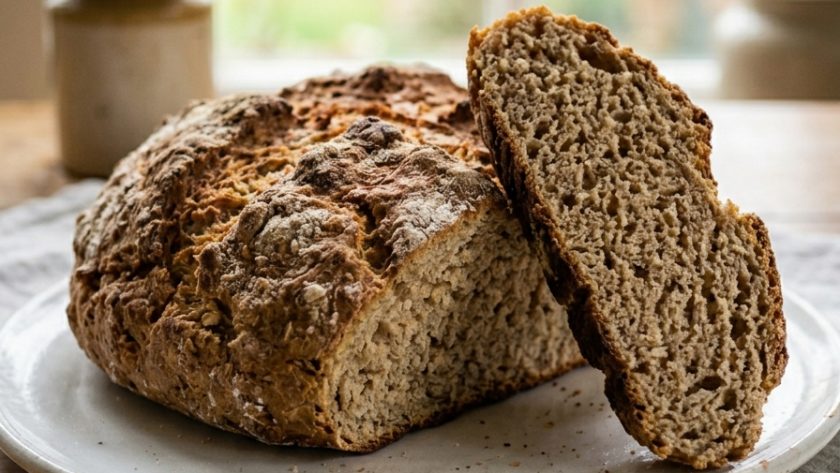
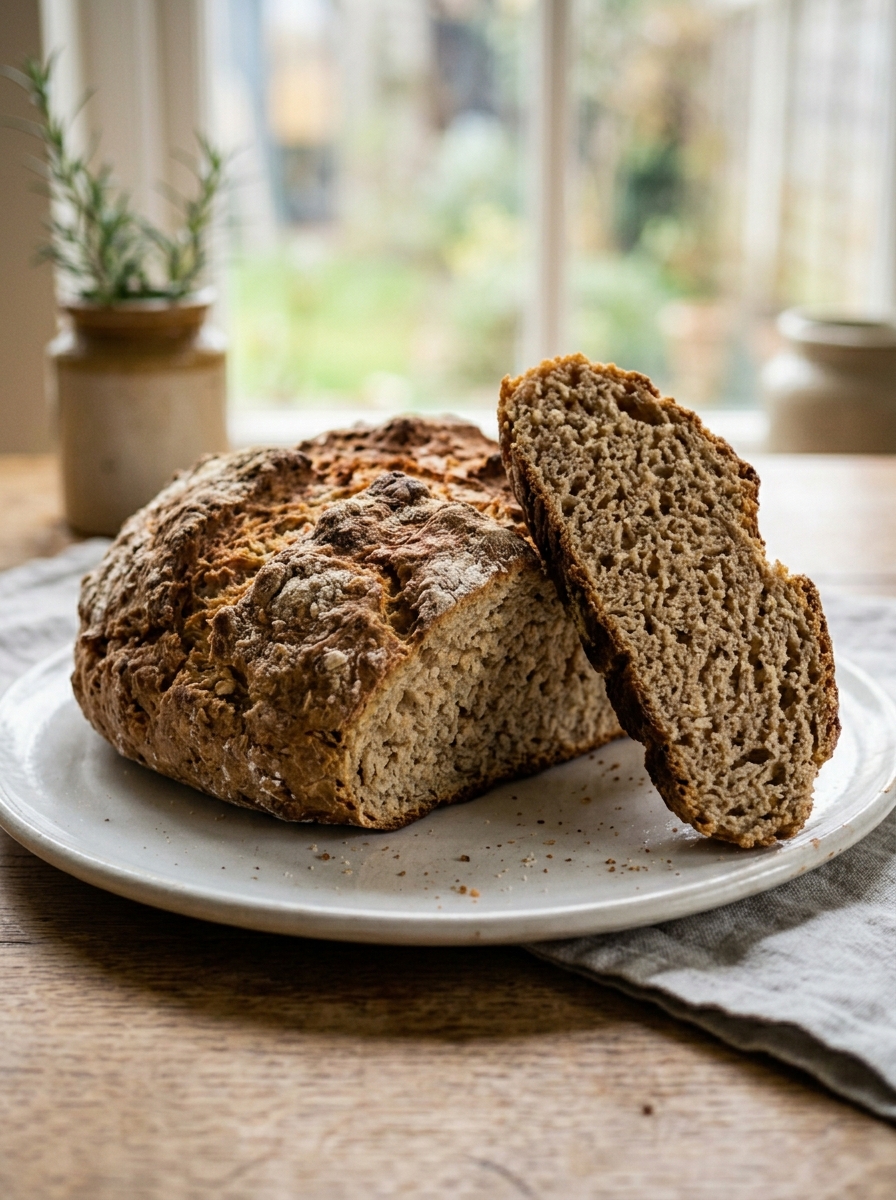
Forty minutes later you have a crusty, golden loaf with a tender, slightly dense crumb that is completely unlike any yeasted bread — and completely wonderful.
Mary Berry’s soda bread recipe is the version I reach for when I want fresh bread on the table with the absolute minimum of effort and time.
It is the bread I make when I have forgotten to buy a loaf. When I want something warm for dinner without planning ahead. When I want to show someone that making bread does not have to be a day-long project.
The flavour is slightly tangy from the buttermilk — or the milk and vinegar substitute — earthy from the wholemeal flour if you choose to use it, and deeply satisfying in a way that is quite different from a sandwich loaf.
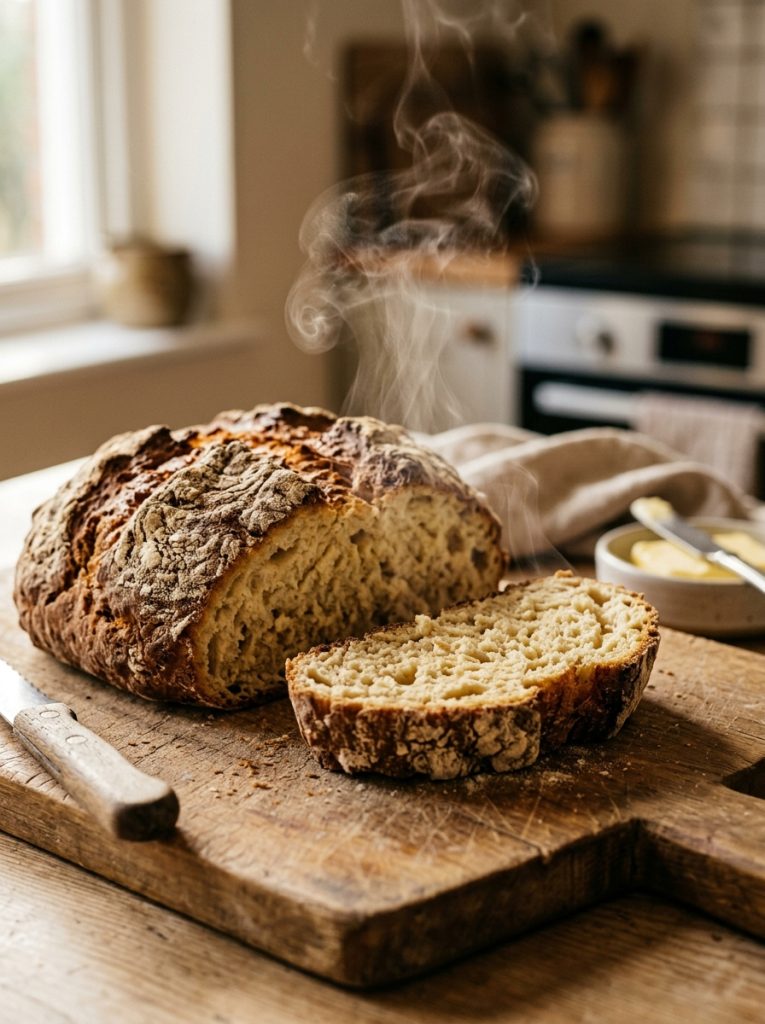
It is best eaten on the day it is made, warm from the oven, torn rather than sliced, with good butter and whatever you have alongside.
Why Soda Bread Works Without Yeast
The rise in soda bread comes not from yeast fermentation but from a chemical reaction between bicarbonate of soda — an alkali — and the acidic buttermilk. When they meet, they produce carbon dioxide bubbles that make the dough rise in the oven.
The reaction begins immediately when the two are combined, which is why soda bread dough must go into the oven as quickly as possible after mixing — delay and the gas escapes and the bread will not rise properly.
This immediacy is actually one of the great advantages of soda bread. There is no waiting. You mix, shape, and bake in a single uninterrupted process that takes perhaps ten minutes of active work.
Ingredients for Mary Berry Soda Bread
For the White Soda Bread
- 450g plain flour or a mix of 300g plain flour and 150g wholemeal flour for more flavour and texture
- 1 tsp bicarbonate of soda
- 1 tsp fine salt
- 1 tsp caster sugar (optional — adds a slight sweetness that balances the tang)
- 400ml buttermilk (or 400ml whole milk mixed with 1 tbsp white wine vinegar or lemon juice — leave for 5 minutes to curdle)
Optional Additions
- 50g rolled oats, stirred through the dough and scattered over the top
- 75g mature Cheddar, grated, stirred through for a savoury cheese soda bread
- 50g raisins or sultanas, stirred through for a slightly sweet version
- 1 tbsp caraway seeds for a more robust, slightly anise-flavoured loaf
How to Make Mary Berry Soda Bread — Step by Step
Step 1 — Preheat and Prepare
Preheat your oven to 220°C / 200°C fan / Gas 7. Lightly flour a large baking tray or line with baking parchment.
The hot oven is essential for soda bread — the initial blast of high heat sets the crust quickly and drives the rise before the crumb has time to set. Do not put soda bread in a cold oven.
Step 2 — Mix the Dry Ingredients
Sift the flour, bicarbonate of soda, and salt into a large mixing bowl. Add the sugar if using. Stir briefly to combine.
If you are using wholemeal flour, tip any bran that remains in the sieve back into the bowl — it adds flavour and texture.
Step 3 — Add the Buttermilk
Make a well in the centre of the flour mixture. Pour in almost all the buttermilk and mix quickly and lightly with a large fork or your hands until a soft, slightly sticky dough comes together. Add the remaining buttermilk if the dough seems dry — it should be soft but not wet, just coming together in a rough, shaggy mass.
The most important rule of soda bread is this: handle the dough as little as possible and work as quickly as you can. The moment the buttermilk meets the bicarbonate, the reaction begins. Excessive handling toughens the gluten and makes the bread dense. Rough and quick is the right approach — the opposite of bread kneading.
Step 4 — Shape and Score
Turn the dough out onto a lightly floured surface. With floured hands, shape it gently and quickly into a round — roughly 20cm in diameter and about 4cm high. Do not knead. Do not roll. Just bring the dough together into a rough round with a few light pats and turns.
Place on the prepared baking tray. Using a sharp knife or a bench scraper, cut a deep cross into the top of the loaf — going almost all the way through, to about three-quarters of the depth of the dough. This cross is not just traditional — it allows heat to penetrate the centre of the loaf and ensures even baking. Dust the top lightly with a little extra flour.
Step 5 — Bake
Bake for 15 minutes at 220°C, then reduce the oven temperature to 200°C / 180°C fan / Gas 6 and bake for a further 20 to 25 minutes until the loaf is deep golden brown all over and sounds hollow when you tap the base firmly with your knuckles.
If you are unsure, insert a skewer into the centre — it should come out clean with no doughy residue.
Step 6 — Cool Slightly and Serve
Transfer to a wire rack. Leave to cool for at least 15 to 20 minutes before cutting — the crumb needs a little time to set after coming out of the oven. Soda bread is wonderful warm but the crumb is very tender when hot and will tear rather than slice cleanly if cut too soon.
Serve torn or sliced, with good butter alongside.
My Top Tips for the Best Soda Bread
Work quickly once the buttermilk goes in. The bicarbonate and buttermilk begin reacting immediately — every minute of delay means less rise in the oven. Mix quickly, shape quickly, score, and bake. This is not a bread that benefits from being fussed over or rested before baking.
Handle the dough as little as possible. This is the cardinal rule of soda bread. Overworked soda bread is dense, tough, and disappointing. Just enough handling to bring it into a rough round — no more. The rough, slightly uneven surface is correct and makes for a beautifully rustic, authentic looking loaf.
Make your own buttermilk if you do not have any. This is genuinely easy and costs nothing — add one tablespoon of white wine vinegar or lemon juice to 400ml of whole milk, stir, and leave for five minutes. The milk curdles slightly, producing an effective buttermilk substitute that works perfectly in this recipe.
The cross must be deep. A shallow cross decorates the bread. A deep cross — three-quarters of the way through — cooks it properly. The cross allows the heat to reach the centre of the loaf, ensuring it cooks evenly all the way through without the outside burning before the centre is done.
Do not skip the hollow tap test. Soda bread can look done from the outside before the centre is fully baked — the dense crumb takes longer to cook through than the crust suggests. Tap the base firmly — it should sound hollow and resonant, like tapping a drum. A dull thud means it needs another five minutes.
Eat on the day — ideally within hours. Soda bread is at its absolute best fresh from the oven. It does not keep as well as yeasted bread — the crumb becomes denser and slightly gummy by day two. Make it fresh when you need it.
Serving Suggestions
Torn while still warm with generous amounts of cold butter — this is the defining way to eat soda bread and it cannot be improved upon. With smoked salmon and cream cheese for an elegant lunch.
As a side with soups and stews — particularly the leek and potato soup or carrot and coriander soup elsewhere on this site. With good cheese and chutney for a simple dinner.
How to Store Mary Berry Soda Bread
At room temperature: Wrap in a clean tea towel and store for up to 2 days. Refresh in a 180°C oven for 5 minutes if it has staled slightly.
In the freezer: Slice, wrap tightly in cling film and foil, and freeze for up to 3 months. Toast individual slices from frozen — it toasts beautifully and is a very useful thing to have in the freezer.
Mary Berry Soda Bread Recipe
Ingredients
Method
- Preheat oven to 220°C / 200°C fan / Gas 7. Lightly flour a baking tray.
- Sift flour, bicarbonate of soda, and salt into a large bowl. Add sugar if using. Stir briefly.
- Make a well in the centre. Pour in almost all the buttermilk. Mix quickly with a fork or hands until a soft, slightly sticky dough just comes together. Add remaining buttermilk only if needed — dough should be soft but not wet.
- Turn onto a lightly floured surface. With floured hands, shape quickly and gently into a round about 20cm across. Do not knead.
- Place on the baking tray. Cut a deep cross into the top — three-quarters of the way through. Dust lightly with flour.
- Bake at 220°C for 15 minutes. Reduce to 200°C / 180°C fan / Gas 6 and bake a further 20–25 minutes until deep golden and hollow-sounding when tapped on the base.
- Cool on a wire rack for at least 20 minutes before serving.
Notes
Frequently Asked Questions About Mary Berry Soda Bread
Can I use self-raising flour instead of plain flour?
No — self-raising flour already contains a raising agent, and combined with the bicarbonate of soda in this recipe it would produce too much rise and an unpleasant, bitter flavour. Plain flour only.
Why did my soda bread not rise?
The most likely cause is old bicarbonate of soda that has lost its effectiveness — test it by adding a teaspoon to a little vinegar, it should fizz vigorously. Also check that you used buttermilk or an effective substitute — plain milk without an acid will not activate the bicarbonate properly.
Can I make soda bread without buttermilk?
Yes — add one tablespoon of white wine vinegar or lemon juice to 400ml of whole milk, stir, and leave for five minutes to curdle. This homemade buttermilk works perfectly in this recipe.
Why is my soda bread dense and heavy?
Either the dough was overworked — developing too much gluten — or there was too much delay between mixing and baking. Mix quickly, handle minimally, shape immediately, and put it straight into a hot oven.
Can I add seeds, oats, or cheese to soda bread?
Yes — this recipe is wonderfully versatile. Rolled oats, mixed seeds, grated cheese, dried fruit, or herbs can all be added to the dry ingredients before the buttermilk goes in. Each gives a slightly different character and all work well with the basic recipe.
Can I make soda bread rolls instead of a round loaf?
Yes — divide the dough into 8 equal pieces, shape each into a small round, cut a cross in the top, and bake at the same temperature for 15 to 20 minutes. They are wonderful for packed lunches and freeze well individually.



Leave a Reply