
 Anna Louise
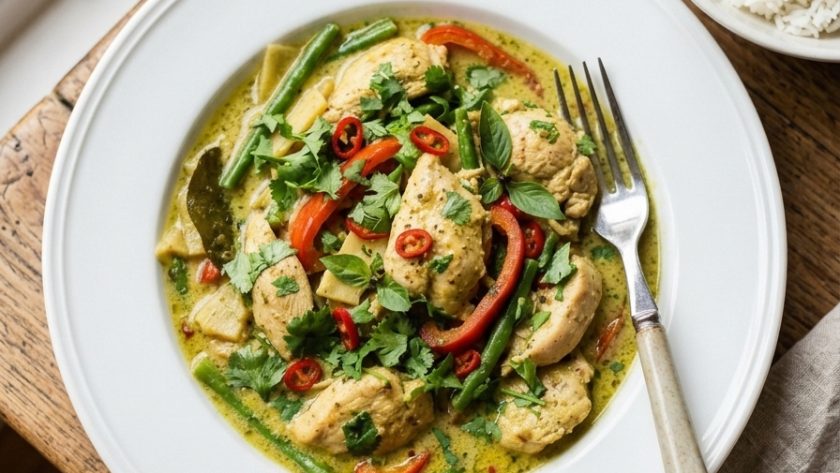
 A Thai green curry is one of the fastest and most satisfying curries you can make at home. Unlike an Indian curry which builds flavour over a long simmer, a Thai curry cooks quickly.
The freshness and fragrance of the paste, the richness of the coconut milk, and the brightness of the lime and fish sauce work together almost immediately to produce something vibrant, complex, and completely wonderful.
Mary Berry’s Thai chicken curry recipe uses a good quality shop-bought Thai green curry paste — this is not a shortcut to be apologised for, it is the sensible choice.
A proper Thai green paste contains lemongrass, galangal, kaffir lime leaves, and bird’s eye chillies in quantities that would require a well-stocked Asian grocery and significant time to source and prepare. A good jar of paste from a reputable brand gives you all of those flavours in two tablespoons.
The rest of the recipe comes together in 30 minutes — fragrant paste fried briefly in the pan, coconut milk added for richness, chicken simmered until tender, vegetables added for freshness and colour, and lime, fish sauce, and fresh coriander to finish. It is genuinely quick, genuinely delicious, and becomes a weekly staple once you have made it once.
What Makes a Great Thai Green Curry
The paste must be fried before the liquid goes in. This is the step that separates a great Thai curry from a mediocre one. Frying the paste in a dry pan or with a little oil for one to two minutes before adding the coconut milk releases the aromatic compounds in the lemongrass and galangal and gives the finished curry a depth that adding paste directly to liquid cannot achieve.
Use full-fat coconut milk. Low-fat coconut milk is watery and produces a thin, less satisfying sauce. Full-fat coconut milk gives the rich, creamy consistency that defines a Thai green curry. Always full-fat.
Fish sauce and lime at the end. These two ingredients provide the salty, sour, sharp notes that balance the richness of the coconut and the heat of the chilli. They must go in at the end — cooking them for too long mutes their brightness.
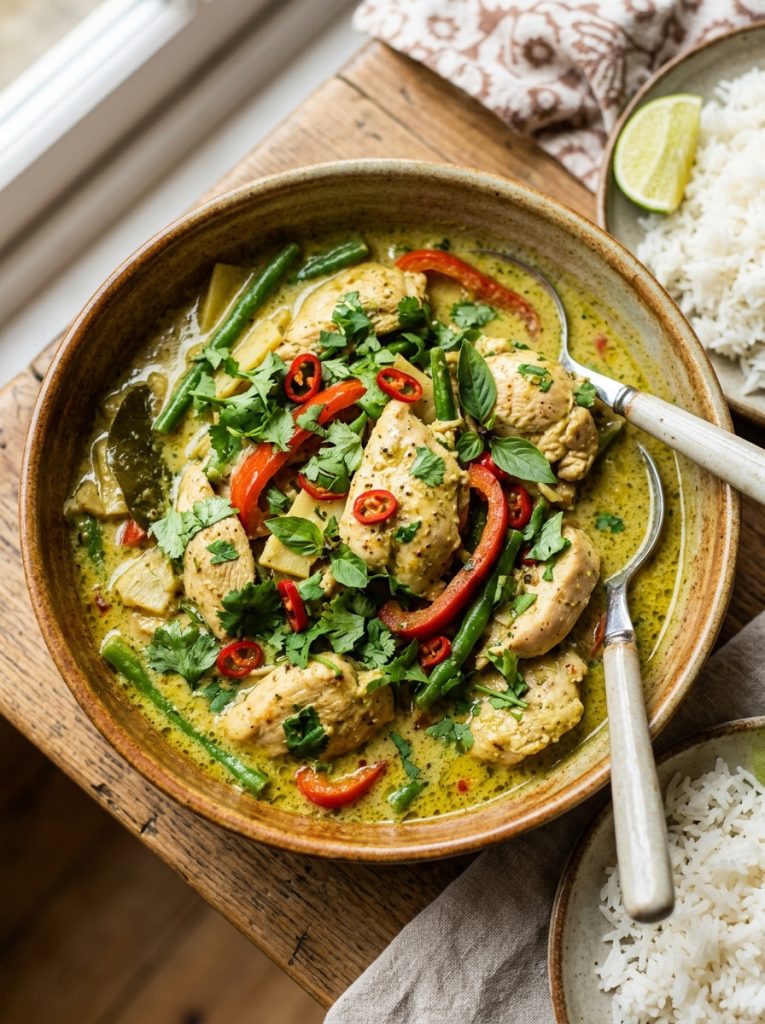
Ingredients for Mary Berry Thai Chicken Curry
For the Curry
- 2 tbsp sunflower oil
- 2 tbsp good quality Thai green curry paste (Mae Ploy or Maesri are excellent)
- 2 x 400ml tins full-fat coconut milk
- 600g boneless skinless chicken thighs, cut into bite-sized pieces
- 2 tbsp fish sauce
- 1 tbsp palm sugar or soft light brown sugar
- 200g baby courgettes or green beans, trimmed
- 150g baby spinach
- Juice of 1 lime
- 4 kaffir lime leaves (fresh or dried — optional but wonderful)
- 1 lemongrass stalk, bruised (optional — if available)
- Fresh coriander leaves to finish
- Fresh red chilli, thinly sliced to finish (optional)
To Serve
- Jasmine rice
- Lime wedges
- Thai basil leaves (if available)
How to Make Mary Berry Thai Chicken Curry — Step by Step
Step 1 — Fry the Paste
Heat the sunflower oil in a large, deep frying pan or wok over a medium-high heat. Add the Thai green curry paste. Fry for one to two minutes, stirring constantly, until it is fragrant and beginning to stick slightly to the pan. This brief frying is what develops the flavour of the paste.
Step 2 — Add the Coconut Milk
Pour in both tins of coconut milk. Add the kaffir lime leaves and bruised lemongrass if using. Stir well to combine the paste with the coconut milk. Bring to a gentle simmer.
Step 3 — Add the Chicken
Add the chicken pieces to the simmering coconut sauce. Cook over a medium heat for 12 to 15 minutes until the chicken is completely cooked through. The coconut milk should be gently bubbling — not at a rolling boil.
Step 4 — Season the Sauce
Add the fish sauce and sugar. Stir to combine. Taste and adjust — this is the critical tasting moment for a Thai curry. It should taste rich, creamy, slightly spicy, slightly sweet, and slightly salty. Adjust the fish sauce for saltiness, lime juice for sharpness, and sugar for sweetness until the balance is right.
Step 5 — Add the Vegetables
Add the courgettes or green beans and cook for three to four minutes until just tender but still with a little bite. Add the baby spinach and stir until wilted.
Step 6 — Finish and Serve
Remove the kaffir lime leaves and lemongrass. Squeeze over the lime juice. Taste one final time and adjust seasoning.
Serve immediately over jasmine rice, scattered with fresh coriander, Thai basil if available, and sliced red chilli.
My Top Tips Mary Berry Thai Green Chicken Curry
Fry the paste before adding coconut milk. One to two minutes in a hot pan or wok releases the aromatic compounds in the paste. Adding it directly to liquid gives a flatter, less fragrant result.
Use full-fat coconut milk only. The difference between full-fat and low-fat coconut milk in a Thai curry is dramatic. Full-fat gives the rich, creamy sauce that makes this dish so satisfying. Low-fat gives something thin and watery.
Taste and balance at the end. A Thai curry is balanced through tasting and adjusting. Fish sauce for saltiness, lime juice for sharpness, sugar for sweetness. Taste at the end and adjust each element until the curry tastes perfectly balanced.
Do not boil the coconut milk vigorously. A gentle simmer keeps the coconut milk emulsified and creamy. A vigorous boil can cause it to split and become grainy. Keep the heat moderate throughout.
Use chicken thighs rather than breast. Chicken thighs remain tender and moist throughout the 12 to 15 minutes of simmering in coconut milk. Breast can become dry and stringy if cooked for too long. Thighs are the correct choice.
Add vegetables at the end. Vegetables added early become soft and grey. Added in the final three to four minutes, they stay bright, slightly crisp, and retain their freshness — which is exactly what a Thai curry needs.
Serving Suggestions
With jasmine rice — the slightly sticky, aromatic character of jasmine rice is the perfect match for a Thai curry. With warm flatbreads for mopping. With a simple cucumber and shallot salad alongside for freshness.
How to Store Mary Berry Thai Chicken Curry
In the fridge: Store in an airtight container for up to 3 days. Reheat gently on the hob — do not boil. The flavour improves overnight.
In the freezer: Freeze in portions for up to 2 months. The coconut milk can separate slightly on defrosting but comes back together when reheated gently and stirred. Defrost overnight in the fridge.
Try These Recipes
- Mary Berry Chicken And Mushroom Pie
- Mary Berry Slow Cooker Chicken Casserole
- Mary Berry Sausage Rolls
- Mary Berry Chicken Pasta Bake
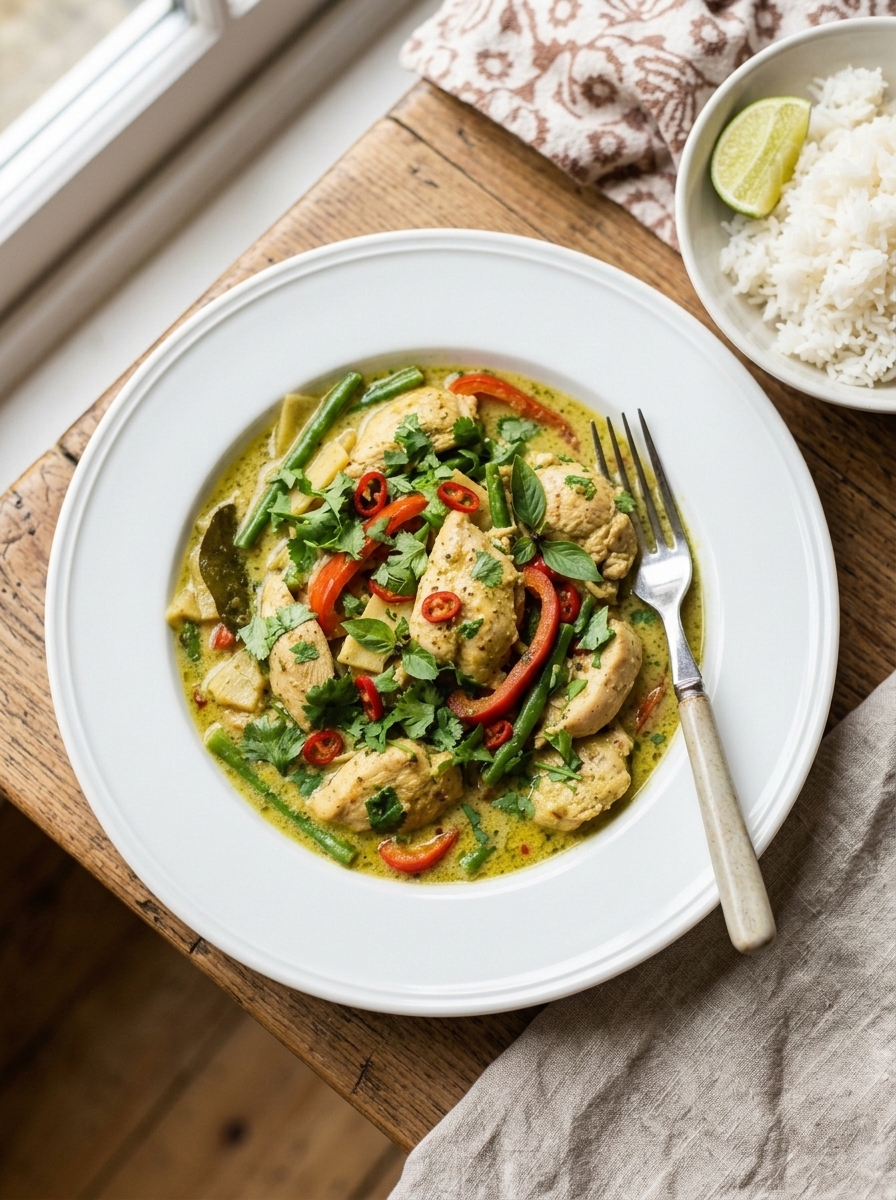
Mary Berry Thai Chicken Curry Recipe
Ingredients
Method
- Fry curry paste in hot oil for 1–2 minutes until fragrant.
- Add coconut milk, kaffir lime leaves, and lemongrass if using. Stir to combine. Bring to a gentle simmer.
- Add chicken pieces. Cook over medium heat 12–15 minutes until cooked through. Keep at a gentle simmer — do not boil vigorously.
- Add fish sauce and sugar. Taste and balance — adjust fish sauce, lime, and sugar until perfectly balanced.
- Add courgettes or green beans — cook 3–4 minutes. Add spinach — stir until wilted.
- Remove kaffir lime leaves and lemongrass. Squeeze over lime juice. Taste one final time. Serve over jasmine rice scattered with coriander, basil, and chilli.
Notes
Frequently Asked Questions
Can I use red curry paste instead of green?
Yes — a Thai red curry is slightly more robust and less aromatic than a green curry but uses the same method and quantities. Both are excellent. Red curry paste tends to be slightly hotter than green.
Can I add other vegetables?
Yes — baby corn, bamboo shoots, red pepper, or sugar snap peas all work beautifully in a Thai green curry. Add them with the courgettes in the final few minutes of cooking.
Can I make this vegetarian?
Yes — replace the chicken with firm tofu, cut into cubes and fried until golden before adding to the sauce. Replace the fish sauce with soy sauce or tamari. The result is excellent.
How do I make this milder?
Use one tablespoon of curry paste rather than two. Reduce the chilli garnish or omit it. Full-fat coconut milk already moderates the heat — the quantity of paste is the main control.
Can I use fresh lemongrass and kaffir lime leaves?
Yes — and the fresh versions are worth finding if you have an Asian grocery nearby. Bruise the lemongrass by pressing firmly with the flat of a knife before adding to release its fragrance. Remove both before serving.
Why does my coconut milk look grainy?
The coconut milk has been boiled too vigorously and split. Next time, keep the heat at a gentle simmer rather than a rolling boil. If it has split, add a splash of cold coconut milk and stir gently off the heat — it often comes back together.















Leave a Reply