
 Anna Louise
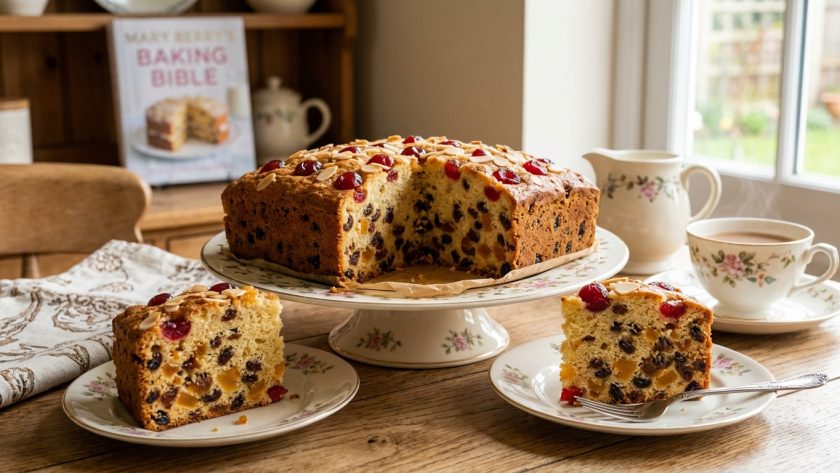
 There are some recipes that feel less like baking and more like coming home. Mary Berry’s light farmhouse fruit cake is one of them for me.
I am Anna Louise, and this cake has been part of my baking life for as long as I can remember. It is the cake my mother made on Sunday afternoons, the one that sat under a glass dome on the kitchen counter all week slowly disappearing slice by slice.
It is not a Christmas cake — it does not need weeks of feeding and maturing. It is something simpler and perhaps more honest than that. A proper, everyday fruit cake that is moist, lightly sweet, packed with dried fruit, and completely wonderful with a cup of tea.
If you have been looking for a Mary Berry light farmhouse fruit cake recipe that gives you reliable, beautiful results every time — one that is not too heavy, not too sweet, and not remotely difficult to make — this is exactly what you have been searching for.
What Makes Mary Berry’s Light Farmhouse Fruit Cake Different?
The word “light” in the name is important. This is not a dense, dark, heavily spiced fruit cake. It is a softer, gentler thing — a golden sponge base loaded with mixed dried fruit, with a tender crumb and a beautifully even texture throughout.
The method is a simple creamed sponge — butter and sugar beaten together, eggs added gradually, flour folded in, fruit stirred through. It is the kind of method you could do in your sleep after you have made it a couple of times, and the results are consistently excellent.
What I love most about this cake is its versatility. It is absolutely perfect plain, sliced thickly with butter. It is lovely as a centrepiece at a tea party. It keeps beautifully for days, actually improving as it sits. And it is the sort of cake that suits any occasion — or no occasion at all.
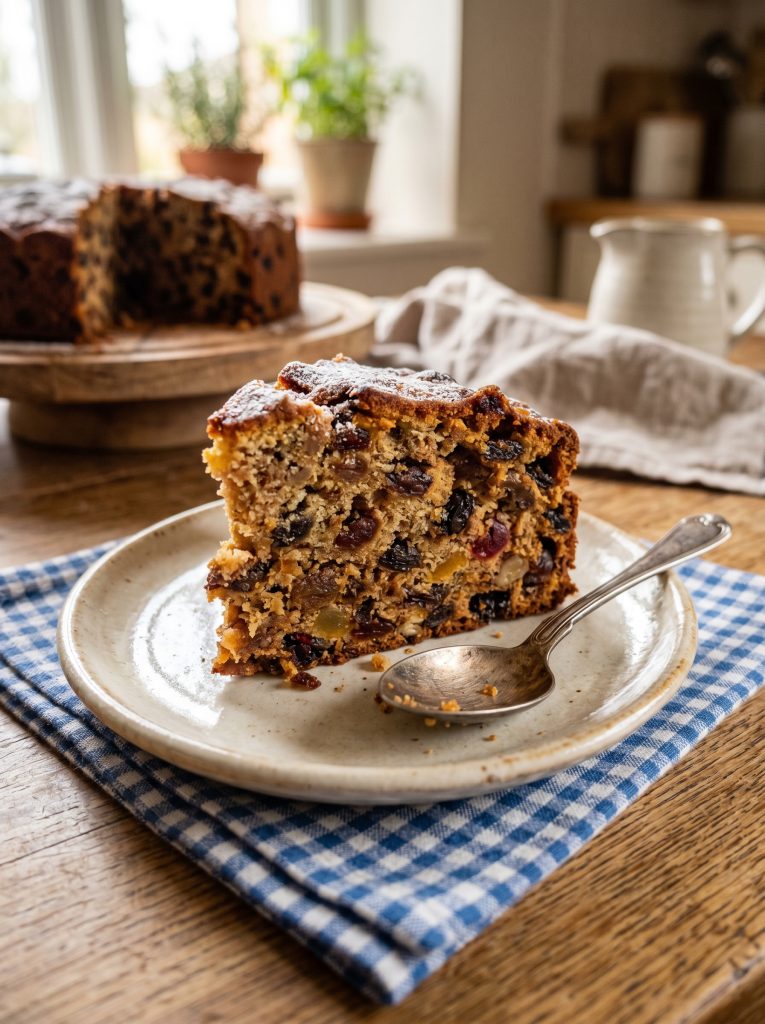
Ingredients for Mary Berry Light Farmhouse Fruit Cake
Have everything weighed and at room temperature before you start. Cold butter will not cream properly, and cold eggs can cause the mixture to curdle.
For the Fruit Cake
- 225g unsalted butter, softened
- 225g light muscovado sugar (or soft light brown sugar)
- 4 large eggs, at room temperature
- 225g self-raising flour
- 1 tsp baking powder
- 1 tsp mixed spice
- ½ tsp ground cinnamon
- 2 tbsp whole milk
- 350g mixed dried fruit (sultanas, raisins, currants, mixed peel)
- 50g glacé cherries, halved and rinsed
- Zest of 1 unwaxed lemon
- Zest of 1 unwaxed orange
For the Top
- 2 tbsp flaked almonds
- 1 tbsp demerara sugar (for a light crunchy top — optional but lovely)
How to Make Mary Berry Light Farmhouse Fruit Cake — Step by Step
Step 1 — Prepare Your Tin and Oven
Preheat your oven to 160°C / 140°C fan / Gas 3. Grease a deep 20cm round cake tin and line the base and sides with baking parchment. For a fruit cake, I always double-line the sides — it protects the outside of the cake from over-browning during the longer bake time.
Step 2 — Cream the Butter and Sugar
In a large mixing bowl, beat the softened butter and muscovado sugar together with an electric hand whisk until pale, light, and fluffy. This will take a good four to five minutes — do not rush it. Properly creamed butter and sugar is what gives this cake its light, tender texture.
Step 3 — Add the Eggs
Add the eggs one at a time, beating well after each addition. If the mixture starts to look like it might curdle — it can happen, particularly if your eggs are cold — add a tablespoon of the flour and beat it in before continuing. This stabilises the mixture and stops it splitting.
Step 4 — Fold in the Flour and Spices
Sift the self-raising flour, baking powder, mixed spice, and cinnamon into the bowl. Fold gently with a large spatula until just combined. Add the milk and fold again — this loosens the batter slightly and helps it hold all the fruit without becoming too stiff.
Step 5 — Add the Fruit and Zest
Add the mixed dried fruit, glacé cherries, lemon zest, and orange zest. Fold everything together until the fruit is evenly distributed throughout the batter. Take your time with this — you want fruit in every single slice, not all congregating at the bottom.
Step 6 — Fill the Tin and Add the Topping
Spoon the batter into the prepared tin and level the top with the back of a spoon. Scatter the flaked almonds over the surface and sprinkle with demerara sugar if using. This gives the top a beautiful golden, slightly crunchy finish that looks wonderful when the cake comes out of the oven.
Step 7 — Bake Low and Slow
Bake on the middle shelf for 1 hour 15 minutes to 1 hour 30 minutes. Fruit cakes need a lower temperature and a longer bake time than sponge cakes — this ensures the inside cooks through gently without the outside burning. At the one-hour mark, check the cake. If the top is browning too quickly, lay a piece of baking parchment loosely over the top and continue baking.
The cake is ready when a skewer inserted into the very centre comes out completely clean. Start checking at 1 hour 15 minutes.
Step 8 — Cool in the Tin
This is important with a fruit cake — leave it to cool in the tin for at least 20 minutes before attempting to turn it out. It is a denser cake and needs time to settle and firm up. Then turn out carefully onto a wire rack and leave to cool completely.
My Top Tips for the Perfect Light Farmhouse Fruit Cake
Rinse your glacé cherries before using them. Glacé cherries are coated in a sticky syrup that causes them to sink straight to the bottom of the cake during baking. Put them in a sieve, rinse under warm water, and pat dry with kitchen paper. Then toss them lightly in a tablespoon of flour before adding them to the batter — this helps them stay suspended throughout the cake.
Do not skip the double lining on the tin sides. A fruit cake bakes for much longer than a sponge, and an unprotected tin will cause the outside edges to over-bake and turn crusty before the centre is done. Double-lined sides and a lower oven temperature are what give you an evenly baked cake with a moist, tender crumb all the way through.
Bring your eggs to room temperature. Cold eggs straight from the fridge are the most common cause of a curdled cake batter. Take them out at least 30 minutes before you start baking. If you forget, sit them in a bowl of warm (not hot) water for 10 minutes.
Do not open the oven door in the first hour. I know it is tempting. The smell coming from your kitchen will be absolutely incredible. But opening the oven before the cake has set causes the structure to collapse and you will end up with a sunken centre. Resist until at least the one-hour mark.
This cake genuinely improves with time. Like all good fruit cakes, the flavour deepens and the texture becomes even more moist on day two and three. Wrap it in baking parchment and then foil once cooled, and store at room temperature. It will keep beautifully for up to a week.
Serving Suggestions
Slice thickly and serve just as it is with a strong pot of tea — this is the traditional British way and honestly, it cannot be bettered.
For something a little more celebratory, a thin spread of butter on each slice is quietly wonderful. It is also lovely as part of an afternoon tea spread alongside scones and finger sandwiches.
How to Store Mary Berry Light Farmhouse Fruit Cake
At room temperature: Wrap in baking parchment and then in foil. Store in a cool, dry place for up to 1 week. The cake improves over the first few days as the flavours settle.
In the fridge: Not ideal for fruit cake — refrigeration can dry it out. Room temperature storage is better.
In the freezer: Freeze whole or in slices, wrapped tightly in cling film and foil, for up to 3 months. Defrost at room temperature overnight.
Try These Recipes
- Mary Berry Fruit Cake Recipe Rich Moist And Made To Last
- Mary Berry Coffee And Walnut Cake
- Mary Berry Carrot Cake
- Mary Berry Dorset Apple Cake
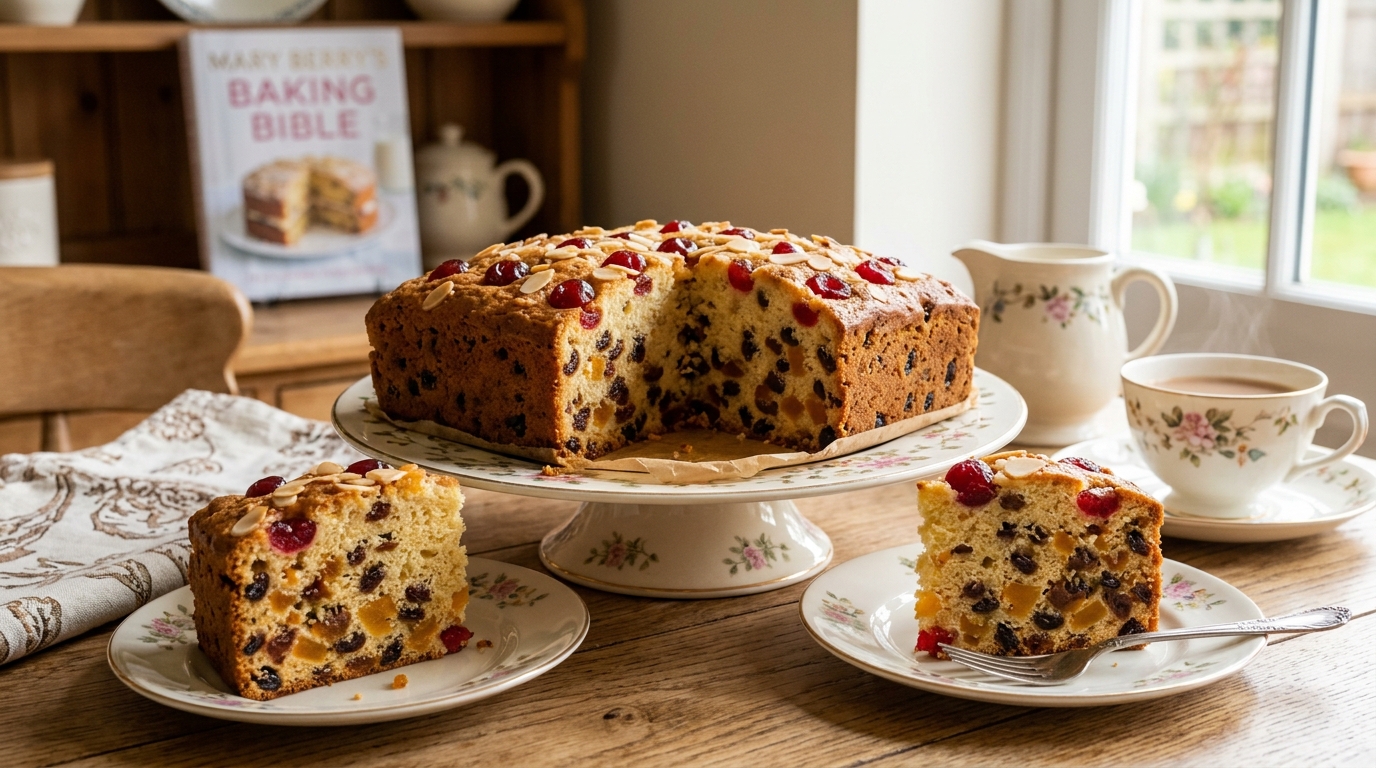
Mary Berry Light Farmhouse Fruit Cake
Ingredients
Method
- Preheat oven to 160°C / 140°C fan / Gas 3. Grease and double-line a deep 20cm round cake tin.
- Beat butter and muscovado sugar together for 4–5 minutes until pale and fluffy.
- Add eggs one at a time, beating well after each. Add a spoonful of flour if the mixture starts to curdle.
- Sift in flour, baking powder, mixed spice, and cinnamon. Fold gently. Add milk and fold again.
- Add mixed dried fruit, glacé cherries, lemon zest, and orange zest. Fold until evenly distributed.
- Spoon into prepared tin and level the top. Scatter flaked almonds and demerara sugar over the surface.
- Bake for 1 hour 15 minutes to 1 hour 30 minutes until a skewer comes out clean. Cover top with parchment if it browns too quickly.
- Cool in tin for 20 minutes, then turn out onto a wire rack to cool completely.
Notes
Rinse glacé cherries and toss in a little flour to stop them sinking. Double-line the tin sides to prevent over-browning. Do not open the oven door in the first hour of baking. This cake improves over 2–3 days — make it ahead if possible. Store wrapped in parchment and foil at room temperature for up to 1 week.
Frequently Asked Questions About Mary Berry Light Farmhouse Fruit Cake
Can I use a different combination of dried fruit?
Absolutely. The recipe works with whatever dried fruit you enjoy. I sometimes add dried cranberries, chopped dried apricots, or a handful of dried blueberries. Just keep the total weight at around 350g.
Why did my fruit sink to the bottom?
Almost always because the fruit was too moist or the batter was too loose. Make sure you rinse and dry the glacé cherries, toss all the fruit lightly in flour before adding it, and do not add too much extra liquid to the batter.
Can I make this as a loaf cake?
Yes. Spoon the batter into a greased and lined 2lb loaf tin and bake at the same temperature for about 1 hour to 1 hour 10 minutes. Check with a skewer. It makes a wonderful gift, sliced and wrapped in cellophane with a ribbon.
Can I add alcohol to Mary Berry’s farmhouse fruit cake?
You can soak the dried fruit overnight in a couple of tablespoons of brandy, dark rum, or sherry before baking if you would like a slightly richer flavour. It is not traditional for this lighter version, but it is absolutely delicious.
My cake is browning on top but still raw in the middle — what do I do?
Cover the top loosely with a piece of baking parchment and reduce the oven temperature by 10°C. Continue baking until the skewer comes out clean. This happens when the oven runs slightly hot — every oven is different and it is worth getting to know yours.















Leave a Reply