
 Anna Louise
 A homemade Christmas chutney is one of the most useful and most appreciated things you can make in the run-up to Christmas.
It sits on the cheese board, it elevates cold turkey sandwiches on Boxing Day, it goes into gifts with a wedge of cheese and a bottle of wine, and it improves — dramatically — every time you open the jar over the festive season.
Mary Berry’s Christmas chutney is a beautifully balanced festive preserve — warming spices that feel entirely at home in December, a mixture of fruits that gives depth and sweetness, and that characteristic sweet-sharp balance that makes a great chutney the perfect companion to everything from a ploughman’s to a cold meat platter.
Make it in October or November and it will be perfectly matured by Christmas. Make it in December and it will still be excellent, just slightly less developed in flavour.
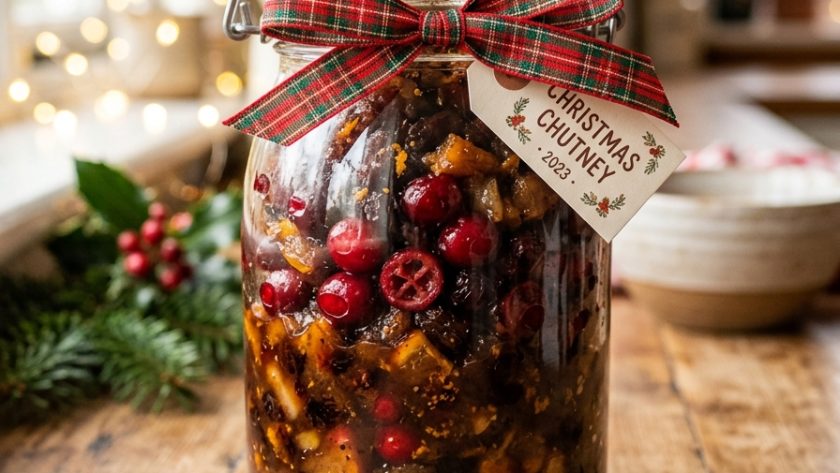
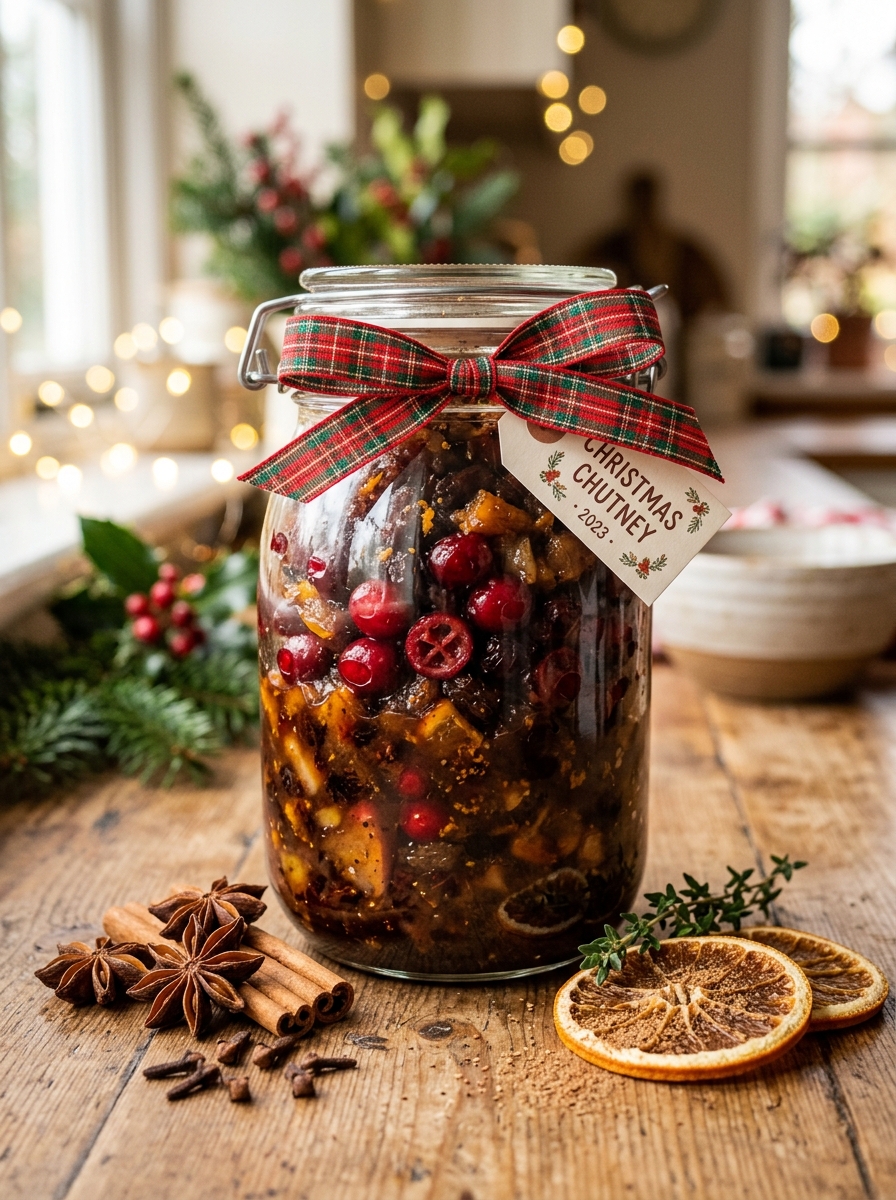
Either way, a jar of this chutney tied with ribbon and given with a good piece of cheese is a genuinely wonderful gift that costs very little and means a great deal.
What Makes This Christmas Chutney Special?
A mixture of fruits. Where tomato chutney uses a single dominant fruit, Christmas chutney benefits from a combination — dried fruit for depth and sweetness, fresh apple for body and texture, and orange for a citrus brightness that lifts the whole thing and makes it feel properly festive.
The spice blend. Cinnamon, mixed spice, ginger, and cloves — the same spices that run through Christmas baking throughout Britain — give this chutney its unmistakably festive character. They are warm without being hot, complex without being complicated.
Time in the jar. This is the most important thing. Freshly made chutney tastes raw and slightly sharp. After four to six weeks in the jar, the flavours have melded, the vinegar has mellowed, and the whole thing has developed into something rich, complex, and completely wonderful. Make it early.
Ingredients for Mary Berry Christmas Chutney
- 500g cooking apples (Bramley), peeled, cored, and roughly chopped
- 300g onions, finely chopped
- 200g dried cranberries
- 200g sultanas
- 150g dried apricots, roughly chopped
- 100g dried figs, roughly chopped
- Zest and juice of 2 unwaxed oranges
- Zest and juice of 1 unwaxed lemon
- 350g soft dark brown sugar
- 300ml red wine vinegar
- 1 tsp ground cinnamon
- 1 tsp mixed spice
- 1 tsp ground ginger
- ½ tsp ground cloves
- ½ tsp cayenne pepper
- 1 tsp fine salt
- 2 bay leaves
- 1 cinnamon stick
Equipment
- A large heavy-based preserving pan
- 4 to 5 sterilised glass jars with vinegar-proof lids
How to Make Mary Berry Christmas Chutney — Step by Step
Step 1 — Sterilise the Jars
Wash jars in hot soapy water, rinse, and place upside down in an oven at 140°C for 15 minutes. Leave in the oven until needed.
Step 2 — Combine All Ingredients
Place the chopped apples, onions, dried cranberries, sultanas, dried apricots, dried figs, orange zest and juice, lemon zest and juice, dark brown sugar, red wine vinegar, all the spices, salt, bay leaves, and cinnamon stick into the preserving pan.
Stir well to combine. The mixture will look very rough and chunky at this stage — it will transform completely during cooking.
Step 3 — Dissolve the Sugar
Heat gently over a low heat, stirring frequently, until the sugar has completely dissolved — about 10 to 12 minutes. The liquid should look clear when you lift the spoon. Do not let the mixture boil before the sugar has dissolved.
Step 4 — Simmer Until Thick
Bring to a gentle simmer and cook uncovered over a low to medium heat for 1 hour to 1 hour 30 minutes, stirring regularly. The mixture will reduce dramatically in volume, the apple will break down and almost disappear into the chutney, and the whole thing will become thick, glossy, and deeply coloured.
The chutney is ready when a wooden spoon drawn across the base of the pan leaves a clear channel that holds for a few seconds before slowly filling back. This is your test for the right consistency.
In the final 20 to 30 minutes, stir more frequently to prevent the chutney catching on the base of the pan — it becomes increasingly sticky as it thickens.
Remove the bay leaves and cinnamon stick.
Step 5 — Pot and Seal
Leave the chutney to cool for five minutes. Ladle into the hot sterilised jars, filling to within 1cm of the top. Seal immediately with vinegar-proof lids. Label with contents and date.
Leave for a minimum of four weeks before opening — six weeks is even better.
Serving Suggestions
On a Christmas cheese board alongside mature Cheddar, Stilton, and Brie. In cold turkey sandwiches on Boxing Day — spread generously on good bread with leftover turkey and a little butter.
Alongside cold cuts and pie at a buffet. As part of a hamper gift with cheese, crackers, and wine. With a simple ploughman’s lunch at any point during the festive season.
How to Store Mary Berry Christmas Chutney
Unopened: Store in a cool, dark place for up to 1 year. The flavour continues to develop and improve over the first six months.
Once opened: Refrigerate and use within 6 to 8 weeks.
Mary Berry Christmas Chutney Recipe
Ingredients
Method
- Sterilise jars in a 140°C oven for 15 minutes.
- Combine all ingredients in a large preserving pan. Stir well.
- Heat gently, stirring, until sugar completely dissolves — about 10–12 minutes. Do not boil before sugar has dissolved.
- Bring to a gentle simmer. Cook uncovered on low-medium heat for 1 hour to 1 hour 30 minutes, stirring regularly and more frequently towards the end, until thick and glossy. A spoon drawn across the base should leave a channel that holds briefly.
- Remove bay leaves and cinnamon stick. Cool 5 minutes.
- Ladle into hot sterilised jars. Fill to within 1cm of top. Seal immediately with vinegar-proof lids. Label with contents and date. Leave at least 4 weeks before opening.
Notes
Frequently Asked Questions About Mary Berry Christmas Chutney
Can I use fresh cranberries instead of dried?
Yes — but increase the sugar slightly as fresh cranberries are much more tart than dried. Use 300g of fresh cranberries in place of the dried, add an extra 50g of sugar, and expect a slightly longer cooking time as fresh cranberries release more liquid.
Can I reduce the vinegar to make it less sharp?
The vinegar is essential for both the flavour balance and the preservation of the chutney — reducing it significantly affects both. If you find the fresh chutney too sharp, give it more time in the jar — the sharpness mellows considerably with maturation.
Can I use white wine vinegar instead of red wine vinegar?
Yes — white wine vinegar gives a slightly lighter, more delicate flavour and a slightly paler colour. Red wine vinegar gives a deeper, more robust flavour that suits the Christmas spices particularly well. Both work.
Why is my chutney not thickening?
Either it needs longer on the hob, or the heat was too low — the chutney was steaming rather than reducing. Increase the heat slightly to a steady simmer and continue cooking uncovered, stirring regularly, until the right consistency is reached.
Can I make a smaller batch?
Yes — halve all the quantities and use the same method. The cooking time will be slightly shorter — check from 45 minutes and pot when the right consistency is reached.
Do I need to use a preserving pan?
A very large, heavy-based saucepan works perfectly well. The important things are that the pan is large enough to hold all the ingredients with room for bubbling, and that it has a heavy base to prevent catching. An ordinary large pot works fine.


Leave a Reply