

 Anna Louise
 Quiche Lorraine is one of those recipes that has an unfortunate reputation for being difficult, and a completely underserved one.
A well-made quiche is one of the most elegant, versatile, and satisfying things you can produce from a domestic oven — and once you understand the few techniques that make the pastry crisp and the custard silky, it becomes a reliable and deeply impressive addition to your repertoire.
Mary Berry’s quiche Lorraine is the definitive version. A crisp, short, buttery pastry case — blind baked to ensure it stays crisp beneath the filling. A custard of eggs and double cream, properly seasoned, with smoky bacon lardons and a generous scattering of Gruyère cheese.
The finished quiche is set just enough to slice cleanly while remaining silky and barely trembling in the centre — the hallmark of a quiche that has been made correctly.
This is the dish I make for summer lunches, for picnics, for dinner with a salad, for any occasion where I want something that looks and tastes impressive without requiring complicated technique.
The Two Things That Make or Break a Quiche
A properly blind-baked pastry case. Raw pastry beneath a liquid custard filling will not crisp in the oven once the filling is in — there is too much moisture above it and not enough heat reaching the base. Blind baking — baking the pastry case empty before the filling goes in — is the step that gives you a genuinely crisp, properly cooked base rather than a soft, soggy one. It is not optional.
The right custard consistency. The custard should be silky, barely set, and still very slightly trembling in the centre when you take the quiche out of the oven. It firms up as it cools. A custard that is fully set and firm in the oven will be rubbery and dry once cool — pull it out while it still wobbles.
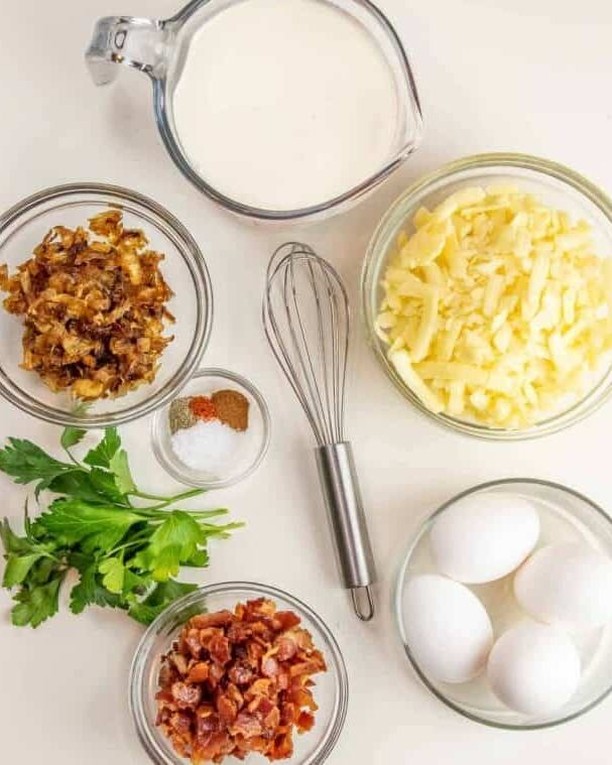
Ingredients for Mary Berry Quiche Lorraine
For the Shortcrust Pastry
- 200g plain flour, sifted
- 100g unsalted butter, cold and cubed
- Pinch of fine salt
- 1 large egg yolk
- 2–3 tbsp cold water
For the Filling
- 150g smoked bacon lardons
- 1 small onion, very finely chopped
- 4 large eggs
- 2 large egg yolks
- 300ml double cream
- 100ml whole milk
- 100g Gruyère cheese, finely grated
- ½ tsp freshly grated nutmeg
- Salt and freshly ground black pepper
How to Make Mary Berry Quiche Lorraine — Step by Step
Step 1 — Make the Pastry
Place the sifted flour, salt, and cold cubed butter in a food processor. Pulse until the mixture resembles fine breadcrumbs. Add the egg yolk and pulse again. Add cold water one tablespoon at a time, pulsing between each addition, until the dough just comes together — it should hold when pressed but not feel wet or sticky.
If making by hand, rub the butter into the flour and salt with your fingertips until fine breadcrumbs, then mix in the egg yolk and just enough cold water to bring it together.
Flatten into a disc, wrap in cling film, and refrigerate for at least 30 minutes. Chilled pastry is significantly easier to roll and is less likely to shrink during baking.
Step 2 — Roll and Line the Tin
On a lightly floured surface, roll the chilled pastry out to a circle about 3mm thick and large enough to line a 23cm loose-bottomed fluted tart tin, with some overhang at the edges. Roll the pastry around your rolling pin and carefully unroll it over the tin, pressing it gently into the base and sides without stretching.
Leave the overhang in place — do not trim yet. Prick the base all over with a fork and refrigerate for a further 20 minutes. Chilling after lining is essential — it relaxes the pastry and prevents it from shrinking away from the sides during blind baking.
Step 3 — Blind Bake the Pastry
Preheat your oven to 200°C / 180°C fan / Gas 6. Line the chilled pastry case with a sheet of baking parchment and fill with baking beans or dried rice — making sure they come up the sides as well as covering the base.
Bake for 15 minutes, then carefully remove the parchment and beans. Return to the oven for a further 8 to 10 minutes until the pastry looks dry and pale golden all over — particularly on the base. If any small cracks have appeared, patch them with a tiny amount of raw pastry pressed into the gap and return to the oven for a minute.
Reduce the oven temperature to 170°C / 150°C fan / Gas 3. Trim the excess pastry from the edges with a sharp knife while still warm, for a clean, neat finish.
Step 4 — Cook the Bacon Filling
While the pastry blind bakes, cook the bacon. Place the lardons in a dry frying pan over a medium heat and cook for 5 to 6 minutes until golden and the fat has rendered out. Add the finely chopped onion and cook for a further 5 minutes until softened. Remove from the heat and leave to cool slightly.
Step 5 — Make the Custard
Whisk the eggs, egg yolks, double cream, and whole milk together in a large jug until combined and smooth. Add the grated Gruyère — reserving a small handful for scattering on top — the nutmeg, and a generous seasoning of salt and pepper. Whisk briefly to distribute the cheese through the custard.
Step 6 — Assemble and Bake
Scatter the cooked bacon and onion mixture evenly across the base of the blind-baked pastry case. Pour the custard mixture slowly and evenly over the filling, filling the case as close to the top as possible. Scatter the reserved Gruyère over the surface.
Carefully transfer to the oven. Bake at 170°C / 150°C fan / Gas 3 for 30 to 35 minutes until the custard is just set at the edges with a gentle wobble in the centre — like a very soft jelly. Do not wait until it is fully set — it will continue to firm up as it cools.
Step 7 — Cool and Serve
Leave the quiche to cool in the tin on a wire rack for at least 15 to 20 minutes before removing the tin sides and slicing. This resting time is essential — a quiche sliced immediately from the oven will collapse. Warm or at room temperature is the ideal serving temperature.
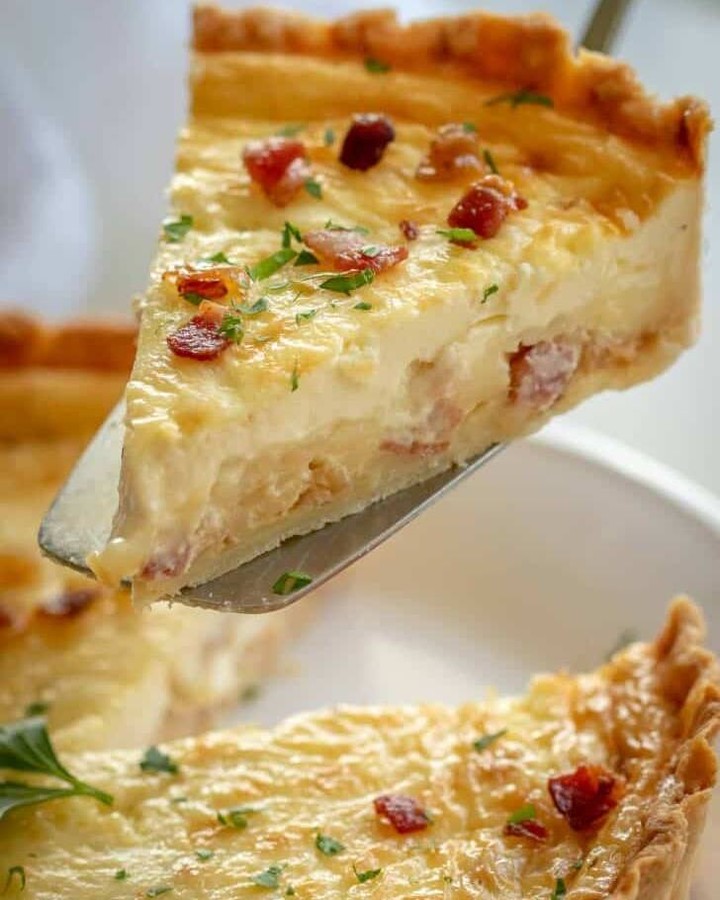
My Top Tips for the Perfect Quiche Lorraine
Keep the pastry cold at every stage. Cold butter in the dough, chilling after making, chilling again after lining the tin. Every chilling step reduces gluten development and keeps the butter cold, which is what gives shortcrust pastry its characteristic crispness and short texture rather than toughness.
Do not skip blind baking. A soggy pastry base is the most common quiche problem and it is entirely avoidable. Blind baking for the full 25 minutes — including the extra time after removing the beans — ensures a genuinely crisp base that holds up under the custard.
Pull the quiche out while the centre wobbles. The custard should still move gently in the centre when you take it out. If it is fully set and still in the oven, it will be overcooked and slightly rubbery once cool. Trust the wobble.
Use both whole eggs and extra yolks. The extra yolks enrich the custard and give it a more deeply golden colour and silkier texture than whole eggs alone.
Season the custard generously. Egg custard needs more seasoning than you might expect — it can taste flat and under-seasoned if you go gently. Taste before pouring and add salt and pepper with a generous hand.
Leave the overhang when lining the tin. Pastry shrinks slightly during baking — leaving an overhang and trimming after blind baking gives you a cleaner, more professional finish than trying to cut it level before it goes in the oven.
Serving Suggestions
Warm or at room temperature — both are excellent. With a simple green salad dressed with a sharp Dijon vinaigrette for the classic French-inspired pairing. With sliced tomatoes and a little extra seasoning. Cold from the fridge the next day, cut into wedges and packed for a picnic.
How to Store Mary Berry Quiche Lorraine
In the fridge: Cover loosely with cling film and store for up to 3 days. Serve at room temperature, or warm individual slices in a 160°C oven for 10 minutes or in a microwave for 1 to 2 minutes.
In the freezer: Cool completely, wrap tightly in cling film and foil, and freeze for up to 3 months. Defrost overnight in the fridge and bring to room temperature before serving, or warm gently in a low oven.
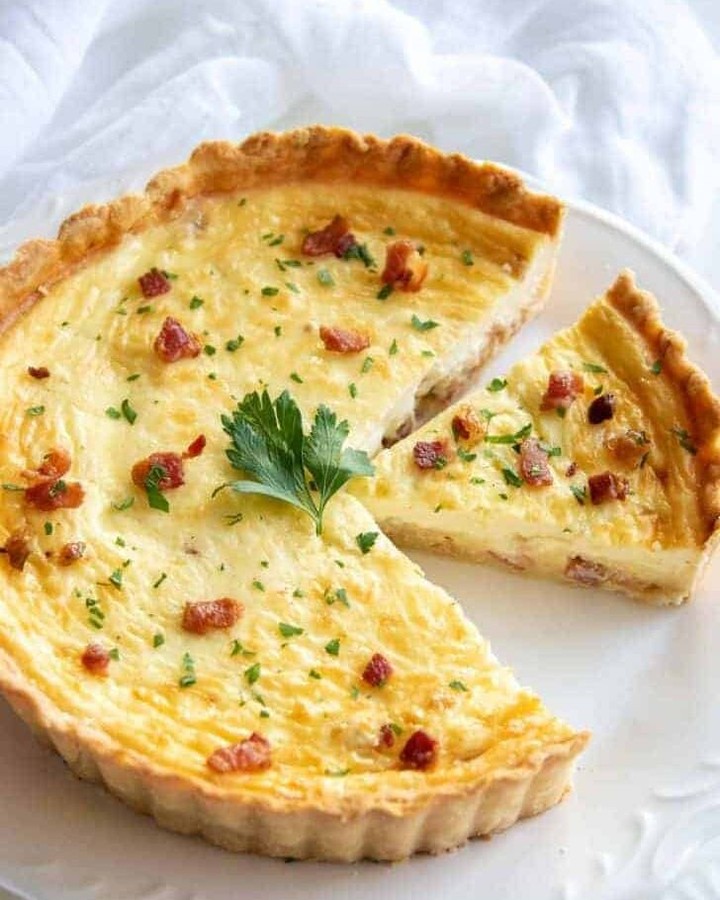
Mary Berry Quiche Lorraine
Ingredients
Method
- Pulse flour, salt, and cold butter to fine breadcrumbs. Add egg yolk and pulse. Add cold water 1 tbsp at a time until dough just comes together. Wrap and refrigerate 30 minutes.
- Roll to 3mm thickness and line a 23cm loose-bottomed tart tin. Leave overhang. Prick base. Refrigerate 20 minutes.
- Preheat oven to 200°C / 180°C fan / Gas 6. Line with parchment and baking beans. Blind bake 15 minutes. Remove beans and parchment, bake further 8–10 minutes until dry and pale golden. Trim edges. Reduce oven to 170°C / 150°C fan / Gas 3.
- Cook bacon lardons in a dry pan until golden. Add onion, cook 5 minutes. Cool slightly.
- Whisk eggs, yolks, cream, milk, most of the Gruyère, nutmeg, salt, and pepper together.
- Scatter bacon and onion across pastry base. Pour over custard. Scatter remaining Gruyère on top.
- Bake at 170°C for 30–35 minutes until just set at edges with a gentle wobble in the centre. Rest 15–20 minutes before removing tin sides and slicing.
Notes
Frequently Asked Questions About Mary Berry Quiche Lorraine
Why did my pastry shrink during blind baking?
The pastry was either not chilled for long enough after lining the tin, was rolled too thin, or was stretched rather than eased into the tin during lining. Always chill for at least 20 minutes after lining, roll to 3mm thickness, and ease the pastry into the tin gently without pulling or stretching it.
Why is the base of my quiche soggy?
Insufficient blind baking is almost always the cause. Make sure the pastry looks properly dry and pale golden on the base before adding the filling — if it still looks pale and doughy, give it another five minutes in the oven.
Can I make quiche Lorraine without Gruyère?
Yes — mature Cheddar is an excellent substitute and gives a more pronounced, slightly sharper flavour. Comté or Emmental also work beautifully if you want to stay within the French tradition.
Can I add other ingredients to the filling?
Yes — sautéed leeks are a classic addition and pair beautifully with the bacon. Caramelised onions, roasted peppers, or wilted spinach are all wonderful variations. Just make sure any vegetables are well cooked and any excess moisture squeezed out before adding to the pastry case.
Can I make the pastry in advance?
Yes — the pastry dough can be made up to 3 days ahead and stored wrapped in the fridge, or frozen for up to 3 months. The blind-baked pastry case can also be made a day ahead and stored at room temperature, ready to fill and bake the following day.
Can I use shop-bought pastry?
Yes — a good quality ready-made shortcrust pastry works perfectly well and significantly reduces the preparation time. Roll it out and use it in exactly the same way as homemade.




Leave a Reply