
 Anna Louise
 Coq au vin is one of those dishes that sounds far more intimidating than it actually is. The name — French for “chicken in wine” — conjures images of complicated technique and professional kitchens.
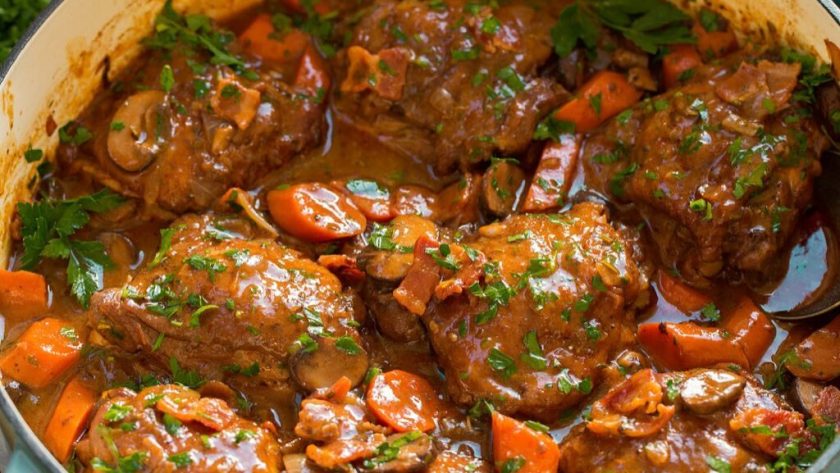
The reality is something much simpler and much more achievable: chicken pieces browned, then braised slowly in red wine with bacon, mushrooms, and shallots until the meat is fall-apart tender and the sauce has become deep, glossy, and intensely flavoured.
Mary Berry’s coq au vin is the version I return to whenever I want a dinner party dish that does almost all of its work unattended in the oven.
The initial preparation takes perhaps 30 minutes of active cooking — browning the chicken and bacon, softening the vegetables — and then the oven takes over for an hour and a half, during which the chicken becomes extraordinarily tender and the sauce reduces and deepens into something genuinely special.
This is a dish that smells incredible while it cooks, looks impressive when it arrives at the table, and tastes like it took far more skill than it actually requires.
What Makes a Great Coq au Vin?
The wine matters. You do not need an expensive bottle, but you do need a decent one — something you would be happy drinking a glass of. A poor quality cooking wine produces a thin, harsh sauce no amount of reduction can fully redeem. A good, full-bodied red — a Burgundy if you want to be traditional, or any robust red you enjoy — gives the sauce real depth.
Browning is not optional. Both the chicken and the bacon must be properly browned before the braising liquid goes in. This is where the foundational flavour of the dish comes from — the fond left in the pan after browning is deglazed with the wine, carrying all that flavour into the sauce.
Low and slow in the oven. A gentle oven braise — rather than a hob simmer — gives you even, consistent heat all around the pot, resulting in chicken that is tender throughout without any risk of the bottom catching or burning.
Ingredients for Mary Berry Coq au Vin
- 8 chicken thighs and drumsticks, skin on, bone in
- 2 tbsp plain flour
- Salt and freshly ground black pepper
- 2 tbsp olive oil
- 150g smoked bacon lardons
- 12–16 shallots, peeled and left whole (or 2 large onions, roughly chopped)
- 2 garlic cloves, crushed
- 250g chestnut mushrooms, halved or quartered if large
- 2 tbsp brandy (optional)
- 500ml full-bodied red wine (Burgundy or similar)
- 300ml chicken stock
- 2 tbsp tomato purée
- 2 bay leaves
- 3–4 sprigs fresh thyme
- 1 tbsp redcurrant jelly or soft brown sugar
- Fresh flat-leaf parsley, chopped, to finish
How to Make Mary Berry Coq au Vin — Step by Step
Step 1 — Preheat and Prepare
Preheat your oven to 160°C / 140°C fan / Gas 3. Pat the chicken pieces dry with kitchen paper — this is essential for good browning, as wet skin will not crisp or colour properly. Season the flour with salt and pepper and dust the chicken pieces lightly all over.
Step 2 — Brown the Chicken
Heat the olive oil in a large, heavy-based, ovenproof casserole dish or Dutch oven over a medium-high heat. Brown the chicken pieces in batches, skin-side down first, for 3 to 4 minutes per side, until deeply golden brown all over. Do not crowd the pan — browning in batches takes longer but gives a far better result. Transfer the browned chicken to a plate and set aside.
Step 3 — Brown the Bacon and Vegetables
In the same pan, add the bacon lardons and cook for 4 to 5 minutes until golden and the fat has rendered out. Add the shallots and cook for a further 8 to 10 minutes, stirring occasionally, until they begin to soften and colour at the edges. Add the garlic and mushrooms and cook for another 3 to 4 minutes.
Step 4 — Deglaze and Build the Sauce
If using brandy, pour it in now and let it bubble for 30 seconds, scraping up any browned bits from the base of the pan with a wooden spoon — this is where a great deal of flavour lives.
Pour in the red wine and bring to a simmer, scraping the base of the pan thoroughly to lift all the caramelised bits into the sauce. Stir in the chicken stock, tomato purée, bay leaves, and thyme.
Step 5 — Return the Chicken and Braise
Return the browned chicken pieces to the pan, nestling them into the liquid — they do not need to be fully submerged, but should be mostly covered. Bring to a gentle simmer on the hob, then cover with a lid and transfer to the oven.
Braise for 1 hour 30 minutes to 1 hour 45 minutes, until the chicken is completely tender and falling away from the bone easily when tested with a fork.
Step 6 — Finish the Sauce
Remove the casserole from the oven. Carefully lift out the chicken pieces and set aside on a plate, covered to keep warm. Remove the bay leaves and thyme sprigs from the sauce.
Place the casserole on the hob over a medium-high heat and simmer the sauce, uncovered, for 8 to 10 minutes to reduce and thicken slightly — it should become glossy and coat the back of a spoon. Stir in the redcurrant jelly or brown sugar to balance the acidity of the wine, and taste for seasoning, adjusting salt and pepper as needed.
Step 7 — Serve
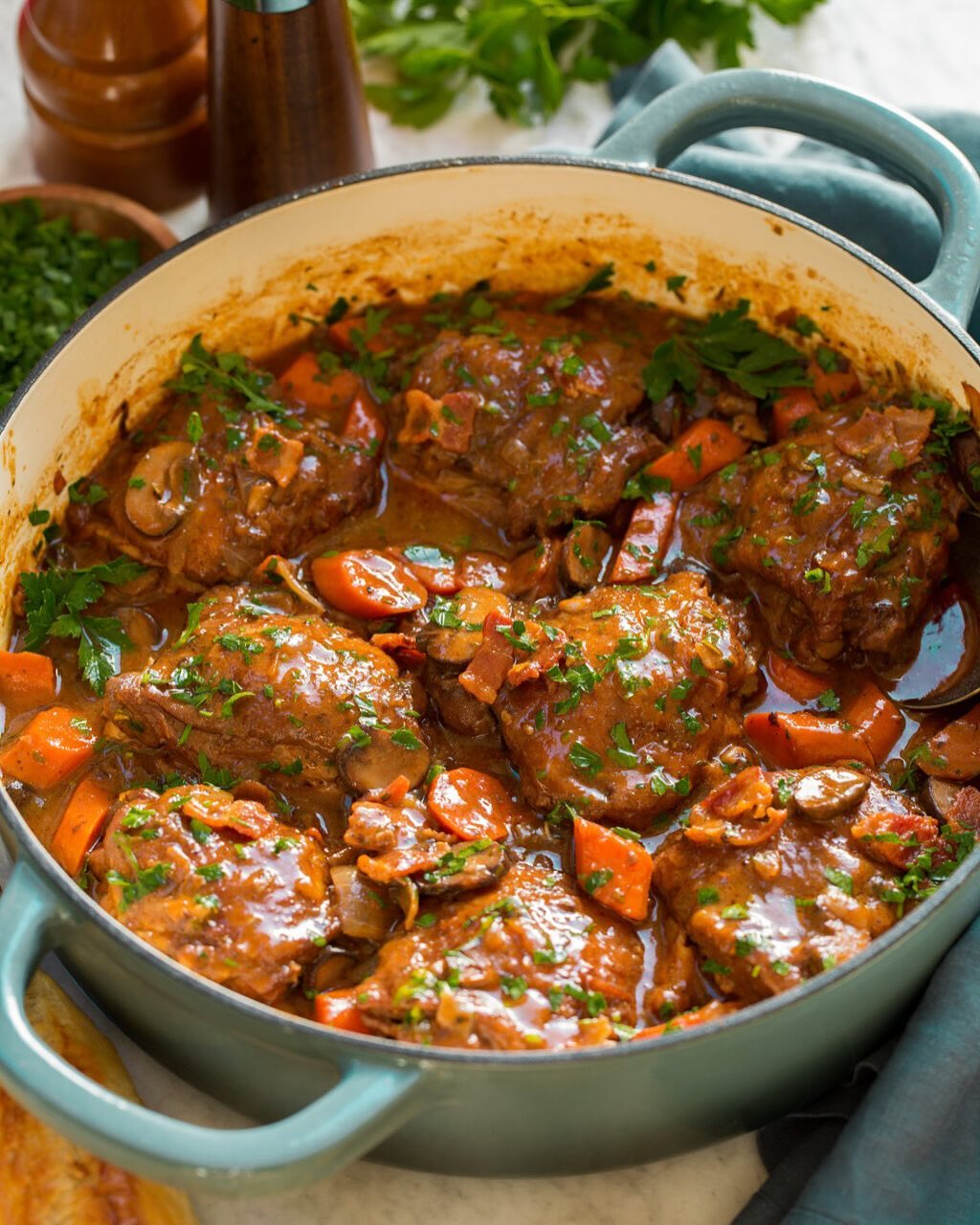
Return the chicken to the sauce, spooning the sauce over the top to glaze everything beautifully. Scatter with chopped fresh parsley and serve.
My Top Tips for the Best Coq au Vin
Pat the chicken completely dry before browning. This is the difference between deeply golden, crisp-edged chicken skin and pale, steamed-looking skin. A few minutes with kitchen paper makes a real difference to both flavour and appearance.
Brown in batches, never crowd the pan. Overcrowding causes the chicken to steam rather than brown — the temperature of the pan drops and moisture released by the chicken has nowhere to go. Take the extra time to brown in two or three batches.
Use a wine you would drink. You are reducing this wine down significantly, concentrating its flavour. A poor quality wine concentrates into a harsh, unpleasant sauce. A decent, drinkable red — it does not need to be expensive, just decent — concentrates into something genuinely delicious.
Use whole shallots if you can find them. Small whole shallots, peeled but left whole, become wonderfully sweet and tender during the long braise and look beautiful in the finished dish. If shallots are unavailable or too fiddly, roughly chopped onion is a perfectly good substitute.
Reduce the sauce properly at the end. This final 8 to 10 minutes of uncovered simmering on the hob is what takes the sauce from “thin braising liquid” to “glossy, rich sauce that clings to the chicken.” Do not skip it.
Make it the day before. Coq au vin is one of those dishes that genuinely improves overnight — the flavours continue to develop and meld together. Make it a day ahead, refrigerate, and gently reheat before serving for an even better result.
Serving Suggestions
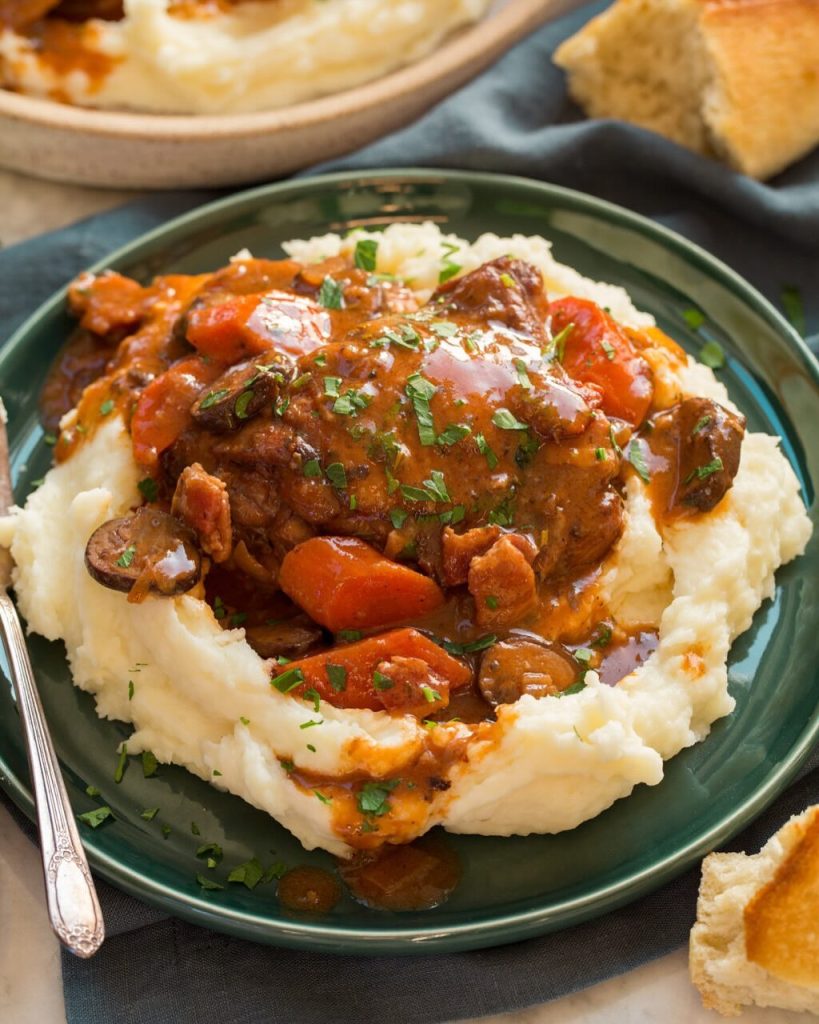
With creamy mashed potato or buttered new potatoes to soak up the sauce — this is the classic pairing and difficult to beat. With crusty bread for mopping up every last bit of sauce.
A simple green salad or steamed green beans on the side adds freshness. The same red wine you cooked with, served alongside, completes the picture beautifully.
How to Store Mary Berry Coq au Vin
In the fridge: Store in an airtight container for up to 3 days. Reheat gently on the hob or in a covered dish in a 160°C oven for 25 to 30 minutes until piping hot throughout. It genuinely tastes better on day two.
In the freezer: Freeze in an airtight container for up to 3 months. Defrost overnight in the fridge and reheat gently on the hob, adding a splash of stock or water if the sauce has thickened too much during freezing.
Mary Berry Coq au Vin Recipe
Ingredients
Method
- Preheat oven to 160°C / 140°C fan / Gas 3. Pat chicken dry, season flour, and dust chicken lightly all over.
- Brown chicken in batches in hot oil, skin-side down first, 3–4 minutes per side until deeply golden. Set aside.
- Brown bacon in same pan, 4–5 minutes. Add shallots, cook 8–10 minutes until softened and coloured. Add garlic and mushrooms, cook 3–4 minutes.
- Add brandy if using, bubble 30 seconds, scraping the pan. Add wine, simmer and scrape base. Stir in stock, tomato purée, bay leaves, and thyme.
- Return chicken to pan, nestling into the liquid. Bring to a simmer, cover, and transfer to oven. Braise 1 hour 30 minutes to 1 hour 45 minutes until tender.
- Remove chicken and keep warm. Remove bay leaves and thyme. Simmer sauce uncovered on the hob 8–10 minutes until glossy and thickened. Stir in redcurrant jelly. Season to taste.
- Return chicken to sauce, spoon over to glaze. Scatter with parsley. Serve.
Notes
Frequently Asked Questions About Mary Berry Coq au Vin
Can I make coq au vin on the hob instead of in the oven?
Yes — after returning the chicken to the pan, cover and simmer very gently on the lowest possible hob setting for the same amount of time, checking occasionally to make sure it is not catching on the bottom. The oven method gives more even heat with less risk of burning, which is why it is generally preferred.
Can I use chicken breasts instead of thighs and drumsticks?
I would not recommend it. Chicken breast becomes dry and stringy during a long braise — the dark meat of thighs and drumsticks is what holds up to this length of cooking and becomes wonderfully tender rather than tough. If you must use breast, reduce the braising time significantly and check regularly.
Can I make this without alcohol?
The wine is fairly central to the flavour and character of coq au vin, but you can substitute it with a good quality alcohol-free red wine, or with additional stock combined with a tablespoon of red wine vinegar and a tablespoon of redcurrant jelly to mimic some of the depth and acidity that the wine provides.
Why is my sauce too thin?
It either needed longer reducing on the hob at the end, or there was too much liquid relative to the size of the pan. The final reduction step — 8 to 10 minutes uncovered, simmering briskly — is essential for thickening the sauce to the right consistency.
Can I add other vegetables?
Yes — small whole carrots or pearl onions can be added alongside the shallots for extra colour and flavour. Add them at the same stage as the shallots so they have time to become tender during the braise.
Can I make this in a slow cooker?
Yes — brown the chicken, bacon, and vegetables as directed, then transfer everything to a slow cooker with the wine, stock, and other ingredients. Cook on low for 6 to 8 hours. Reduce the sauce on the hob in a separate pan at the end, as slow cookers do not allow for the same reduction.



Leave a Reply