
 Anna Louise
 Few dishes carry the weight of occasion quite like beef Wellington. It is the dish for the dinner that matters — Christmas, an anniversary, the meal you have been planning for weeks.
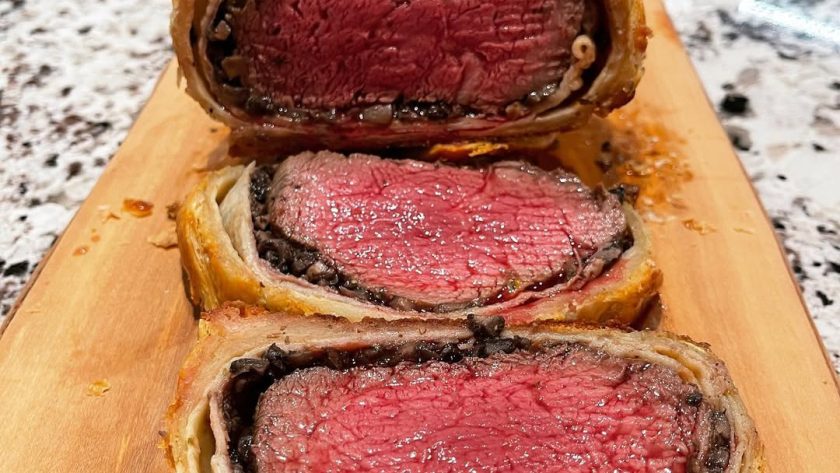
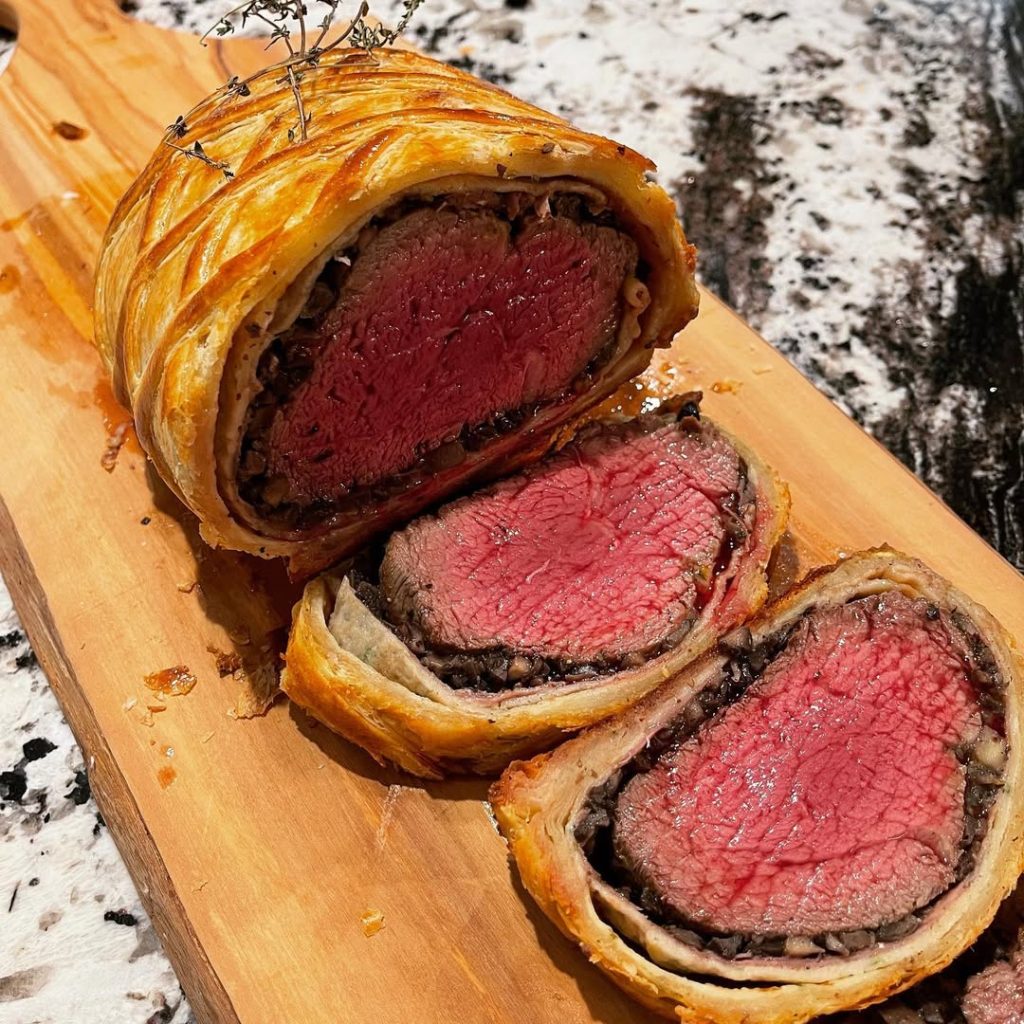
A whole piece of beef fillet, wrapped in a rich mushroom duxelles, encased in golden, crisp puff pastry, sliced to reveal perfectly pink meat at the centre. It looks, and tastes, like something from a professional kitchen.
Mary Berry’s beef Wellington recipe takes the intimidation out of this dish without taking away any of its impact. The technique is broken down into manageable stages — searing the beef, making the mushroom duxelles, wrapping and chilling, then the final bake. Each stage is straightforward on its own. Together, they produce something genuinely spectacular.
This is the dish I make when I want to mark an occasion properly. It takes some advance preparation, but very little of it is difficult — it is mostly about timing and patience, and the result is more than worth it.
The Three Stages That Make a Great Beef Wellington
Searing the beef first. A quick, hot sear on all sides of the fillet before wrapping gives the meat a head start on cooking and develops flavour on the surface. It must be properly cooled before wrapping, or the heat will begin cooking the pastry from the inside out.
The mushroom duxelles must be cooked down until almost dry. This finely chopped mushroom mixture, cooked slowly until all the moisture has evaporated, forms a flavourful barrier between the beef and the pastry. A wet duxelles makes the pastry soggy — cooking it until properly dry is essential.
Chilling before baking. The wrapped Wellington must be chilled — ideally for at least an hour, longer if possible — before it goes into the oven. This firms up the pastry and the filling, helping everything hold its shape and ensuring the pastry has time to relax, which prevents shrinkage during baking.
Ingredients for Mary Berry Beef Wellington
For the Beef
- 800g–1kg beef fillet, trimmed and tied if necessary
- 2 tbsp olive oil
- Salt and freshly ground black pepper
- 2 tbsp Dijon mustard
For the Mushroom Duxelles
- 400g chestnut mushrooms, very finely chopped
- 2 shallots, very finely chopped
- 2 garlic cloves, crushed
- 25g unsalted butter
- 2 tbsp fresh thyme leaves
- Salt and freshly ground black pepper
For the Wrapping
- 8–10 slices Parma ham or prosciutto
- 500g ready-made puff pastry (or 2 sheets ready-rolled)
- 2 large egg yolks, beaten with 1 tbsp water (for the egg wash)
How to Make Mary Berry Beef Wellington — Step by Step
Step 1 — Sear the Beef
Pat the beef fillet completely dry with kitchen paper and season generously all over with salt and pepper. Heat the olive oil in a large frying pan over a high heat until shimmering.
Sear the beef for 1 to 2 minutes on each side — including the ends — until well browned all over. You are not cooking it through, just developing colour and flavour on the surface. The total searing time should be no more than 6 to 8 minutes.
Remove from the pan and brush all over with the Dijon mustard while still warm. Leave to cool completely — at least 30 minutes. This is essential; wrapping warm beef will start cooking the pastry from the inside before it even goes in the oven.
Step 2 — Make the Mushroom Duxelles
Melt the butter in the same pan over a medium heat. Add the finely chopped mushrooms, shallots, and garlic. Cook, stirring frequently, for 15 to 20 minutes until the mixture has reduced significantly in volume and almost all the moisture has evaporated — the mixture should look dry and paste-like, not wet.
Stir in the thyme leaves and season with salt and pepper. Remove from the heat and leave to cool completely.
Step 3 — Assemble the Wrapping Layer
Lay out a large sheet of cling film on your work surface — about twice the length of the beef fillet. Arrange the slices of Parma ham on the cling film, overlapping slightly, in a rectangle large enough to wrap around the beef completely.
Spread the cooled mushroom duxelles evenly over the Parma ham, leaving a small border around the edges.
Step 4 — Wrap the Beef
Place the cooled, mustard-coated beef fillet along the centre of the duxelles-covered Parma ham. Using the cling film to help, roll the Parma ham and duxelles tightly around the beef, forming a neat cylinder. Twist the ends of the cling film tightly to secure, and refrigerate for at least 30 minutes — this helps the wrapped beef hold its shape for the next stage.
Step 5 — Wrap in Pastry
Roll out the puff pastry on a lightly floured surface to a rectangle large enough to completely enclose the beef, with enough overlap to seal. If using two sheets, overlap them slightly and press together to join.
Unwrap the chilled beef cylinder from the cling film and place it in the centre of the pastry. Brush the edges of the pastry with the egg wash. Wrap the pastry around the beef, sealing the seams firmly — trim any excess pastry, but keep enough to crimp and decorate if you like.
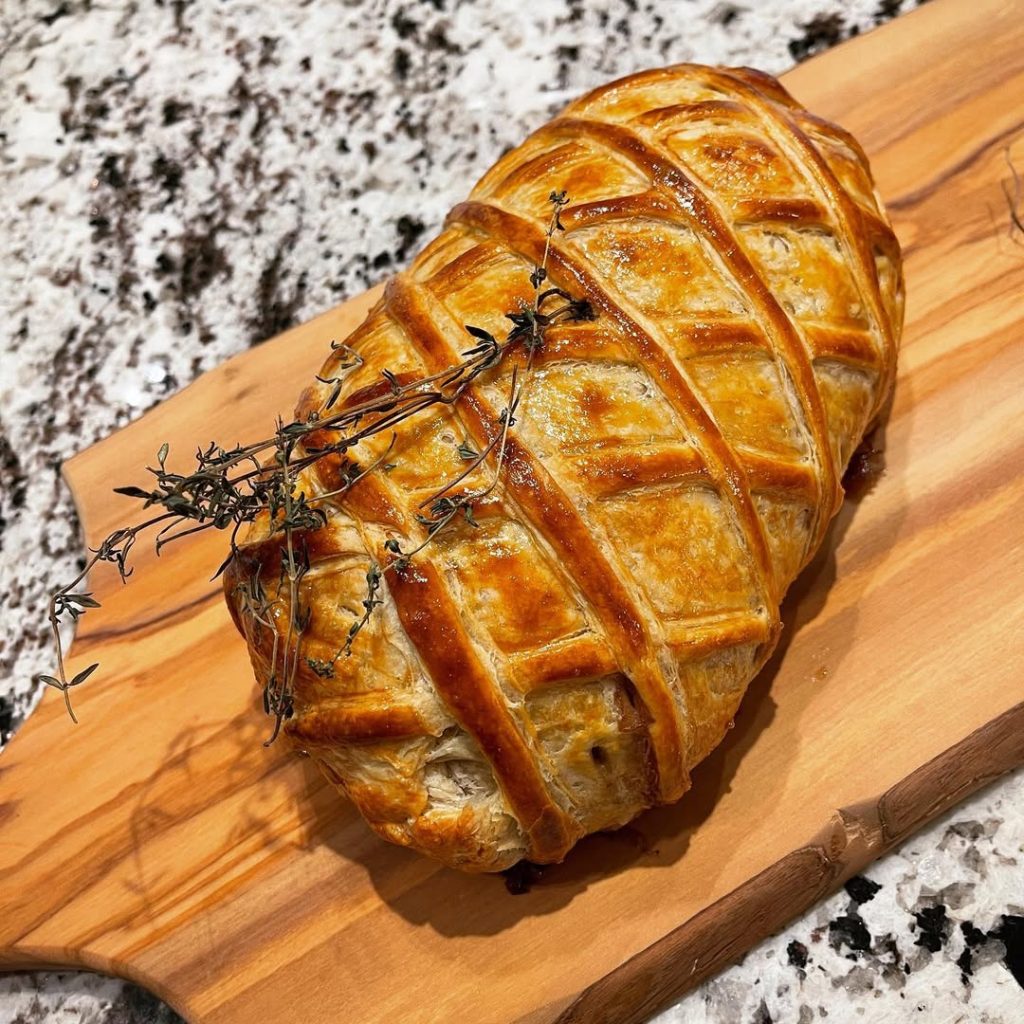
Place seam-side down on a baking tray lined with parchment. Brush all over with egg wash. If you have time and excess pastry, cut decorative leaves or strips and arrange on top, brushing with more egg wash.
Refrigerate for at least 1 hour — longer if possible, up to 24 hours — before baking. This chilling step is essential for the pastry to hold its shape and for an even bake.
Step 6 — Score and Bake
Preheat your oven to 200°C / 180°C fan / Gas 6. Remove the Wellington from the fridge. Brush with a final layer of egg wash and use a sharp knife to score shallow diagonal lines across the top of the pastry — this is both decorative and helps steam escape during baking.
Bake for 35 to 45 minutes for medium-rare, depending on the thickness of your fillet. The pastry should be deep golden brown and well risen. For an accurate result, use a meat thermometer inserted into the centre — 50–52°C for rare, 55–57°C for medium-rare, 60–63°C for medium.
Step 7 — Rest and Serve
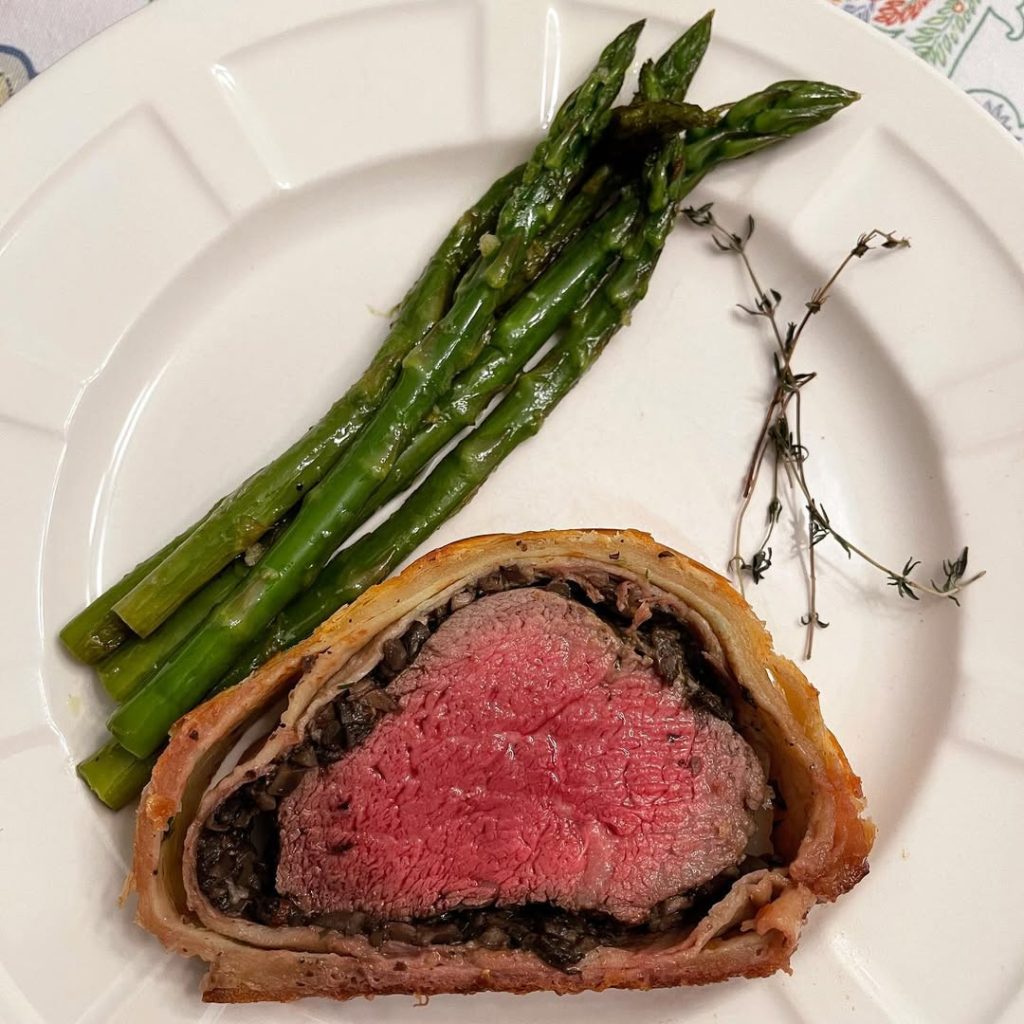
Remove from the oven and leave to rest for 10 to 15 minutes before slicing — this allows the juices to redistribute through the meat and makes slicing much cleaner. Slice with a sharp serrated knife into thick slices, revealing the layers of pastry, ham, duxelles, and perfectly pink beef at the centre.
My Top Tips for the Perfect Beef Wellington
Buy the best quality beef fillet you can afford. This is the centrepiece of the dish and there is nowhere for poor quality meat to hide. Ask your butcher for a piece of fillet that is even in thickness throughout — this ensures even cooking.
Cool the beef completely before wrapping. I cannot stress this enough. Warm beef will begin to cook the pastry from the inside, resulting in soggy, undercooked pastry around a beef that has continued cooking past the point you wanted. Thirty minutes minimum, longer is better.
Cook the duxelles until properly dry. This takes longer than you might expect — 15 to 20 minutes of patient stirring. A wet duxelles is the single most common cause of soggy pastry in a beef Wellington. The mixture should look almost like a paste with no visible liquid.
Use a meat thermometer. Beef Wellington is an expensive dish to get wrong, and visual cues alone are unreliable through a pastry casing. A meat thermometer takes the guesswork out entirely and is the single best investment for getting this dish right consistently.
Chill at every stage. Chilling after wrapping in Parma ham, and chilling again after wrapping in pastry, both matter. Each chilling step firms everything up, helps the Wellington hold its shape, and allows the pastry to relax — all of which contribute to a better final result.
Score the pastry before baking. This is not just decorative — it allows steam to escape during baking, which helps keep the pastry crisp rather than soggy from trapped steam.
Serving Suggestions
With roasted or fondant potatoes, a rich red wine jus, and a green vegetable such as tenderstem broccoli or green beans — this is the classic accompaniment and it is hard to improve on.
A béarnaise or peppercorn sauce alongside is wonderful if you want something a little more indulgent. A good full-bodied red wine — a Bordeaux or a Barolo — is the perfect pairing for an occasion this special.
How to Store Mary Berry Beef Wellington
Unbaked, wrapped Wellington: Can be refrigerated for up to 24 hours before baking — this is actually recommended as part of the method.
Baked Wellington: Leftovers can be stored in the fridge for up to 2 days. Reheat slices in a hot oven (200°C) for 10 to 12 minutes — the pastry will not be as crisp as freshly baked but the flavour remains excellent.
Freezing: It is possible to freeze the assembled, unbaked Wellington for up to 1 month, wrapped tightly. Defrost overnight in the fridge before baking. Freezing after baking is not recommended as the pastry texture suffers significantly.
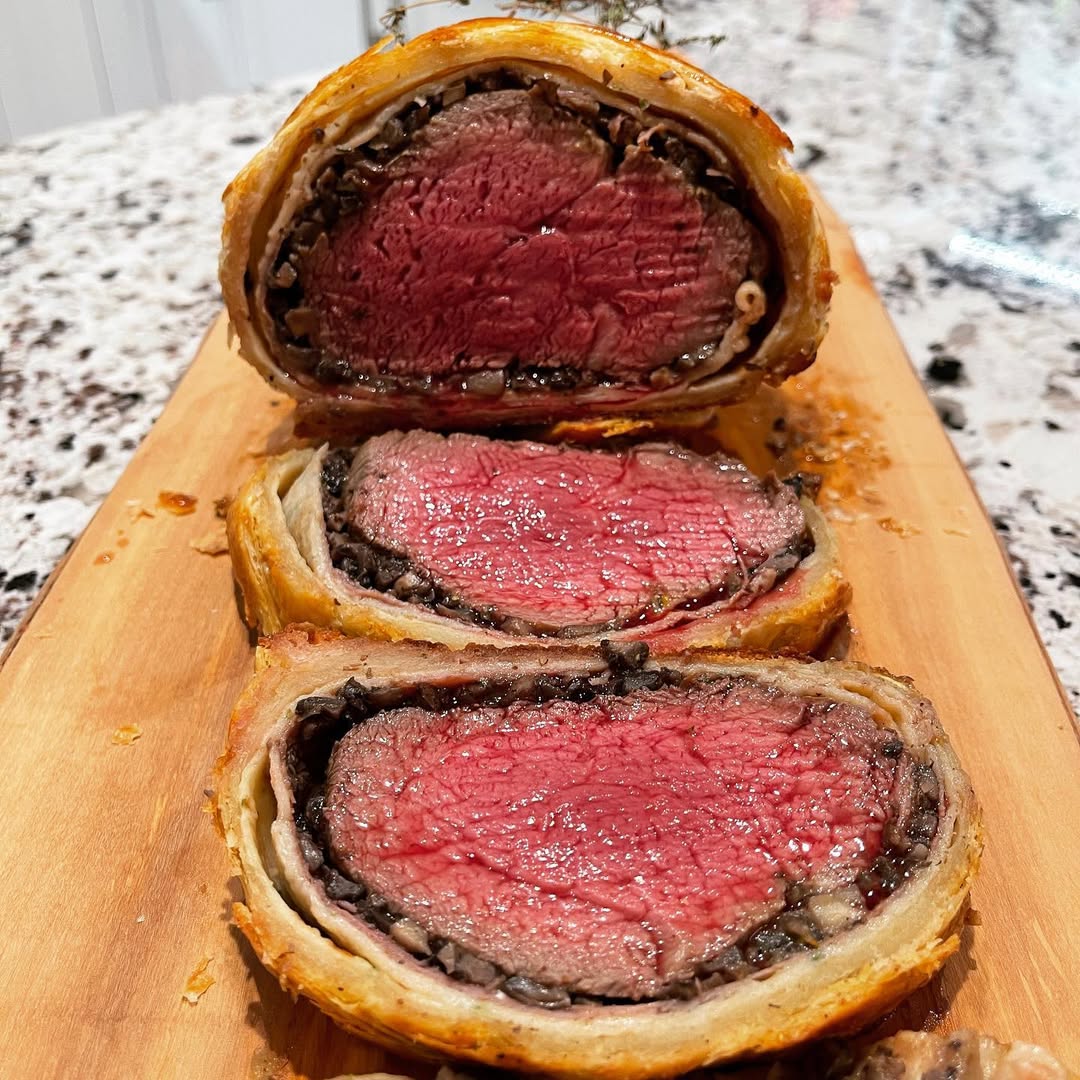
Mary Berry Beef Wellington
Ingredients
Method
- Pat beef dry, season generously. Sear in hot oil for 1–2 minutes per side until browned all over. Brush with Dijon mustard. Cool completely, at least 30 minutes.
- Melt butter, cook mushrooms, shallots, and garlic for 15–20 minutes until reduced and dry, almost paste-like. Stir in thyme. Season. Cool completely.
- Arrange Parma ham slices, overlapping, on cling film. Spread duxelles evenly over the top. Place cooled beef in the centre. Roll tightly into a cylinder using the cling film. Twist ends to secure. Refrigerate at least 30 minutes.
- Roll out puff pastry into a rectangle large enough to enclose the beef. Unwrap beef cylinder and place on pastry. Brush pastry edges with egg wash. Wrap and seal seams. Place seam-side down on a lined baking tray. Brush with egg wash and decorate if desired. Refrigerate at least 1 hour, up to 24 hours.
- Preheat oven to 200°C / 180°C fan / Gas 6. Brush Wellington with egg wash again and score diagonal lines across the top.
- Bake for 35–45 minutes until deep golden brown and internal temperature reaches 55–57°C for medium-rare.
- Rest for 10–15 minutes before slicing with a sharp serrated knife.
Notes
Frequently Asked Questions About Mary Berry Beef Wellington
Why is my pastry soggy on the bottom?
Almost always caused by a wet duxelles or beef that was not cooled completely before wrapping. Make sure the duxelles is cooked until properly dry and paste-like, and that the beef is completely cool — ideally cold — before assembly. Baking on a preheated baking tray can also help give the base a head start on crisping.
How do I know what temperature to cook the beef to?
A meat thermometer is the most reliable method. For rare, remove at 50–52°C internal temperature. For medium-rare — the classic choice for Wellington — aim for 55–57°C. The temperature will rise by a few degrees during resting, so remove the Wellington slightly before your target temperature.
Can I make beef Wellington ahead of time?
Yes — this is one of the most make-ahead-friendly showstopper dishes. Assemble the wrapped Wellington up to 24 hours in advance and keep it refrigerated. Bake fresh on the day you plan to serve it.
Can I use a different cut of beef?
Beef fillet (also called tenderloin) is the traditional and best choice — it is tender, even in shape, and cooks quickly and evenly. Other cuts, such as sirloin, can be used but will not be as tender and may cook less evenly.
Why did my pastry shrink during baking?
This usually happens if the pastry was not chilled for long enough before baking. Cold pastry holds its shape much better in a hot oven. Chill for at least an hour, and longer if possible.
Can I make individual beef Wellingtons?
Yes — use individual portions of fillet steak (about 150–200g each) and follow the same method, scaling down the duxelles and pastry accordingly. Reduce the baking time to 20 to 25 minutes, checking the internal temperature for each one individually as they may cook at slightly different rates.


Leave a Reply