
 Anna Louise
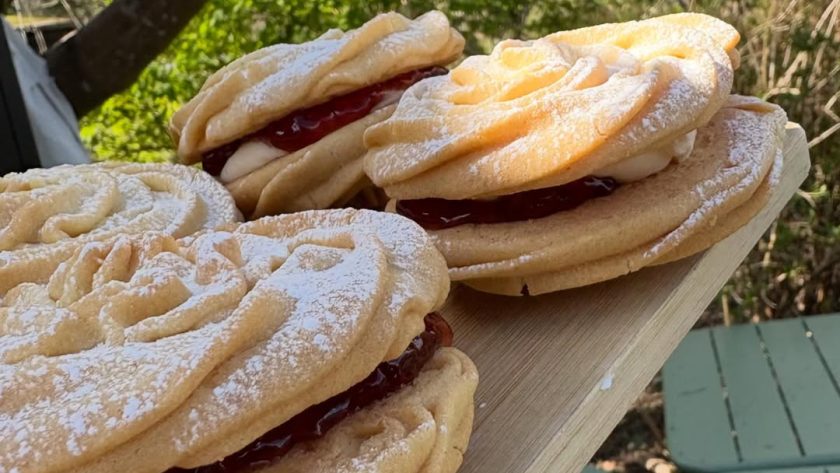
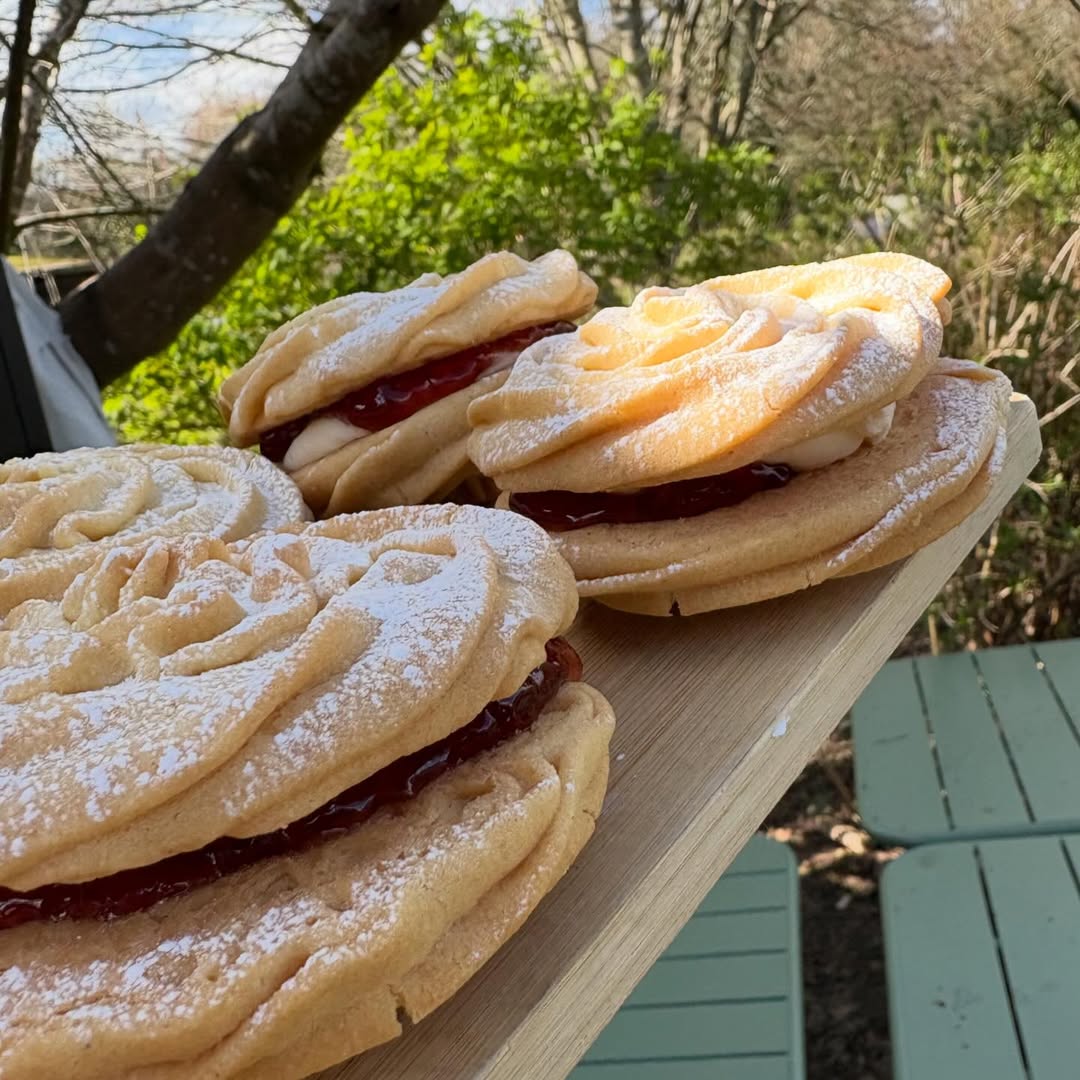
 There are biscuits you make and there are biscuits you present. Viennese whirls fall firmly into the second category. The moment a plate of them arrives at the table — those beautiful piped rosettes, dusted with icing sugar, sandwiched with a jewel of raspberry jam and pale vanilla buttercream — something happens to people. They slow down. They pick one up carefully. They take a bite and then go very quiet for a moment.
That moment of quiet is the melt-in-the-mouth quality that defines a perfect Viennese whirl. The biscuit dissolves almost immediately — barely any chewing required — leaving behind an intense, pure butteriness that is completely unlike any other biscuit texture in British baking. It is extraordinary for something made from such simple ingredients.
Mary Berry’s Viennese whirls recipe achieves that quality reliably and consistently. The method is precise — it needs to be — but once you understand why each step matters, these become one of the most rewarding biscuits you will ever make.
If you have been searching for the perfect Mary Berry Viennese whirls recipe, this is exactly what you need.
Why Viennese Whirls Have That Unique Melt-in-the-Mouth Texture
The answer is the ratio of butter to flour — and the addition of cornflour.
Viennese whirl dough contains a significantly higher proportion of butter than most biscuit doughs. This high fat content is what creates that characteristic melt-in-the-mouth quality — fat inhibits gluten development, keeping the biscuit tender and fragile rather than crisp and snappy.
The cornflour works in the same direction — it replaces some of the plain flour, further reducing gluten development and making the biscuit even more delicate and short.
The result is a dough that is almost impossibly soft — so soft it cannot be rolled or shaped by hand. It must be piped. And piping it is what gives Viennese whirls their beautiful, elegant appearance.
Ingredients for Mary Berry Viennese Whirls
For the Viennese Whirl Biscuits
- 250g unsalted butter, softened to room temperature
- 50g icing sugar, sifted
- 1 tsp vanilla extract
- 225g plain flour, sifted
- 25g cornflour, sifted
- Pinch of salt
For the Filling
- 100g unsalted butter, softened
- 200g icing sugar, sifted
- 1 tsp vanilla extract
- 1–2 tbsp whole milk, to loosen
- 4 tbsp good quality raspberry jam (seedless is best for a cleaner finish)
To Finish
- Icing sugar, for dusting
How to Make Mary Berry Viennese Whirls — Step by Step
Step 1 — Preheat and Prepare
Preheat your oven to 190°C / 170°C fan / Gas 5. Line two large baking trays with baking parchment. If you want perfectly uniform biscuits — and for Viennese whirls, uniformity is part of the appeal — draw 4cm circles on the underside of the parchment as guides. Space them at least 4cm apart.
Step 2 — Make the Biscuit Dough
Beat the softened butter and sifted icing sugar together with an electric hand whisk for four to five minutes until very pale, extremely light, and almost white. This extended creaming is essential — it introduces air into the dough that gives the biscuits their lightness. Do not rush this step.
Add the vanilla extract and beat for another 30 seconds.
Sift the plain flour, cornflour, and salt into the bowl. Fold gently with a spatula until just combined. The dough will be very soft — almost like a thick, pipeable paste. This is correct. If it seems too stiff to pipe easily, beat in half a teaspoon of milk to loosen it very slightly.
Step 3 — Pipe the Biscuits
Transfer the dough to a piping bag fitted with a large star nozzle — a 1M or 2D nozzle works beautifully and gives you those classic, well-defined ridges.
If you find filling a piping bag difficult, stand it in a tall glass or jug and fold the top edge over the rim — this keeps it open and stable while you spoon in the dough.
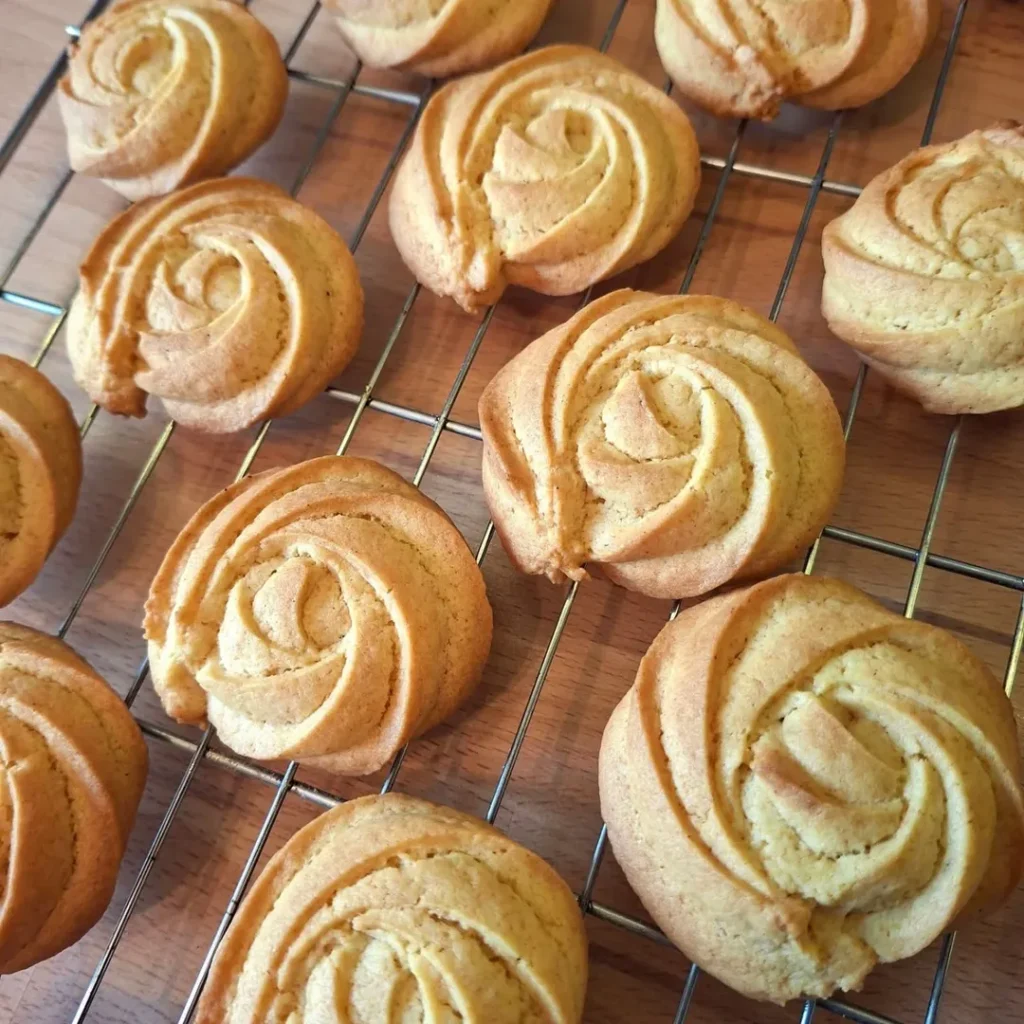
Pipe rosettes onto the prepared trays, using your pencilled circles as guides. Start in the centre and pipe outward and around in one smooth, continuous motion, finishing with a slight upward flick to create a point. Apply even, steady pressure throughout — inconsistent pressure gives you uneven shapes.
This recipe makes approximately 20 individual rosettes, which will be sandwiched into 10 finished whirls.
Step 4 — Chill Before Baking
Place the trays in the fridge for 15 minutes before baking. This firms the butter back up and helps the biscuits hold their piped shape in the oven rather than spreading and losing definition. Do not skip this step — it is what keeps those beautiful ridges sharp and defined after baking.
Step 5 — Bake
Bake on the middle shelf for 13 to 15 minutes until the biscuits are very pale golden at the edges and just set in the centre. They should be the palest possible gold — barely coloured. Viennese whirls should be pale and delicate, not golden brown. Watch them carefully.
Leave on the trays for 10 minutes before transferring very carefully to a wire rack. These biscuits are extremely fragile when warm — handle them with great care.
Step 6 — Make the Vanilla Buttercream
Beat the softened butter alone for three to four minutes until very pale and fluffy. Add the sifted icing sugar in two batches, beating well after each. Add the vanilla extract and enough milk to bring the buttercream to a smooth, easily pipeable consistency.
Transfer to a clean piping bag fitted with a star nozzle.
Step 7 — Assemble the Whirls
Once the biscuits are completely cold, match them into pairs of similar size. Spread or pipe a small amount of raspberry jam onto the flat side of one biscuit from each pair. Pipe a small rosette of vanilla buttercream onto the flat side of the other biscuit. Press the two halves together gently — just enough to adhere without squashing.
Dust generously with icing sugar immediately before serving.
My Top Tips for Perfect Viennese Whirls
The butter must be genuinely soft — not just slightly less cold. This is the most important preparation step. The butter should be at room temperature — around 20°C — and should yield completely when you press your finger into it. Cold butter will not cream to the right consistency and the dough will be too stiff to pipe smoothly. Take it out of the fridge at least two hours before you start.
Beat the butter and icing sugar for the full four to five minutes. The extended creaming is what gives these biscuits their lightness. The colour of the mixture should change from pale yellow to almost white. Set a timer and do not stop early.
Use icing sugar, not caster sugar, in the dough. Icing sugar has a much finer texture than caster sugar and dissolves completely into the butter during creaming, giving a smoother, more delicate dough. Caster sugar leaves a slightly grainier texture. Icing sugar only.
Do not skip chilling the piped biscuits. Fifteen minutes in the fridge before baking is the difference between biscuits that hold their beautiful piped shape and biscuits that spread and lose definition. The chill takes no effort and makes a significant visual difference to the finished result.
Use a large star nozzle for well-defined ridges. A small nozzle gives you thin, undefined ridges that lose their shape during baking. A large star nozzle — 1M or 2D — gives you bold, beautiful ridges that stay defined and look properly professional. It is worth buying a good nozzle for this recipe.
Handle with extreme care when warm. Viennese whirls are significantly more fragile than other biscuits because of their high butter content. Wait the full 10 minutes on the tray and then transfer with a palette knife rather than your fingers. One careless moment and a beautiful biscuit becomes a pile of crumbs.
Serving Suggestions
On a plate dusted with icing sugar, served with afternoon tea — this is the natural home of a Viennese whirl and it is perfect. They are also wonderful gifts, packaged carefully in a small box or cellophane bag. For a more indulgent version, use lemon curd instead of raspberry jam in the filling — the sharpness of the curd against the sweet buttercream and delicate biscuit is genuinely wonderful.
How to Store Mary Berry Viennese Whirls
At room temperature: Store in an airtight container, in a single layer if possible, for up to 3 days. The buttercream filling means they should not be stacked too heavily as the biscuits are fragile.
Unfilled biscuits: Keep in an airtight container for up to 5 days. Fill on the day you plan to serve for the best result.
In the freezer: Freeze unfilled biscuits in an airtight container for up to 3 months. Defrost at room temperature for 30 minutes. Fill once defrosted and completely dry.
Mary Berry Viennese Whirls
Ingredients
Method
- Preheat oven to 190°C / 170°C fan / Gas 5. Line two baking trays with parchment. Draw 4cm circles on the underside as guides if desired.
- Beat butter and icing sugar for 4–5 minutes until very pale and almost white. Add vanilla extract.
- Sift in flour, cornflour, and salt. Fold gently until just combined into a soft, pipeable dough.
- Transfer to a piping bag fitted with a large star nozzle. Pipe rosettes onto prepared trays using circles as guides.
- Refrigerate trays for 15 minutes.
- Bake for 13–15 minutes until barely golden at the edges and just set. Cool on tray for 10 minutes then transfer carefully to a wire rack. Cool completely.
- Beat butter alone 3–4 minutes until pale. Add icing sugar in two batches. Add vanilla and milk until smooth and pipeable.
- Match biscuits into pairs. Spread jam on one half, pipe buttercream on the other. Press gently together. Dust with icing sugar before serving.
Notes
Frequently Asked Questions About Mary Berry Viennese Whirls
Why did my Viennese whirls lose their shape in the oven?
Either the butter was too soft when piped, the dough was too warm, or the chilling step was skipped. The dough must be piped while cool enough to hold its shape, then chilled in the fridge for 15 minutes before baking. If your kitchen is warm, work quickly and chill the dough before piping as well as after.
My piping bag keeps slipping — how do I hold it steady?
Stand the piping bag in a tall glass or jug and fold the top over the rim. This keeps both hands free for filling and gives you a stable base. Once filled and the top is twisted, hold the bag from the top and apply pressure from above rather than squeezing from the sides.
Can I make Viennese whirls without a piping bag?
Technically you can use a fork to shape them into rough rounds, but they will not have the characteristic ridged rosette shape that defines a Viennese whirl. A piping bag is essential for the proper result. Disposable piping bags are inexpensive and available in most supermarkets.
Why are my Viennese whirls too hard and crisp?
They were overbaked. Viennese whirls should be barely coloured — the palest gold at the edges only. If they are browning all over, your oven is too hot or they have been in too long. They should feel just set in the centre when you take them out and will firm up slightly as they cool.
Can I use a different jam for the filling?
Yes — any good quality jam works. Strawberry, apricot, or blackcurrant are all lovely. Lemon curd is particularly wonderful for a more sophisticated flavour. Seedless jams give a cleaner, more elegant finish than seeded ones.
Can I colour the biscuit dough?
Yes — a tiny amount of gel food colouring added to the butter at the creaming stage gives beautifully coloured Viennese whirls. Pale pink, lilac, or pale blue are all very pretty for special occasions. Use gel rather than liquid colouring to avoid adding excess moisture to the dough.




Leave a Reply