
 Anna Louise
 Some recipes carry a sense of place with them so strongly that you can almost smell the location when you make them. Dundee cake is one of those. This cake belongs to Scotland the way shortbread does, the way tablet does — it is part of the identity of a place, and it has been for well over a century.
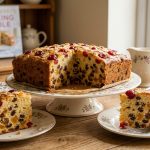
Dundee cake is one of Britain’s most distinguished and recognisable bakes. It is a rich, beautifully spiced fruit cake — lighter and less dense than a Christmas cake, but with far more character than a plain sponge. The dried fruit is plentiful and perfectly spiced.
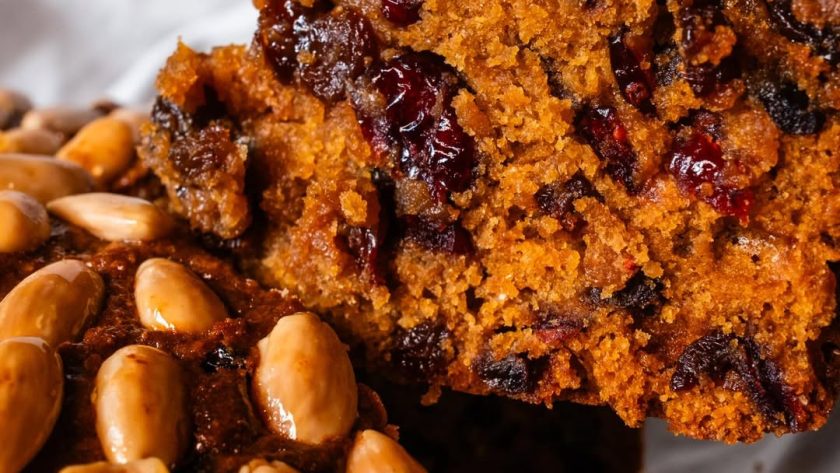
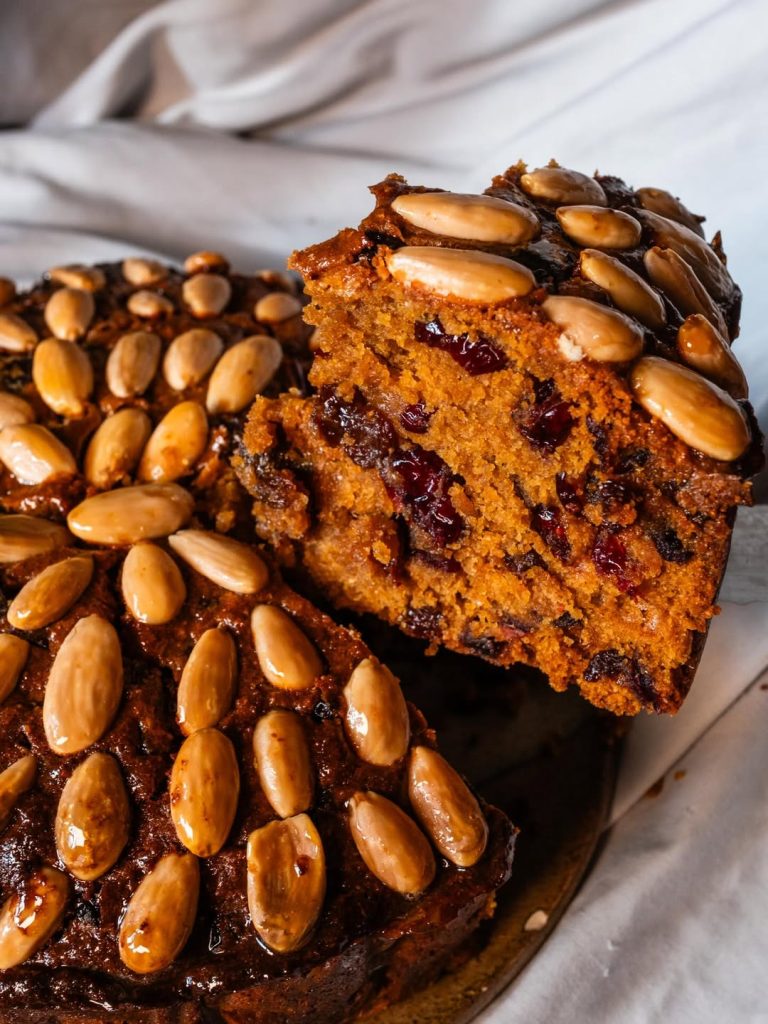
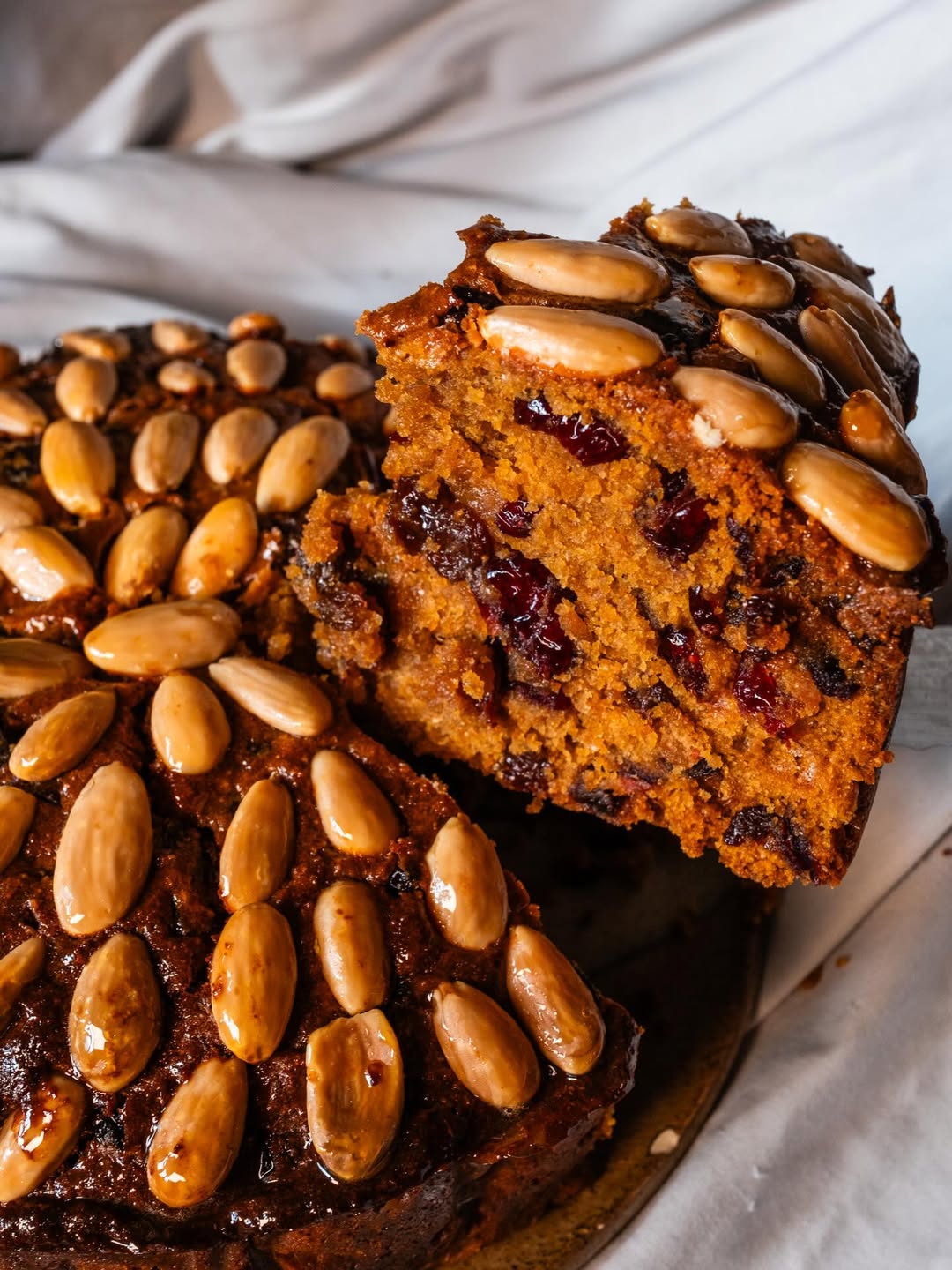
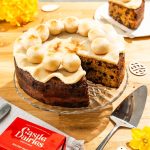
The texture is tender and moist. And the top — covered in concentric circles of whole blanched almonds that toast to a beautiful golden brown during baking — is as distinctive and instantly recognisable as any cake decoration in British baking.
Mary Berry’s Dundee cake recipe is faithful to the tradition in every way that matters. It is the version I make every year without question, and it has never once let me down.
If you have been looking for the perfect Mary Berry Dundee cake recipe, you are in exactly the right place.
What Is Dundee Cake and What Makes It Special?
Dundee cake originated in — as the name suggests — Dundee, Scotland, in the nineteenth century. It is most commonly associated with the Keiller marmalade company, who are credited with creating it as a way of using the surplus bitter Seville orange peel from their marmalade production.
This origin story is baked into the cake’s character. Traditional Dundee cake always contains mixed peel and has a subtle citrus note running through it that distinguishes it from other British fruit cakes.
It is less heavily spiced than a Christmas cake, uses lighter dried fruits — predominantly sultanas and currants — and is moistened with Scotch whisky or sherry rather than brandy.
The defining feature, though — the one thing that makes a Dundee cake immediately recognisable at twenty paces — is the top. Whole blanched almonds, arranged in perfect concentric circles, covering the surface completely.
During baking they toast to a beautiful golden brown and become slightly crunchy, providing a wonderful contrast to the soft, moist fruit cake beneath.
It is a cake of quiet elegance. Not flashy. Not over-decorated. Just beautifully made and completely confident in what it is.
Ingredients for Mary Berry Dundee Cake
For the Dundee Cake
- 225g unsalted butter, softened
- 225g soft light brown sugar
- 4 large eggs, at room temperature
- 275g plain flour
- 1 tsp baking powder
- 1 tsp mixed spice
- ½ tsp ground cinnamon
- 225g sultanas
- 150g currants
- 100g raisins
- 75g mixed peel, finely chopped
- 50g glacé cherries, halved, rinsed and dried
- Zest of 1 unwaxed lemon
- Zest of 1 unwaxed orange
- 2 tbsp Scotch whisky or dry sherry (or orange juice for non-alcoholic)
- 2 tbsp whole milk
For the Almond Top
- 100g whole blanched almonds
To Finish
- 1 egg, beaten (to glaze the almonds before baking)
- 1 tbsp warmed apricot jam (for a final glaze after baking — optional but traditional)
How to Make Mary Berry Dundee Cake — Step by Step
Step 1 — Prepare Your Tin and Oven
Preheat your oven to 150°C / 130°C fan / Gas 2. Grease a deep 20cm round cake tin and line the base and sides with a double layer of baking parchment. As with any fruit cake that bakes for a long time, the double lining protects the outside from over-browning.
Step 2 — Cream the Butter and Sugar
Beat the softened butter and soft light brown sugar together with an electric hand whisk for four to five minutes until pale, light, and fluffy. The light brown sugar takes slightly longer to cream than caster sugar — keep going until the mixture is genuinely light and the grains of sugar have mostly dissolved.
Step 3 — Add the Eggs
Add the eggs one at a time, beating well after each addition. If the mixture looks like it might curdle — which is more common with fruit cake batters — add a tablespoon of the flour and beat it in before continuing. This stabilises the mixture.
Step 4 — Fold in the Flour and Spices
Sift the plain flour, baking powder, mixed spice, and cinnamon into the bowl. Fold gently with a large spatula until just combined.
Step 5 — Add the Fruit, Zest and Whisky
Add the sultanas, currants, raisins, mixed peel, glacé cherries, lemon zest, orange zest, and whisky or sherry. Add the milk. Fold everything together thoroughly until the fruit is evenly distributed. The batter will be quite thick and heavy — that is exactly right.
Step 6 — Fill the Tin and Arrange the Almonds
Spoon the batter into the prepared tin and level the top with the back of a wet spoon — this helps prevent the surface cracking during baking.
Now comes the most important and most satisfying step: arranging the almonds. Starting from the outside edge of the cake, arrange the whole blanched almonds in a single layer, working in concentric circles towards the centre.
Press each almond very gently so it sits just on the surface of the batter without sinking in. Take your time with this — the almond pattern is the defining characteristic of a Dundee cake and it is worth getting right.
Brush the arranged almonds carefully with beaten egg. This helps them turn a beautiful golden brown during baking.
Step 7 — Bake
Bake on the middle shelf for 2 to 2½ hours. Check at the 2-hour mark — a skewer inserted into the very centre should come out completely clean. If the almonds are browning too quickly, lay a piece of baking parchment loosely over the top and continue baking.
Step 8 — Cool and Glaze
Leave the cake to cool completely in the tin — do not attempt to remove it while warm. Once completely cold, turn out carefully and remove the lining paper.
For a beautiful traditional finish, brush the almond top with a little warmed, sieved apricot jam. This makes the almonds glossy and gives the finished cake an elegant, professional look. It is optional but I always do it.
My Top Tips for the Perfect Mary Berry Dundee Cake
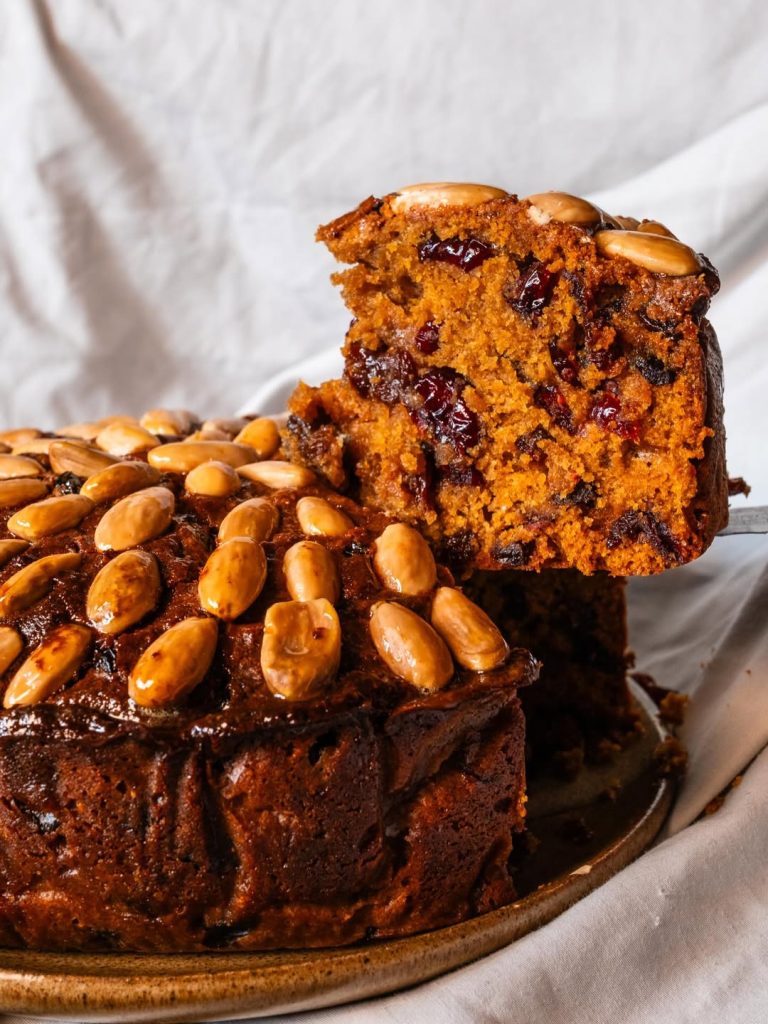
Take your time arranging the almonds. The concentric circle pattern is the signature of a Dundee cake — it is what makes it instantly recognisable and what gives it its quiet, elegant beauty.
Do not rush this step. Lay each almond flat and work methodically from the outside in. A perfectly arranged almond top is deeply satisfying to achieve and makes the finished cake look properly special.
Press the almonds gently but do not push them in. The almonds should sit on the surface of the batter, not be pushed down into it. If they go in too deep, they will be surrounded by batter when the cake rises and will not toast properly.
Brush with beaten egg before baking. This is what gives the almonds their beautiful golden colour. Do it carefully with a pastry brush — you want the egg on the almonds, not pooling on the surface of the batter.
Rinse and dry your glacé cherries. As with any fruit cake, rinsed glacé cherries stay where they are supposed to be rather than sinking. Pat them thoroughly dry after rinsing and toss lightly in flour before adding to the batter.
Use Scotch whisky if you can. It is traditional and it adds a subtle, slightly smoky depth that really suits this cake. A good blended Scotch is perfectly fine — you do not need anything expensive. If you prefer not to use alcohol, orange juice works well.
This cake improves significantly with time. Like all fruit cakes, a Dundee cake is better on day two than day one, and better still on day three. The flavours knit together and deepen beautifully as the cake rests. Make it a day or two ahead if possible.
Serving Suggestions
Dundee cake is traditionally served in thin slices with tea — this is a Scottish afternoon tea staple and needs nothing more. It is also wonderful at Christmas alongside other seasonal bakes.
For a more formal occasion, serve each slice with a small piece of good Scottish cheddar on the side — the combination of fruit cake and mature cheese is a genuinely lovely one and very traditional in Scotland.
How to Store Mary Berry Dundee Cake
At room temperature: Wrap in baking parchment and then foil. Store in a cool, dry place for up to 2 weeks. The flavour improves over the first few days.
In the fridge: Not recommended — refrigeration can dry out a fruit cake. Room temperature storage in a cool place is far better.
In the freezer: Dundee cake freezes beautifully for up to 3 months. Wrap tightly in cling film and foil. Defrost slowly at room temperature overnight.
Mary Berry Dundee Cake
Ingredients
Method
- Preheat oven to 150°C / 130°C fan / Gas 2. Grease and double-line a deep 20cm round tin.
- Beat butter and light brown sugar for 4–5 minutes until pale and fluffy.
- Add eggs one at a time, beating well. Add a spoonful of flour if mixture curdles.
- Sift in flour, baking powder, mixed spice, and cinnamon. Fold gently until just combined.
- Add sultanas, currants, raisins, mixed peel, glacé cherries, lemon zest, orange zest, whisky, and milk. Fold until evenly distributed.
- Spoon into prepared tin and level with a wet spoon. Arrange blanched almonds in concentric circles over the surface. Press each one gently. Brush almonds carefully with beaten egg.
- Bake for 2–2½ hours until skewer comes out clean. Cover top loosely with parchment if almonds brown too fast.
- Cool completely in tin. Turn out carefully. Brush almond top with warmed apricot jam if using.
Notes
Frequently Asked Questions About Mary Berry Dundee Cake
What is the difference between Dundee cake and Christmas cake?
The main differences are in the fruit, the spicing, and the density. Christmas cake is darker, more heavily spiced, uses darker dried fruits and black treacle, and is traditionally fed with brandy over weeks or months.
Dundee cake is lighter in colour and flavour, uses predominantly sultanas and currants, has a more delicate spice profile, and does not need feeding or maturing — though it does improve with a day or two of resting.
Can I make Dundee cake without alcohol?
Absolutely — replace the whisky with fresh orange juice or cold strong tea. The cake will be slightly lighter in flavour but still completely delicious and entirely traditional in character.
Why did my almonds sink into the cake during baking?
Usually because they were pushed in too deeply before baking or because the batter was too loose. Press each almond very gently — it should sit on the surface, not be embedded in it. If your batter seems unusually loose, add an extra tablespoon of flour before filling the tin.
Can I use flaked almonds instead of whole blanched almonds?
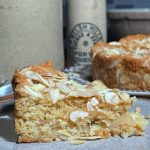
Technically yes, but it will not look like a traditional Dundee cake. The whole blanched almonds in concentric circles are the defining visual characteristic of this cake. Flaked almonds will give a different — and perfectly pleasant — result, but it will simply be a fruit cake with an almond topping rather than a proper Dundee cake.
How long in advance can I make Dundee cake?
It keeps beautifully for up to 2 weeks at room temperature, wrapped properly. You can make it well in advance — many bakers make their Dundee cake a week ahead and find it is at its absolute best by the time they serve it.
Can I add marzipan to Dundee cake?
Traditionally, no — Dundee cake does not have marzipan. That is the domain of simnel cake and Christmas cake. The almond flavour in Dundee cake comes entirely from the whole blanched almonds on top. If you add marzipan you will have created something delicious, but it will not be a traditional Dundee cake.

Leave a Reply