
 Anna Louise
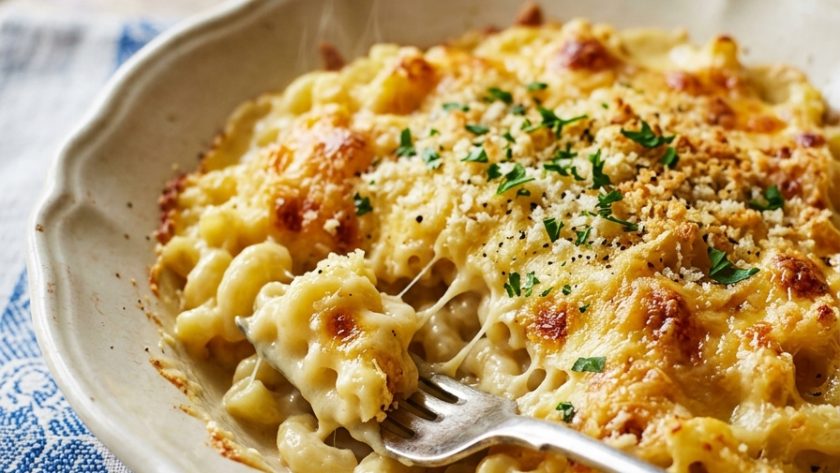
 Macaroni and cheese made properly — with a real béchamel sauce, excellent mature cheese, and a crunchy breadcrumb topping — is one of the finest comfort dishes British cooking has adopted and made its own.
It is simultaneously simple and deeply satisfying, economical and genuinely impressive, a weeknight dinner and a crowd-pleasing celebration dish.
Mary Berry’s macaroni and cheese recipe builds the sauce from scratch — a proper béchamel enriched with two types of cheese, a little mustard to sharpen the flavour, and a touch of cayenne for warmth.
The pasta is cooked slightly under al dente before going into the sauce, the whole thing is transferred to a baking dish, topped with a layer of breadcrumbs and extra cheese, and baked until golden, bubbling, and completely irresistible.
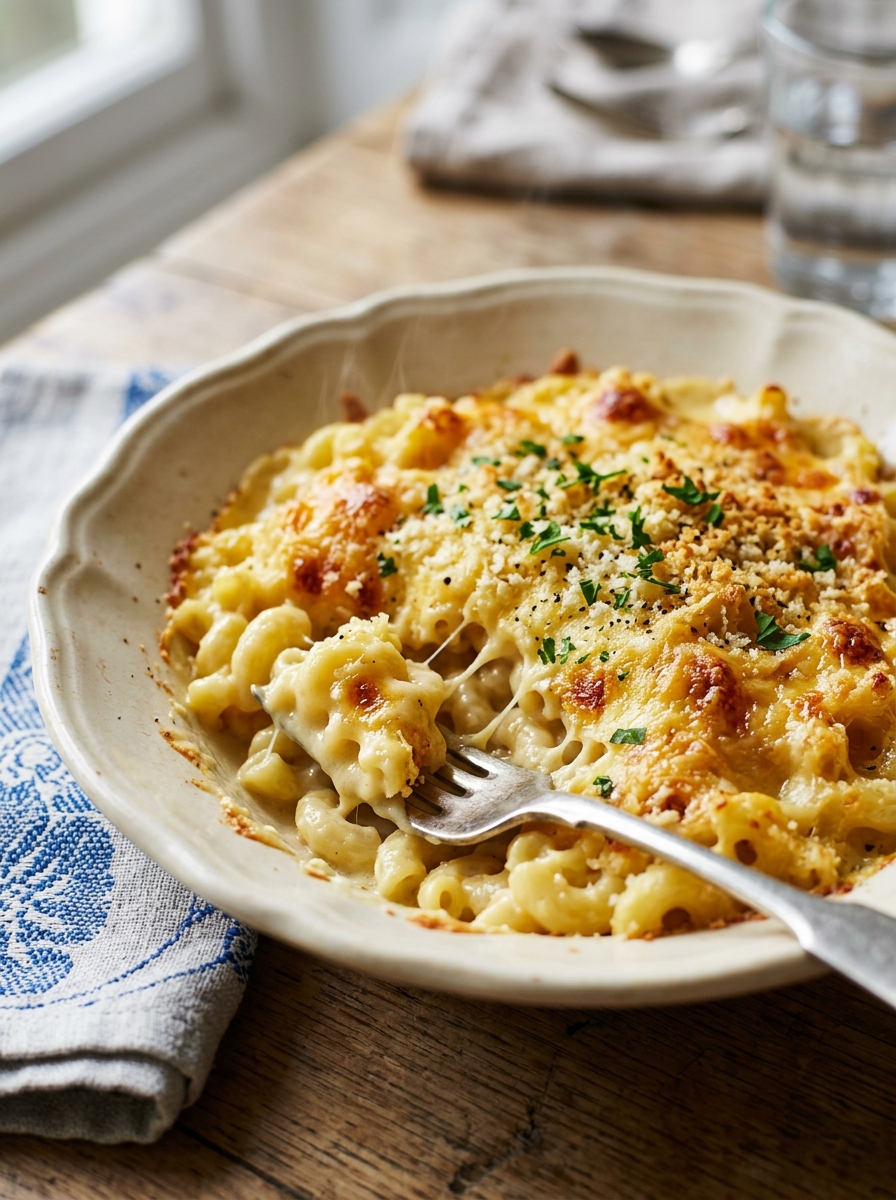
This is mac and cheese as it should be — rich, deeply cheesy, with a sauce that clings to every piece of pasta and a top that cracks magnificently under the first spoon.
What Makes a Great Mac and Cheese
A proper béchamel. The sauce is everything in a mac and cheese. A thin, flavourless sauce gives a disappointing result — pasta sitting in something that barely coats it. A properly made béchamel — the right ratio of butter to flour to milk — gives a sauce thick enough to coat the pasta generously and keep it coated through the baking.
Two cheeses. Mature Cheddar for flavour and sharpness. Gruyère for that distinctive nutty, slightly sweet, wonderfully melty quality that gives mac and cheese its characteristic richness. The combination is significantly better than either alone.
Cooking the pasta slightly under. The pasta finishes cooking in the oven. Under-cooked pasta goes into the sauce; perfectly cooked pasta comes out of the oven. Fully cooked pasta goes mushy.
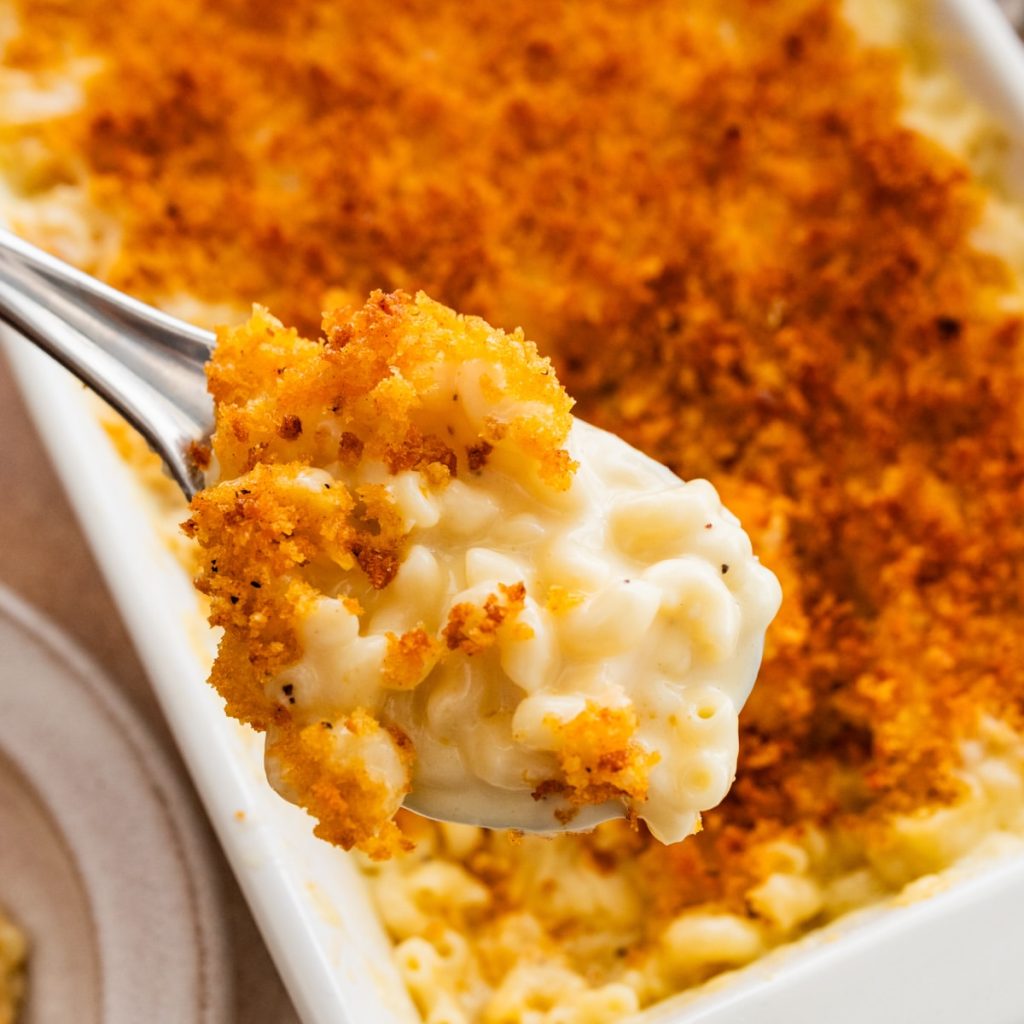
The breadcrumb top. This is what elevates a baked mac and cheese above a stovetop one. Fresh breadcrumbs mixed with a little butter and extra cheese, scattered over the surface before baking — they crisp and toast in the oven to give a golden, slightly crunchy contrast to the creamy, yielding pasta beneath.
Ingredients for Mary Berry Macaroni and Cheese
For the Pasta
- 400g macaroni or other short pasta
For the Cheese Sauce
- 75g unsalted butter
- 75g plain flour
- 900ml whole milk
- 1 tsp English mustard (or ½ tsp mustard powder)
- ¼ tsp cayenne pepper
- ¼ tsp freshly grated nutmeg
- 200g mature Cheddar, finely grated
- 100g Gruyère, finely grated
- Salt and freshly ground black pepper
For the Topping
- 75g fresh white breadcrumbs
- 50g mature Cheddar, finely grated
- 25g Parmesan, finely grated
- 25g unsalted butter, melted
- ½ tsp smoked paprika
How to Make Mary Berry Macaroni and Cheese — Step by Step
Step 1 — Cook the Pasta
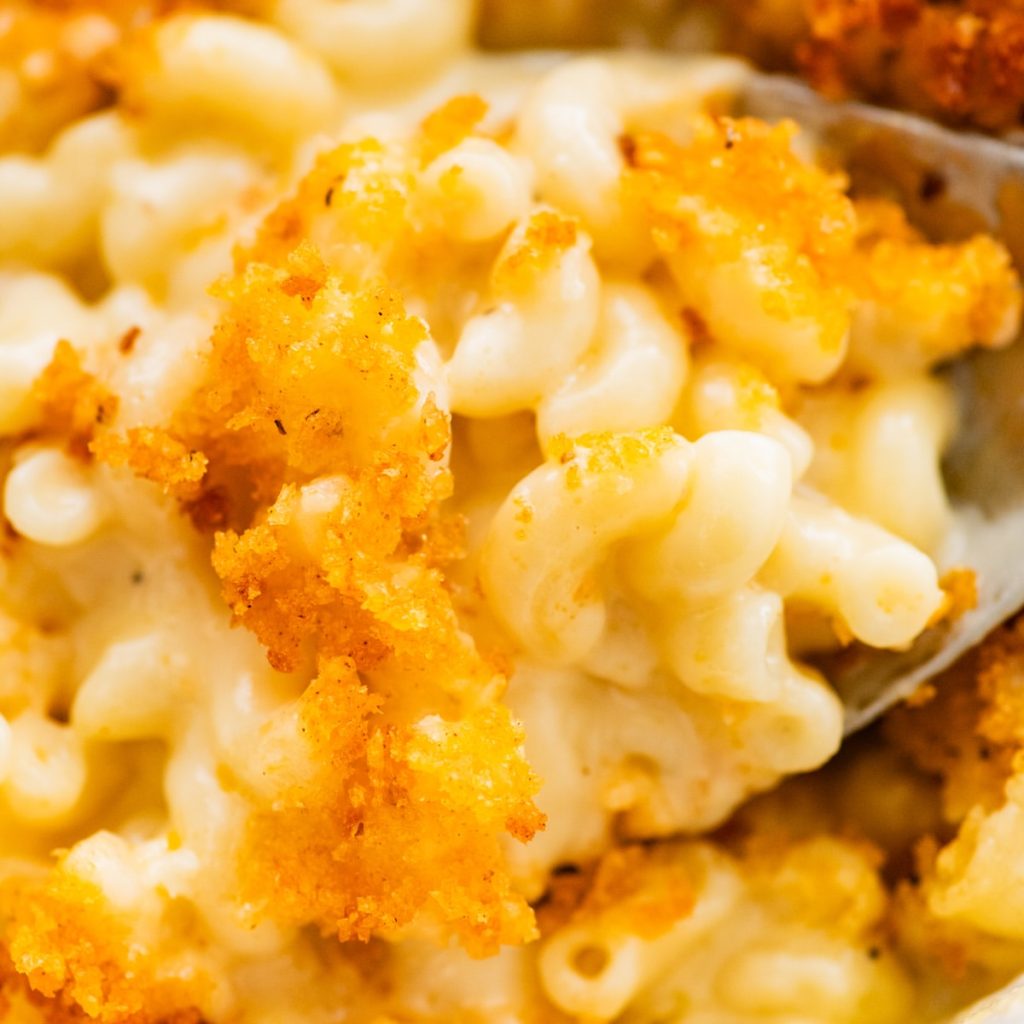
Cook the macaroni in a large pan of very well-salted boiling water for two minutes less than the packet instructions — just under al dente. It should have a definite bite remaining. Drain and toss with a very little olive oil to prevent sticking. Set aside.
Step 2 — Make the Béchamel
Melt the butter in a large, heavy-based saucepan over a medium heat. Add the flour and stir continuously with a wooden spoon for two minutes to cook the flour through — this is the roux. The mixture should be smooth and slightly foaming.
Remove from the heat. Add the milk a little at a time, whisking continuously to prevent lumps — add the first few additions slowly and make sure each is fully incorporated before adding the next. Once all the milk is added and the sauce is smooth, return to a medium heat.
Cook, stirring continuously, until the sauce comes to the boil and thickens to a consistency that coats the back of a spoon generously. This takes about five minutes from when it first starts to bubble.
Step 3 — Add the Cheese and Seasoning
Remove the béchamel from the heat. Add the mustard, cayenne, and nutmeg. Stir in the Cheddar and Gruyère — all of it — and stir until completely melted and incorporated into a smooth, glossy, deeply cheesy sauce.
Taste and season very generously with salt and pepper. The sauce should taste slightly over-seasoned at this point — it will taste correct once combined with the unseasoned pasta.
Step 4 — Combine
Add the drained pasta to the cheese sauce and stir well to coat every piece completely. The mixture should be generously sauced — not dry.
Step 5 — Transfer and Top
Preheat your oven to 190°C / 170°C fan / Gas 5. Transfer the pasta and sauce to a large, deep ovenproof dish — approximately 30x20cm and at least 5cm deep.
Mix the breadcrumbs, Cheddar, Parmesan, melted butter, and smoked paprika together in a bowl until combined. Scatter evenly over the entire surface of the mac and cheese.
Step 6 — Bake
Bake for 25 to 30 minutes until the topping is deep golden and crunchy, the edges are visibly bubbling, and the dish is piping hot throughout.
Leave to stand for five minutes before serving — the sauce settles slightly and serving is neater.
My Top Tips For Mary Berry Macaroni and Cheese
Season the béchamel generously before adding the pasta. The pasta is unseasoned and will dilute the sauce. The cheese sauce should taste slightly more seasoned than you want the finished dish to be — the balance will be right once the pasta is added.
Use freshly grated cheese — not pre-grated. Pre-grated cheese contains anti-caking agents that prevent it from melting smoothly into the sauce. Freshly grated cheese melts completely into a glossy, smooth sauce. Always grate your own.
Warm the milk before adding to the roux. Cold milk added to a hot roux can cause lumps and slow the sauce-making process. Warming the milk slightly in the microwave or in a separate saucepan before adding gives a smoother, quicker result.
Make fresh breadcrumbs from day-old bread. Fresh breadcrumbs — torn bread pulsed briefly in a food processor — give a lighter, crunchier topping than dried breadcrumbs. Day-old white bread produces the best breadcrumbs.
Do not overcook in the oven. The sauce will look set and slightly less creamy compared to when it went in — this is normal. But more than 30 minutes and the sauce can become too thick and the pasta too soft. Check at 25 minutes.
Serving Suggestions
On its own as a complete dinner — this needs nothing alongside. With a simple green salad for freshness. With crusty bread for those who want to mop every last trace of sauce from their bowls. With crispy bacon crumbled over the top for a richer, more indulgent version.
How to Store Mary Berry Macaroni and Cheese
In the fridge: Store covered for up to 3 days. Reheat in a 180°C oven covered with foil for 20 minutes, then remove foil for five minutes to crisp the topping. Individual portions can be microwaved with a splash of milk to loosen the sauce.
In the freezer: Freeze before baking for up to 2 months. Cover tightly. Defrost overnight in the fridge and bake as directed.
Frequently Asked Questions
Can I use different pasta shapes?
Yes — penne, rigatoni, fusilli, or any medium-sized pasta works well. Avoid very small pasta like orzo which becomes too soft, or very large pasta which is difficult to coat evenly.
Can I add other cheeses?
Yes — Red Leicester gives a wonderful orange colour and a slightly sweeter flavour. Stilton gives a more robust, complex result. A three-cheese mac and cheese using Cheddar, Gruyère, and either Red Leicester or Stilton is excellent.
Can I add vegetables?
Yes — roasted broccoli, spinach, caramelised onion, or roasted red pepper all work very well. Add them when combining the pasta and sauce.
Why is my cheese sauce grainy?
The cheese was added to a sauce that was too hot and the proteins in the cheese seized rather than melting smoothly. Always remove the béchamel from the heat before adding the cheese, and use freshly grated cheese.
Can I make this on the stovetop without baking?
Yes — combine the sauce and pasta, serve immediately with a scattering of cheese on top. It is a different dish — creamier and less structured than the baked version but equally delicious.
Mary Berry Macaroni and Cheese Recipe
Ingredients
Method
- Cook macaroni 2 minutes under al dente. Drain. Toss with a little oil.
- Melt butter. Add flour — stir 2 minutes. Remove from heat. Add milk gradually, whisking continuously. Return to heat, stirring, until boiling and thickened — about 5 minutes from first bubble.
- Remove from heat. Add mustard, cayenne, and nutmeg. Add Cheddar and Gruyère — stir until melted and smooth. Season very generously.
- Add pasta to sauce. Stir to coat completely.
- Preheat oven to 190°C / 170°C fan / Gas 5. Transfer to ovenproof dish. Mix topping ingredients — scatter over the surface.
- Bake 25–30 minutes until golden, crunchy on top, and bubbling at edges. Stand 5 minutes before serving.

Leave a Reply