

 Anna Louise
 Mary Berry’s mini Christmas cakes are made using the same rich fruit cake recipe as a standard Christmas cake, simply baked in smaller tins. But the difference in how they are presented and experienced is significant. Each person gets their own whole cake.
You can decorate each one differently. They are genuinely beautiful wrapped in cellophane with a ribbon for gifts. And there is something particularly satisfying about cutting into your own complete, perfectly decorated little Christmas cake.
This recipe makes six individual cakes. You can make more or fewer depending on the number of tins you have — the batter recipe scales up and down easily.
And unlike a full-sized Christmas cake, mini versions bake relatively quickly and can be made as little as a week before Christmas with good results.
What Makes a Great Mini Christmas Cake?
The same rich fruit cake base as a full-sized Christmas cake. There is no shortcut here — the fruit must be soaked, the batter must be properly made, and the cake must be baked low and slow. Miniature does not mean compromised.
Feeding with brandy after baking. Even mini Christmas cakes benefit from being fed with a little brandy or orange juice every few days between baking and decorating. It keeps them moist and develops the flavour in the way that makes a Christmas cake taste like a Christmas cake.
Proper marzipan and royal icing. The marzipan layer seals the cake and provides a smooth base for the royal icing. The royal icing can be as simple or as elaborate as you choose — rough-peaked for a rustic snowdrift effect, or perfectly smooth for a more formal finish.
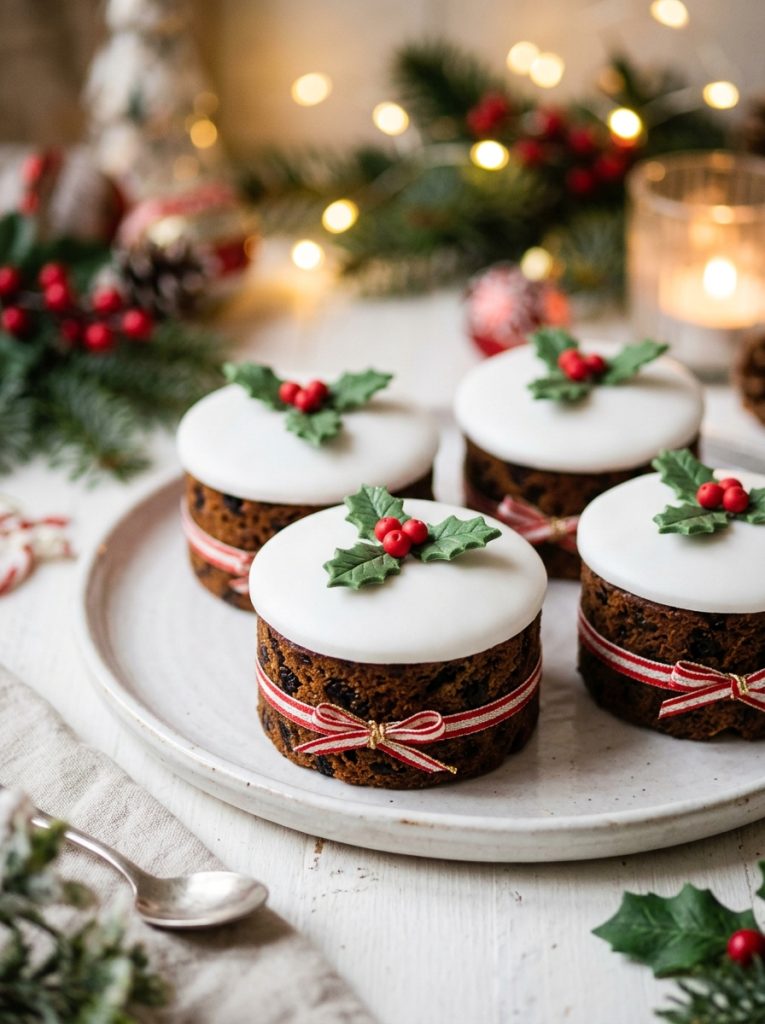
Ingredients for Mary Berry Mini Christmas Cakes
For the Rich Fruit Cake (Makes 6 x 10cm cakes)
- 175g unsalted butter, softened
- 175g soft dark brown sugar
- 3 large eggs, at room temperature
- 200g plain flour, sifted
- 1 tsp mixed spice
- 1 tsp ground cinnamon
- ½ tsp freshly grated nutmeg
- 2 tbsp black treacle
- 500g mixed dried fruit (sultanas, currants, raisins)
- 100g glacé cherries, halved, rinsed and dried
- 50g mixed peel
- 50g blanched almonds, roughly chopped
- Zest of 1 unwaxed orange
- Zest of 1 unwaxed lemon
- 3 tbsp brandy (plus extra for feeding)
For the Marzipan Layer
- 500g good quality marzipan
- 3 tbsp apricot jam, warmed and sieved
For the Royal Icing
- 500g icing sugar, sifted
- 2 large egg whites (or 3 tbsp aquafaba for an egg-free version)
- 1 tsp lemon juice
- 1 tsp glycerine (keeps the icing from setting rock hard)
To Decorate Each Cake
- Festive ribbon
- Small Christmas decorations — sugar holly, silver balls, stars, a small sprig of artificial holly
- Icing sugar for dusting
How to Make Mary Berry Mini Christmas Cakes — Step by Step
Step 1 — Soak the Fruit (Night Before)
Place the mixed dried fruit and glacé cherries into a large bowl. Pour over the brandy and stir well. Cover and leave to soak overnight. The fruit will absorb the brandy and become plump and glossy. If you have more time, soaking for 24 to 48 hours gives an even better result.
Step 2 — Prepare Your Tins and Oven
Preheat your oven to 150°C / 130°C fan / Gas 2. Grease six 10cm round loose-bottomed cake tins and line the base and sides with a double layer of baking parchment.
If you do not have six 10cm tins, you can use a 12-hole deep muffin tin, an 18cm square tin cut into portions after baking, or any small round tins of a similar size — adjust baking time accordingly.
Step 3 — Make the Fruit Cake Batter
Beat the softened butter and dark brown sugar together with an electric hand whisk for four to five minutes. The mixture will not go very pale because of the dark sugar — keep beating until it increases in volume and looks lighter.
Add the black treacle and beat briefly. Add the eggs one at a time, beating well after each — add a tablespoon of flour if the mixture shows any sign of curdling.
Sift the flour, mixed spice, cinnamon, and nutmeg into the bowl. Fold gently until just combined. Add the soaked fruit and all its liquid, the mixed peel, blanched almonds, orange zest, and lemon zest. Fold everything together until evenly combined.
Step 4 — Fill the Tins and Bake
Divide the batter evenly between the six prepared tins — weigh each tin if you want perfectly equal cakes. Level the surfaces with a wet spoon.
Bake on the middle shelf for 50 to 60 minutes until each cake is deep golden brown, has pulled away slightly from the sides, and a skewer inserted into the centre comes out completely clean. If the tops are browning too quickly, cover each tin loosely with a small square of baking parchment.
Leave to cool completely in the tins.
Step 5 — Feed the Cakes
Once completely cool, remove from the tins, leaving the lining paper on. Pierce the tops and bases of each cake all over with a fine skewer. Spoon or brush a teaspoon of brandy over each cake — both top and base.
Wrap each cake tightly in baking parchment and then foil. Store in a cool, dry place and feed with a teaspoon of brandy every three to four days until ready to decorate.
Step 6 — Apply the Marzipan
When ready to decorate, unwrap the cakes. If the tops are not completely level, trim very slightly with a serrated knife.
Warm the sieved apricot jam and brush over the top and sides of each cake — this is the glue for the marzipan. Roll out the marzipan on a surface lightly dusted with icing sugar to approximately 4mm thickness. Cut circles slightly larger than the top of each cake, then cut strips for the sides.
Cover each cake with marzipan — top first, then the sides — pressing gently to adhere. Smooth with the palms of your hands. Leave to dry at room temperature for at least 24 hours before applying the royal icing — the marzipan must be dry for the icing to adhere properly.
Step 7 — Make and Apply the Royal Icing
Whisk the egg whites and lemon juice briefly until foamy. Gradually add the sifted icing sugar, beating until the icing is very thick, bright white, and holds stiff peaks. Beat in the glycerine.
Spoon the royal icing onto the top of each marzipan-covered cake and spread to the edges, letting it drop naturally over the sides. For a traditional snowdrift effect, use a palette knife or the back of a spoon to pull up peaks across the surface — the icing should be stiff enough to hold whatever shape you create.
Alternatively, smooth the top flat with a warm palette knife for a cleaner, more contemporary finish.
Step 8 — Decorate and Present
Add your decorations — sugar holly, silver balls, a star or a small Christmas figure — while the icing is still slightly soft so the decorations adhere. Leave to set completely — at least four hours, overnight is better.
Tie a ribbon around each cake and present them on a small cake board or plate, or wrap in cellophane and tie with ribbon for gifts.
My Top Tips for Perfect Mini Christmas Cakes
Make them at least a week before Christmas. Even mini Christmas cakes benefit from time — the fruit settles, the flavours deepen, and regular feeding with brandy makes a noticeable difference to the finished cake. Made two to three weeks in advance and fed regularly, they will be exceptional by Christmas.
Rinse and dry glacé cherries thoroughly. As with all fruit cakes, rinsed and dried glacé cherries tossed lightly in flour before adding to the batter will stay where they are supposed to be rather than sinking to the bottom.
Use a loose-bottomed tin if possible. Removing perfectly cooked mini Christmas cakes from fixed tins without damaging them can be tricky. Loose-bottomed tins make this significantly easier and give you a cleaner result.
Let the marzipan dry for 24 hours before icing. This is the step people most often skip in their eagerness to finish the cakes — and it is the one that causes the most problems. Wet marzipan under royal icing causes the icing to slide and prevents it from setting properly. Always wait the full 24 hours.
Add glycerine to the royal icing. A teaspoon of glycerine in the icing prevents it from setting completely rock hard — which makes it unpleasant to eat and also causes it to crack. With glycerine, the icing sets firm but still cuts cleanly and has a pleasant texture.
Decorate each one differently. The great advantage of mini cakes is that you can personalise each one — add a name, use different coloured ribbons, create different decorative effects. It turns them from merely impressive to genuinely personal.
Serving Suggestions
As individual desserts at a Christmas dinner — one per person, perhaps with a spoonful of brandy cream alongside. As gifts wrapped in cellophane with ribbon and a handwritten label — the most appreciated and personal festive food gift.
On a tiered cake stand at a Christmas party, each decorated differently. As a centrepiece for a smaller Christmas celebration where a full-sized Christmas cake would be too much.
How to Store Mary Berry Mini Christmas Cakes
Before icing: Wrapped in parchment and foil, fed regularly with brandy, in a cool dry place for up to 6 weeks.
Once iced: Store in a cool, dry place in an airtight container for up to 3 weeks. Do not refrigerate — the icing can absorb moisture from the fridge and become sticky.
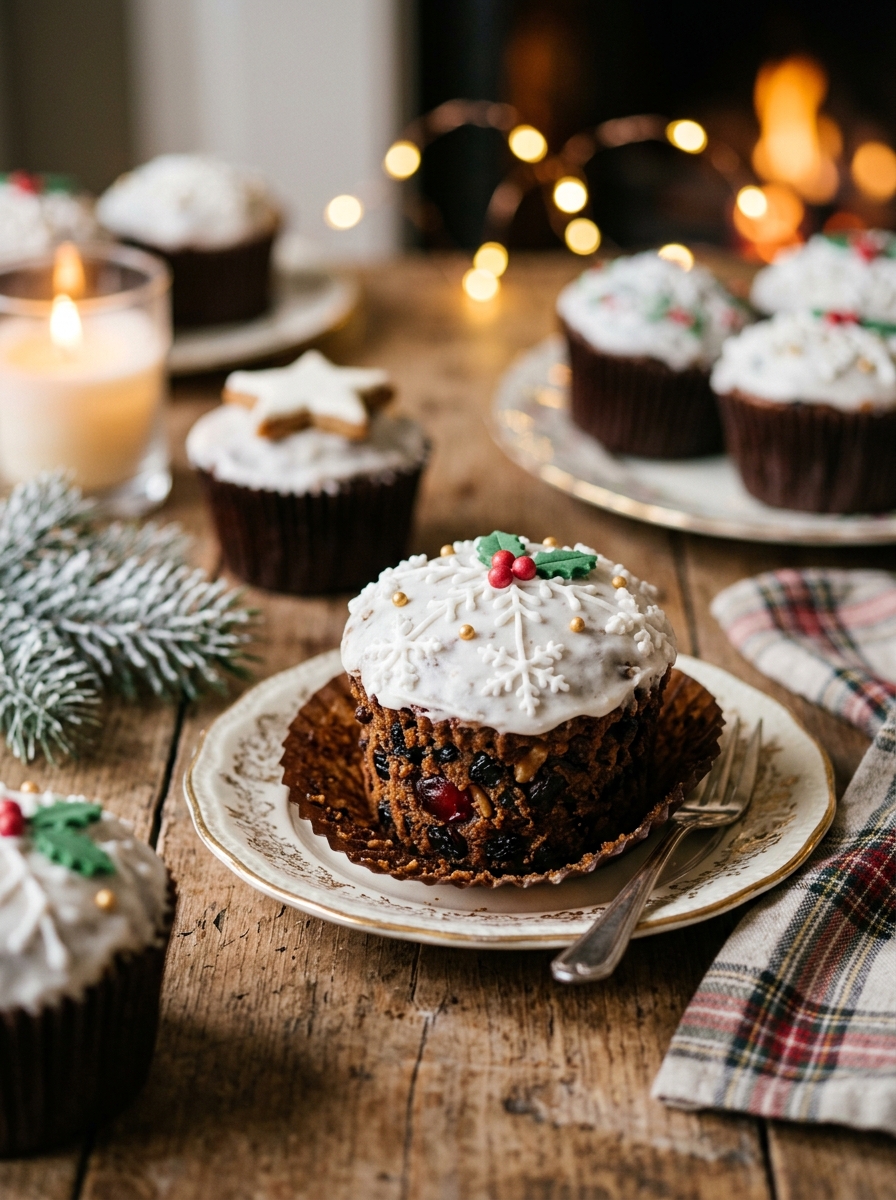
Mary Berry Mini Christmas Cakes Recipe
Ingredients
Method
- Night before: soak dried fruit and cherries in brandy. Cover and leave overnight.
- Preheat oven to 150°C / 130°C fan / Gas 2. Grease and double-line six 10cm round tins.
- Beat butter and dark brown sugar 4–5 minutes. Add treacle. Add eggs one at a time. Sift in flour and spices — fold gently. Add soaked fruit and liquid, peel, almonds, and zests. Fold until combined.
- Divide evenly between tins. Level surfaces. Bake 50–60 minutes until a skewer comes out clean. Cool completely.
- Pierce tops and bases with a skewer. Brush each cake with 1 tsp brandy. Wrap in parchment and foil. Store and feed every 3–4 days until ready to decorate.
- Brush cakes with apricot jam. Cover tops and sides with rolled marzipan. Leave to dry 24 hours.
- Whisk egg whites and lemon juice until foamy. Beat in icing sugar until stiff peaks. Beat in glycerine. Apply to cakes and peak or smooth as desired. Decorate while slightly soft. Leave to set fully.
- Tie with ribbon. Store in a cool, dry place.
Notes
Frequently Asked Questions About Mary Berry Mini Christmas Cakes
Can I make this as one large Christmas cake instead?
Yes — pour the batter into a greased and double-lined deep 20cm round tin and bake at the same temperature for 2 to 2.5 hours. Feed and decorate in the same way. The recipe is a standard rich Christmas cake recipe that works at any size.
Can I make these without alcohol?
Yes — replace the brandy in the batter and for feeding with orange juice, apple juice, or cold strong tea. The cakes will be slightly less richly flavoured but still completely delicious and suitable for children.
Why is my royal icing grey rather than white?
The icing sugar was not sifted, or the bowl had traces of grease that prevented the egg whites from beating to their full whiteness. Sift the icing sugar, make sure the bowl is completely clean and grease-free, and beat to stiff peaks before adding more sugar for the whitest result.
Can I use ready-to-roll fondant icing instead of royal icing?
Yes — ready-to-roll fondant gives a smooth, professional finish that is easier to apply than royal icing and does not require the drying time. Roll out thinly, drape over the marzipan-covered cake, smooth, and trim. The finish is different — smoother and more contemporary — but equally attractive.
How do I prevent the icing from cracking?
Add glycerine to the royal icing as directed in the recipe. Also make sure the marzipan layer is completely dry before icing — wet marzipan under icing prevents it from setting evenly and causes cracking. Apply the icing in a reasonably generous layer — a thin layer cracks more easily than a thicker one.
Can I make mini Christmas cakes in a muffin tin?
Yes — line each hole with a double layer of baking parchment cut into strips and fill two-thirds full. Bake at the same temperature for 30 to 35 minutes. The results are slightly less elegant than individual round tins but completely delicious.


Leave a Reply